


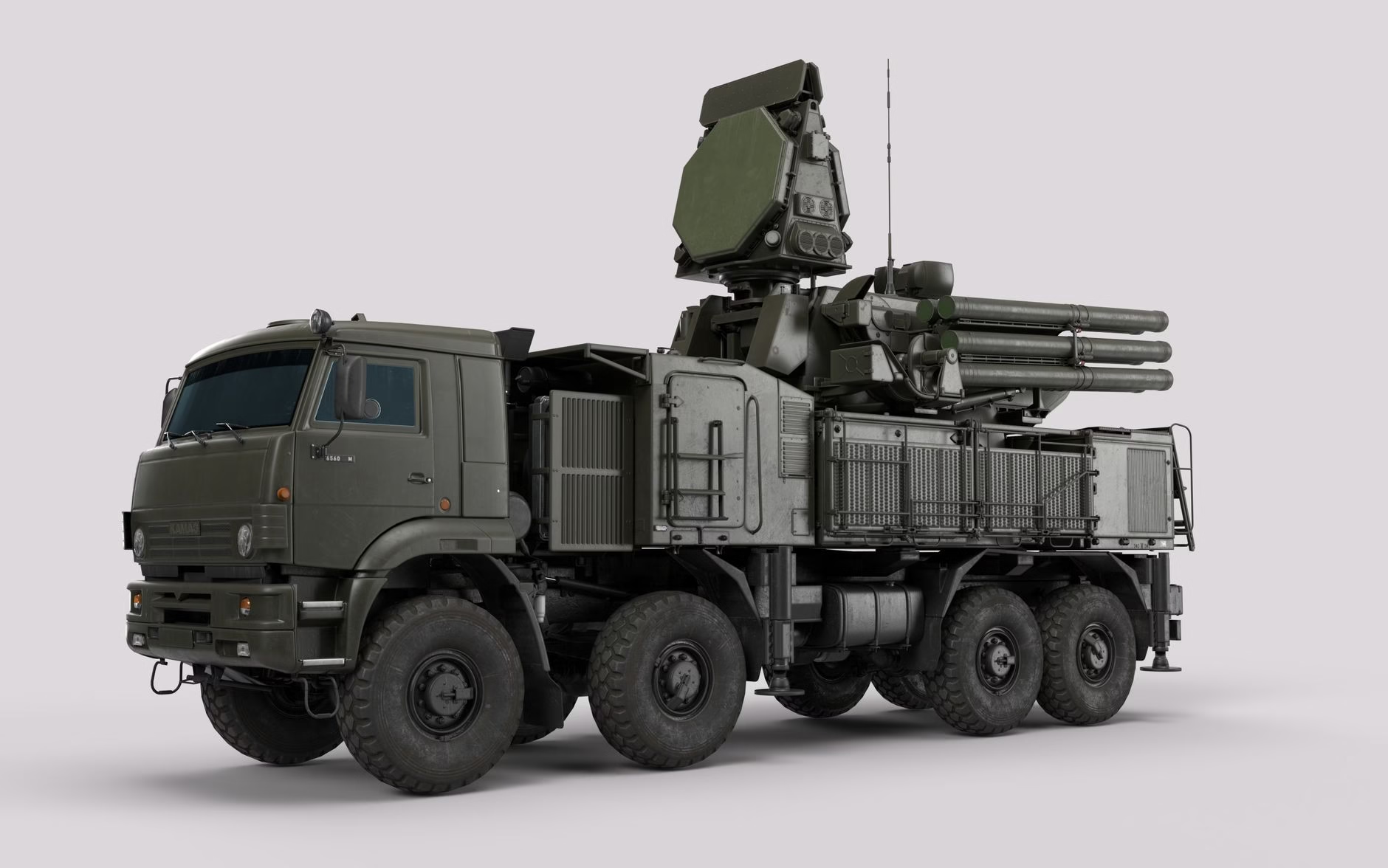
Introduction to Modern Aerial Warfare
Modern military conflicts have increasingly relied on unmanned aerial vehicles, transforming how defense strategies are designed and executed across the globe. Nations involved in active hostilities must continuously adapt their defensive arsenals to counter the rapid evolution of remote-controlled and autonomous flying hardware. As aerial threats become more sophisticated, military engineers are forced to innovate at an unprecedented pace to protect critical infrastructure and frontline personnel.
Defense innovation has become a central priority for nations seeking to maintain tactical superiority in contested airspace. The reliance on cost-effective aerial munitions has necessitated the development of equally cost-efficient countermeasures. Traditional air defense systems often prove economically unsustainable when deployed against large volumes of inexpensive unmanned machinery, prompting a profound shift toward specialized interception technologies.
Recent Developments in Ukraine
Ukrainian authorities have officially confirmed that a brand-new defensive system specifically engineered to neutralize unmanned aerial vehicles is currently undergoing rigorous testing phases. This announcement highlights the ongoing commitment of domestic defense developers to address the persistent challenges posed by hostile aerial assets. The introduction of this experimental equipment marks another step forward in enhancing the nation’s layered protective capabilities.
Testing procedures are designed to evaluate the operational reliability, precision, and overall effectiveness of the hardware under simulated combat conditions. Engineers and military personnel are closely monitoring telemetry and performance data to identify any necessary refinements before full-scale operational deployment. Such trials are essential for ensuring that new armaments can perform consistently in high-stress environments.
Strategic Importance of Counter-Drone Systems
The proliferation of flying munitions presents a significant hazard to both military positions and civilian population centers. Developing reliable neutralization methods is crucial for reducing potential damage and saving lives on the ground. A successful interception platform must be capable of reacting swiftly to rapidly approaching targets while maintaining high accuracy.
Furthermore, integrating these emerging technologies into existing defense frameworks requires careful coordination and strategic planning. Commanders must ensure that new defensive units communicate seamlessly with current radar and tracking infrastructure. This interconnected approach allows for a more cohesive response to multi-vector aerial incursions.
Looking Ahead
As the evaluation phase continues, defense officials remain optimistic about the potential impact of this newly tested technology. The insights gained from current field trials will undoubtedly guide future iterations and improvements of the system. Innovation in defense manufacturing remains a vital component of national security strategy in an era defined by rapid technological change.
The global defense community continues to observe these developments closely, recognizing that advancements achieved in active conflict zones often set new benchmarks for international military standards. The ongoing adaptation of tactical responses underscores the relentless pursuit of effective solutions in contemporary warfare.



















Leave a Reply