


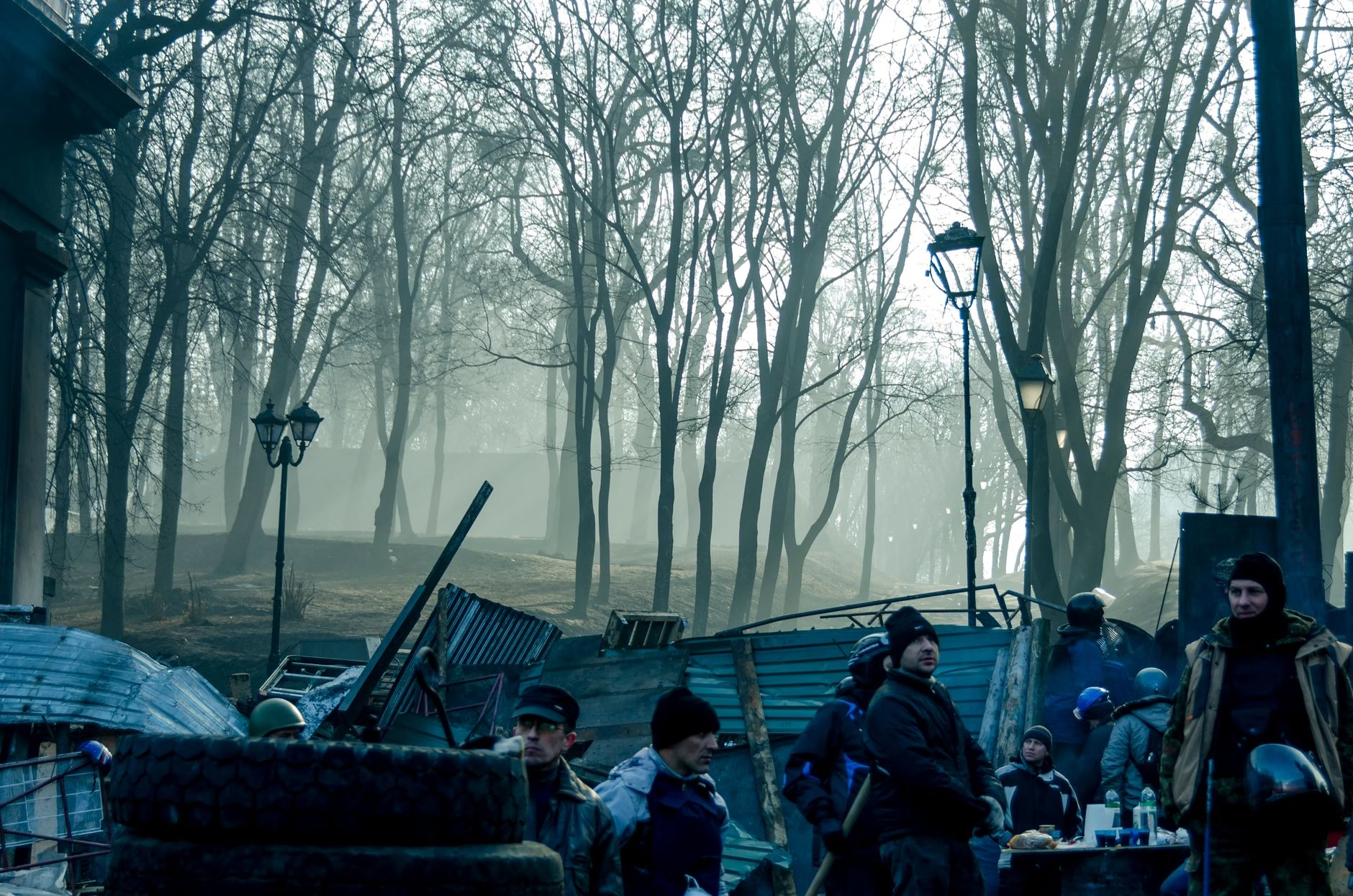
Modern warfare presents multifaceted challenges that extend far beyond direct combat engagements. For military personnel on the active Ukrainian front lines, simply traversing the terrain to reach or exit their defensive positions has become a perilous endeavor. The sheer intensity of the current operational environment means that danger is not confined to moments of direct assault. Instead, the very act of logistical movement and troop rotation incurs significant casualties on a regular basis.
The Evolution of Battlefield Hazard
Traditional military doctrine often views trenches and defensive fortifications as safe havens from enemy fire. However, modern technological advancements have fundamentally altered this paradigm. The widespread proliferation of aerial surveillance drones, loitering munitions, and precision artillery has stripped away the relative safety once afforded by deep earthen works. Troops moving through communication trenches or open supply paths find themselves under constant observation from the skies.
Because hostile forces can monitor movement in real time, any transition into or out of a front-line sector attracts immediate attention. Soldiers carrying equipment, rations, or ammunition are routinely targeted by guided munitions before they even fire a weapon at an adversary. This dynamic transforms routine logistical tasks into high-stakes operations where survival depends heavily on timing, weather conditions, and pure chance.
The Strain of Troop Rotations
Rotating personnel in and out of active sectors is a critical necessity to combat exhaustion and maintain combat effectiveness. Yet, executing these rotations along the current front lines has grown increasingly lethal. Units attempting to relieve their exhausted peers must navigate corridors that are heavily zeroed in by enemy artillery.
The physical geography of the battlefield often leaves very few concealed routes for ingress and egress. When soldiers must march across open terrain or through heavily damaged communication trenches, they face persistent hazards from shrapnel, landmines, and drone-dropped explosives. Consequently, the toll taken during these transitional phases contributes significantly to the overall casualty rates reported by units stationed in the most volatile zones.
Tactical Adaptations and Resilience
In response to these pervasive threats, military commanders and frontline personnel continuously adapt their tactics. Operations are frequently restricted to hours of darkness or adverse weather conditions that limit aerial drone visibility. Small groups move in staggered intervals to minimize the impact of potential strikes, and engineers work tirelessly to reinforce overhead cover along critical pathways.
Despite these rigorous precautions, the baseline level of hazard remains exceptionally high. The integration of advanced surveillance with rapid-response firepower ensures that no route is entirely secure. Ukrainian forces continue to demonstrate remarkable resilience, enduring grueling conditions while maintaining their defensive posture under unrelenting pressure.
Conclusion
The harsh reality of contemporary conflict is vividly illustrated by the conditions along the Ukrainian front lines. Movement itself has evolved into a primary combat hazard, where troops risk injury or death simply by rotating through their assigned sectors. Understanding these logistical perils provides vital context for assessing the immense daily sacrifices made by personnel serving in active combat zones.

















Leave a Reply