


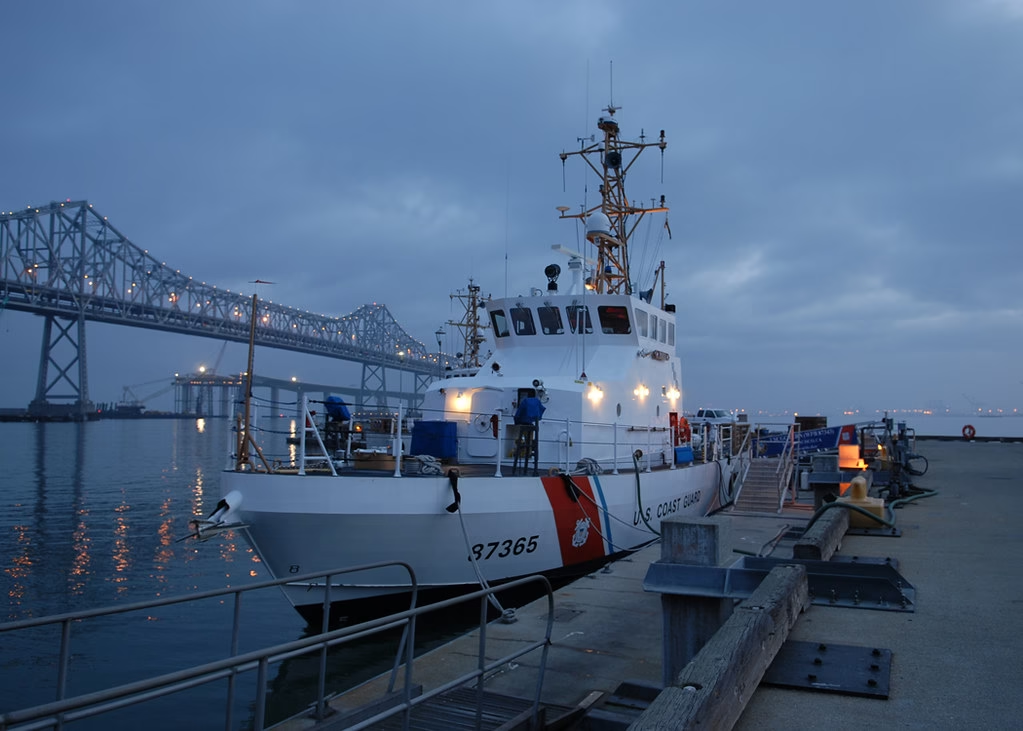
The United States military confirmed on Wednesday that it conducted a lethal strike against a vessel suspected of drug trafficking in the eastern Pacific Ocean, resulting in the deaths of three individuals. The operation, executed by U.S. forces operating in international waters, marks another escalation in the ongoing maritime campaign to intercept illicit narcotics moving toward North American shores.
Context of Maritime Interdiction
The eastern Pacific has long served as a primary corridor for transnational criminal organizations transporting cocaine and other illicit substances from South America. To combat this flow, the U.S. Southern Command (SOUTHCOM) maintains a persistent presence in the region, often coordinating with the U.S. Coast Guard and regional partners.
These operations frequently involve high-speed chases and boarding actions. However, the use of kinetic force against vessels remains a rare and highly scrutinized tactic reserved for scenarios where standard interdiction methods are deemed insufficient or present an immediate threat to military personnel.
Details of the Engagement
While the military has withheld specific operational details regarding the nature of the engagement, spokespersons indicated that the vessel was identified as a go-fast boat—a common platform used by traffickers for its speed and low profile. The incident occurred in deep-water zones far from the coast, complicating recovery and forensic efforts.
Military officials emphasized that the use of force followed established rules of engagement. These protocols are designed to balance the objective of drug interdiction with the legal complexities of operating in international waters against non-state actors.
Expert Perspectives on Counter-Narcotics
Security analysts note that the increasing frequency of these encounters highlights the evolving sophistication of drug cartels. According to the United Nations Office on Drugs and Crime (UNODC), maritime smuggling routes have become more decentralized, forcing authorities to cover larger swaths of the ocean.
“The transition toward more aggressive military postures in the Pacific reflects the sheer volume of illicit cargo moving through these channels,” said Dr. Elena Vance, a maritime security researcher. “It poses a significant challenge for international law, particularly when dealing with unidentified vessels that do not fly a clear flag of nationality.”
Data from the U.S. Coast Guard indicates that drug interdiction efforts in the eastern Pacific and Caribbean have led to the seizure of hundreds of tons of cocaine annually. Yet, the persistent nature of the trade suggests that supply-side interdiction remains a logistical battle of attrition.
Broader Implications for Regional Security
For the defense industry and regional governments, this incident underscores the necessity for advanced persistent surveillance. The ability to track, identify, and neutralize threats in real-time is becoming a technological priority for naval forces tasked with border protection.
The event also raises questions regarding human rights and the legal status of individuals killed in these strikes. International legal bodies have previously called for greater transparency in how military-led anti-drug operations are conducted in the high seas, arguing that without clear documentation, these incidents risk undermining the legitimacy of broader maritime security initiatives.
As the U.S. continues its operations, observers are watching for potential shifts in cartel tactics. There is a strong possibility that smugglers will increase the use of semi-submersible vessels or further integrate into legitimate commercial traffic to avoid detection. Future developments will likely center on the deployment of autonomous drone swarms and enhanced satellite tracking to monitor these remote corridors, potentially changing the nature of maritime interdiction from manual boarding to remote enforcement.



















Leave a Reply