



A growing chorus of lawmakers, civil rights advocates, and community leaders are demanding answers after two recent fatal shootings of immigrants by U.S. Immigration and Customs Enforcement (ICE) officers left investigators without official video footage. The incidents, occurring during routine field operations, have intensified national scrutiny over why the federal law enforcement agency has failed to fully equip its officers with body-worn cameras despite widespread consensus on their necessity.
The Push for Transparency and Administrative Hurdles
Calls for federal officers to wear body cameras gained significant momentum following Executive Order 14074, signed in May 2022, which directed federal law enforcement agencies to mandate the technology. In response, the Department of Homeland Security (DHS) initiated phased rollouts across its operational components, including Customs and Border Protection (CBP) and ICE.
Initial pilot programs for ICE began in late 2021, focusing on select field offices within Enforcement and Removal Operations (ERO) and Homeland Security Investigations (HSI). Agencies tested body-worn cameras in cities like Baltimore, Philadelphia, and El Paso to assess technical feasibility and operational integration. However, despite successful trials and bipartisan political backing, agency-wide adoption has dragged far behind schedule.
Budgetary constraints and legislative funding mechanisms represent a primary bottleneck. While Congress allocated targeted funding for CBP camera programs in recent fiscal cycles, ICE received comparatively limited appropriations earmarked specifically for body camera hardware, cloud storage infrastructure, and administrative redaction software.
Operational Complexities and Technical Roadblocks
Beyond financial constraints, implementing body cameras across ICE presents unique operational and legal challenges compared to local police departments. ICE officers frequently conduct enforcement actions inside private residences, medical facilities, and sensitive public locations where strict privacy regulations apply.
Processing and redacting thousands of hours of video footage containing sensitive personal identifiable information (PII) of non-citizens requires significant labor resources. DHS officials have repeatedly noted that the ongoing cost of data management, storage, and legal review often far exceeds the initial price of the camera hardware itself.
Labor union negotiations have also slowed the timeline. The National ICE Council, representing thousands of deportation officers and support staff, has engaged in prolonged bargaining over policy specifics, including officer privacy, video review procedures prior to statement submission, and disciplinary protocols tied to footage.
Expert Analysis and Data Gaps
Policy experts argue that the lack of clear video evidence in critical incidents harms both the public trust and the officers involved. Without definitive footage, investigations into high-profile enforcement deaths rely heavily on witness statements and post-incident forensic reconstruction, often leading to prolonged legal battles and public unrest.
According to data from the Police Executive Research Forum (PERF), departments that deploy body-worn cameras consistently observe a reduction in citizen complaints and a decrease in use-of-force incidents. “Body cameras serve a dual function of protecting the public from misconduct and protecting officers from frivolous allegations,” says Dr. Arlen Gutierrez, a criminal justice researcher specializing in federal oversight. “When a fatal interaction occurs in a vacuum without video evidence, public confidence in the investigative outcome drops precipitously.”
Internal government reports further underscore the operational gap. A DHS Office of Inspector General audit released earlier this year revealed that while thousands of CBP agents now regularly wear cameras in the field, less than 15 percent of active ICE field personnel are equipped with functional units during daily enforcement activities.
Implications and What to Watch Next
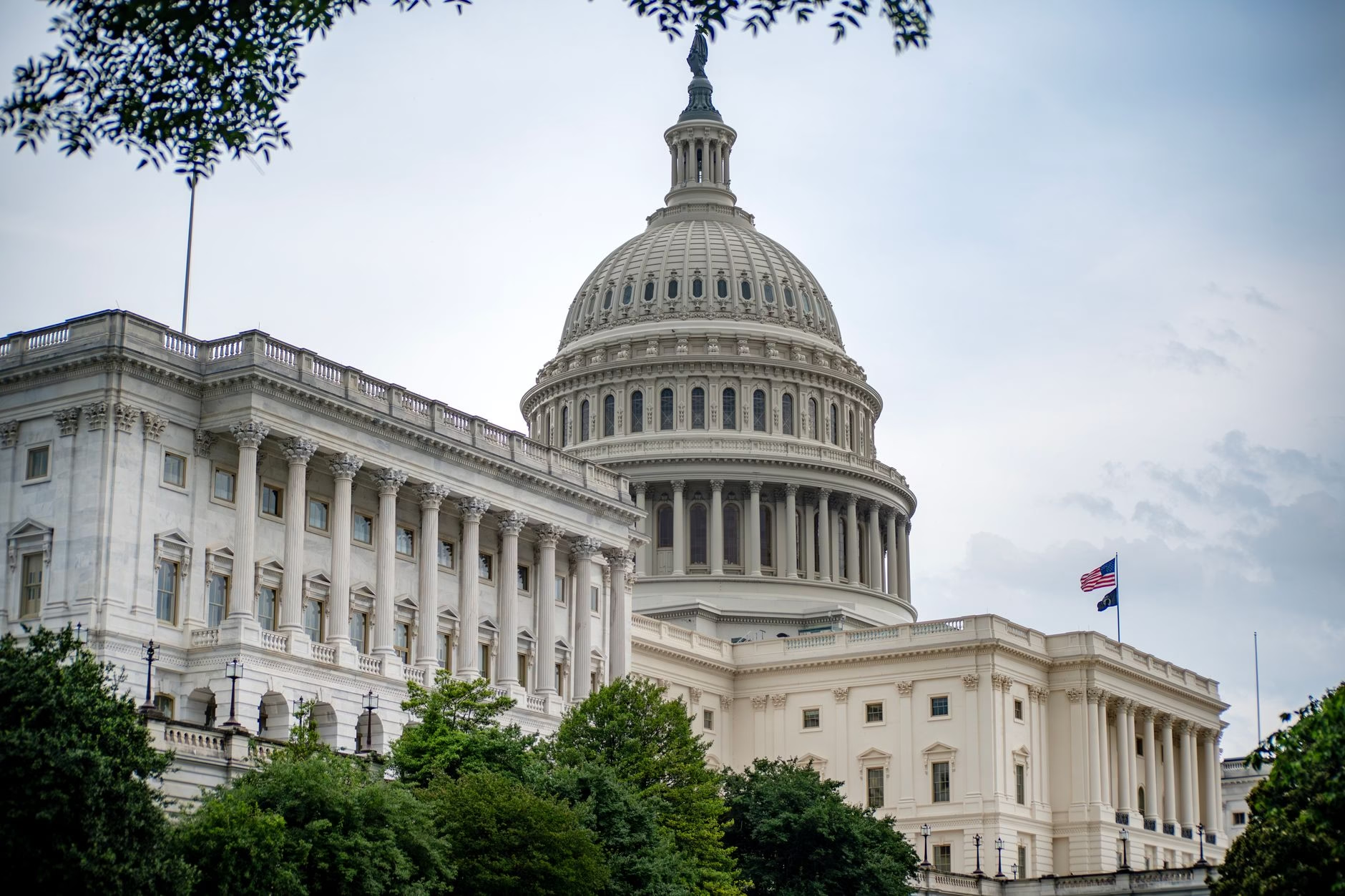
The recent fatal encounters have accelerated legislative pressure on Capitol Hill. Oversight committees in both the House and Senate are expected to convene hearings addressing federal law enforcement accountability, with members threatening to condition future ICE funding allocations on strict deployment milestones.
Industry analysts anticipate that DHS will prioritize emergency procurement shifts in the upcoming fiscal quarter to expand camera distribution to high-density field offices. Stakeholders should closely monitor upcoming Congressional appropriations debates, pending contract awards for secure cloud data management, and the potential release of updated DHS-wide use-of-force transparency guidelines.






















Leave a Reply