


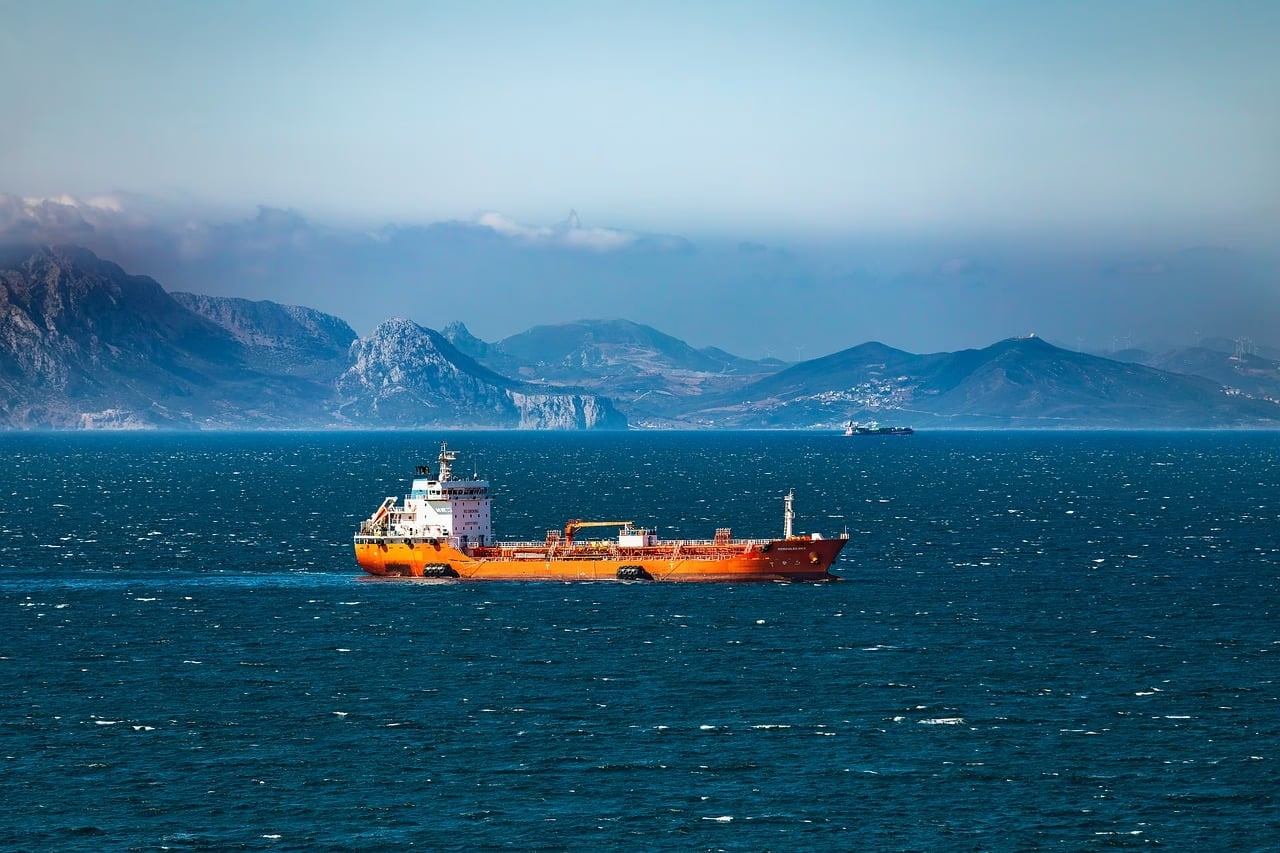
The Growing Threat to Maritime Transit
Global energy investors are bracing for potential disruption as discussions regarding the implementation of transit fees through the Strait of Hormuz gain momentum in regional political circles. The prospect of mandatory tolls for tankers navigating this critical chokepoint has sparked significant alarm, raising concerns that such a policy could set a destabilizing precedent for international maritime commerce.
The Strait of Hormuz, which facilitates the passage of approximately 20% of the world’s total oil consumption, serves as the primary artery for Gulf producers. Any move to monetize transit through these waters would fundamentally alter the economics of global energy trade and invite retaliatory measures from major importing nations.
Understanding the Strategic Importance
The Strait of Hormuz is a narrow waterway separating Iran and Oman, connecting the Persian Gulf with the Gulf of Oman and the Arabian Sea. Its status as a maritime chokepoint is underscored by its limited width and the heavy reliance of Asian economies, particularly China, Japan, and South Korea, on oil shipments passing through the corridor.
Historically, transit through international straits has been governed by the principle of ‘transit passage’ under the United Nations Convention on the Law of the Sea (UNCLOS). This legal framework generally prohibits coastal states from impeding or charging fees for the innocent passage of vessels. Any attempt to levy tolls would likely be viewed as a direct challenge to these established international norms.
The Contagion Effect: Fear of Replication
The primary fear among market analysts is that a successful implementation of tolls in the Persian Gulf could lead to a ‘contagion effect’ in other vital maritime corridors. Investors are particularly focused on the Strait of Malacca, the narrow stretch of water between the Malay Peninsula and the Indonesian island of Sumatra.
The Strait of Malacca handles roughly one-quarter of all traded goods and is the primary route for energy supplies reaching East Asia. Should the Strait of Hormuz set a precedent for charging transit fees, the potential for similar fiscal demands in the Malacca corridor could create a cascading crisis for global supply chains and shipping costs.
Expert Perspectives and Economic Data
Energy analysts at S&P Global Platts have noted that even the threat of increased transit costs adds a ‘geopolitical risk premium’ to crude oil futures. This volatility often translates into higher pump prices for consumers, regardless of whether a toll is actually enacted.
Data from the U.S. Energy Information Administration (EIA) indicates that daily oil flows through the Strait of Hormuz averaged 21 million barrels per day in 2023. Even a minor disruption or a significant increase in operational costs would reverberate through global inflation metrics, as energy remains a core input for manufacturing and transport sectors.
Implications for Global Trade
For the shipping industry, the imposition of fees would necessitate a complete restructuring of insurance premiums and voyage planning. Major carriers may be forced to seek alternative, longer routes, which would increase carbon emissions and delay global delivery timelines.
Looking ahead, industry observers are closely monitoring diplomatic efforts to reaffirm the status of international waterways. The core concern remains whether regional actors will prioritize short-term revenue generation over the stability of the global energy market. The coming months will be critical as international maritime bodies likely face pressure to clarify the legal enforceability of these proposed tolls and the potential for a collective security response to safeguard free-flow transit.





















Leave a Reply