


New Cooperation Framework for Global Energy Transit
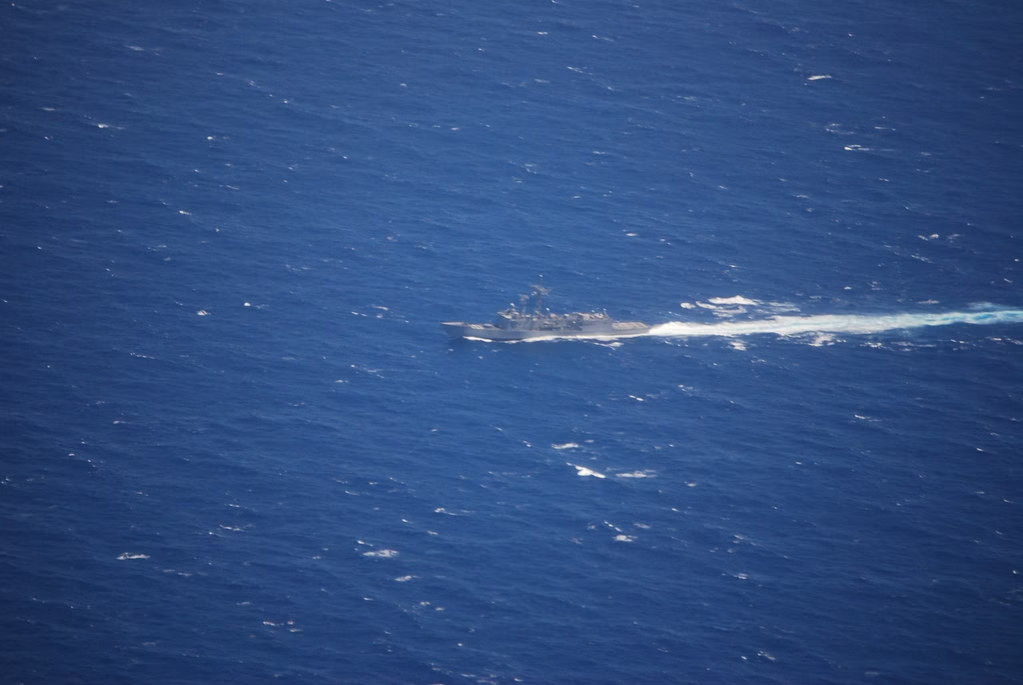
Senior U.S. officials revealed this week that Iran has entered into a memorandum of understanding (MOU) with Oman and several Gulf states to establish a new administrative framework for the Strait of Hormuz. The agreement, which marks a significant shift in regional maritime policy, guarantees 60 days of toll-free shipping for all vessels navigating the critical waterway. This diplomatic development aims to stabilize one of the world’s most vital oil transit chokepoints amid ongoing geopolitical volatility.
Understanding the Strategic Importance of the Strait
The Strait of Hormuz serves as the primary maritime route for approximately 20% of the world’s total oil consumption, making it a focal point for global economic security. Historically, the waterway has been the site of frequent tensions between Iran, the United States, and regional neighbors, characterized by military posturing and threats to close the passage. By formalizing administrative procedures through a trilateral and regional arrangement, the involved nations seek to reduce the risk of accidental conflict and ensure the uninterrupted flow of global energy supplies.
The Mechanics of the New MOU
The core of the agreement centers on a 60-day window during which transit fees and administrative levies are suspended. This period is designed to facilitate a trial phase for a new, collaborative monitoring system that involves both Iranian and Omani maritime authorities. By integrating regional oversight, the MOU aims to standardize safety protocols and communication channels between commercial tankers and local naval forces. The agreement suggests a move toward shared regional security responsibilities rather than unilateral control by any single power.
Expert Perspectives and Economic Implications
International maritime analysts observe that the agreement serves as a necessary de-escalation mechanism. According to data from the U.S. Energy Information Administration, any disruption in the Strait of Hormuz could cause immediate spikes in global fuel prices, impacting inflation rates worldwide. Industry experts suggest that while the 60-day toll-free provision is a temporary measure, it establishes a precedent for diplomatic dialogue that could extend to long-term navigation protocols. The involvement of Gulf states alongside Oman signals a broader regional consensus on the necessity of maintaining open trade routes regardless of broader political disagreements.
Future Outlook and Regional Stability
Market observers are closely monitoring how the implementation phase of the MOU will unfold over the next two months. The success of this initiative will likely depend on the transparency of the joint monitoring operations and the adherence of all parties to the agreed-upon safety corridors. If this framework succeeds, it could serve as a template for other disputed maritime regions, potentially reducing insurance premiums for commercial shipping companies operating in the Gulf. The international community will be watching to see whether this administrative cooperation persists beyond the initial 60-day period or if it serves as a stop-gap measure for immediate political stability.
















Leave a Reply