


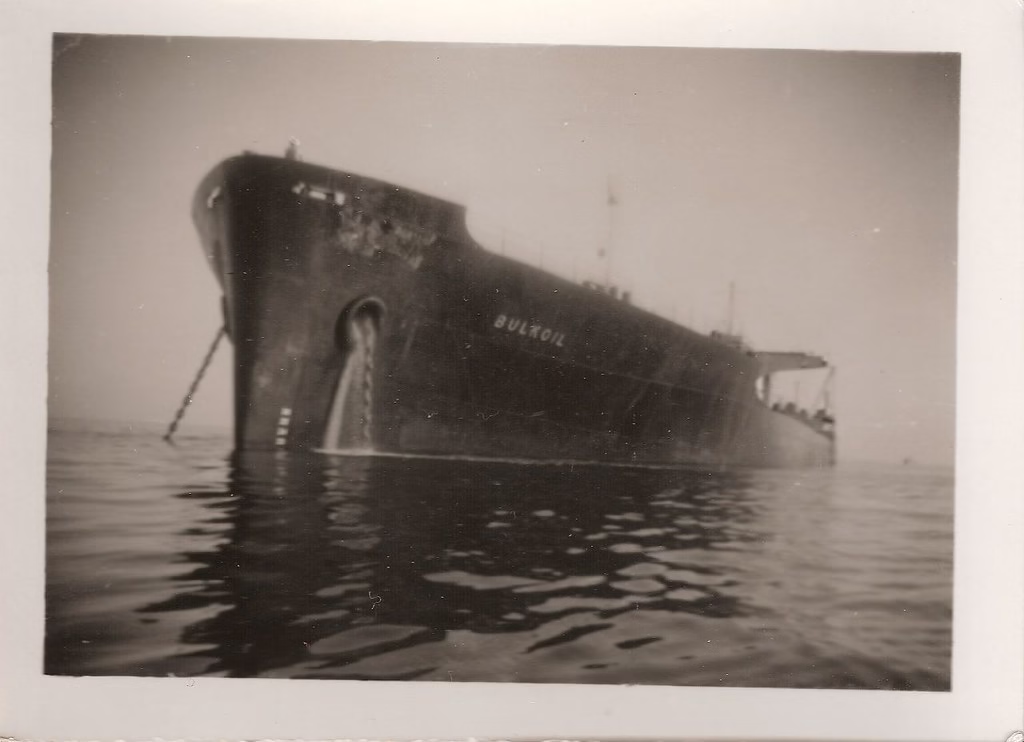
Despite a recent peace agreement aimed at stabilizing the Persian Gulf, energy analysts warn that global gasoline prices are unlikely to return to pre-war levels in the near term. The complexities of restoring regional oil infrastructure, coupled with persistent geopolitical volatility, suggest that motorists will continue to face elevated costs at the pump throughout the coming months.
The Fragility of Energy Supply Chains
The Persian Gulf serves as the world’s most critical maritime energy artery, responsible for transporting a significant portion of global crude oil exports. Even with a formal cessation of hostilities, the physical and logistical hurdles to restarting full-scale production remain immense.
Refineries and pipelines damaged during the conflict require extensive inspection and repair before they can operate at pre-war capacity. Industry experts note that supply chains often suffer from a ‘bullwhip effect,’ where initial disruptions cause long-term instability in inventory levels and distribution networks.
Market Volatility and Risk Premiums
Oil markets have historically functioned on the principle of risk premiums. Traders bake the possibility of renewed conflict into the price of a barrel, keeping costs artificially high even when the actual flow of oil is uninterrupted.
Data from the International Energy Agency indicates that market confidence is slow to recover following regional instability. Until producers can demonstrate consistent, long-term output, the risk premium attached to Brent crude is expected to persist.
The Economic Ripple Effect
For the average consumer, the stabilization of oil prices at a ‘new normal’ represents a significant shift in household budgeting. High fuel costs act as a hidden tax, diverting disposable income away from retail and services.
Economists at the Federal Reserve have highlighted that energy inflation often permeates the broader economy. When transportation costs remain high, the price of shipping goods—from groceries to consumer electronics—inevitably rises, sustaining inflationary pressure long after the initial energy shock has faded.
Navigating the New Energy Landscape
The transition away from war-time pricing is further complicated by the global push for energy diversification. Many nations are now accelerating their shift toward renewable sources, creating a fractured market environment where traditional fossil fuel investments are met with increasing caution.
Investors are monitoring the Persian Gulf closely for signs of long-term diplomatic durability. If the peace agreement holds, the next phase will involve a slow, incremental reduction in market volatility, though a return to the low-price environment of the pre-war era remains statistically improbable.
What to Watch Next
Observers should monitor upcoming OPEC+ production quotas and quarterly reports from major regional oil producers. Additionally, any fluctuations in maritime insurance premiums for tankers passing through the Strait of Hormuz will serve as a bellwether for whether the market perceives the region as truly stabilized or merely in a temporary lull.























Leave a Reply