


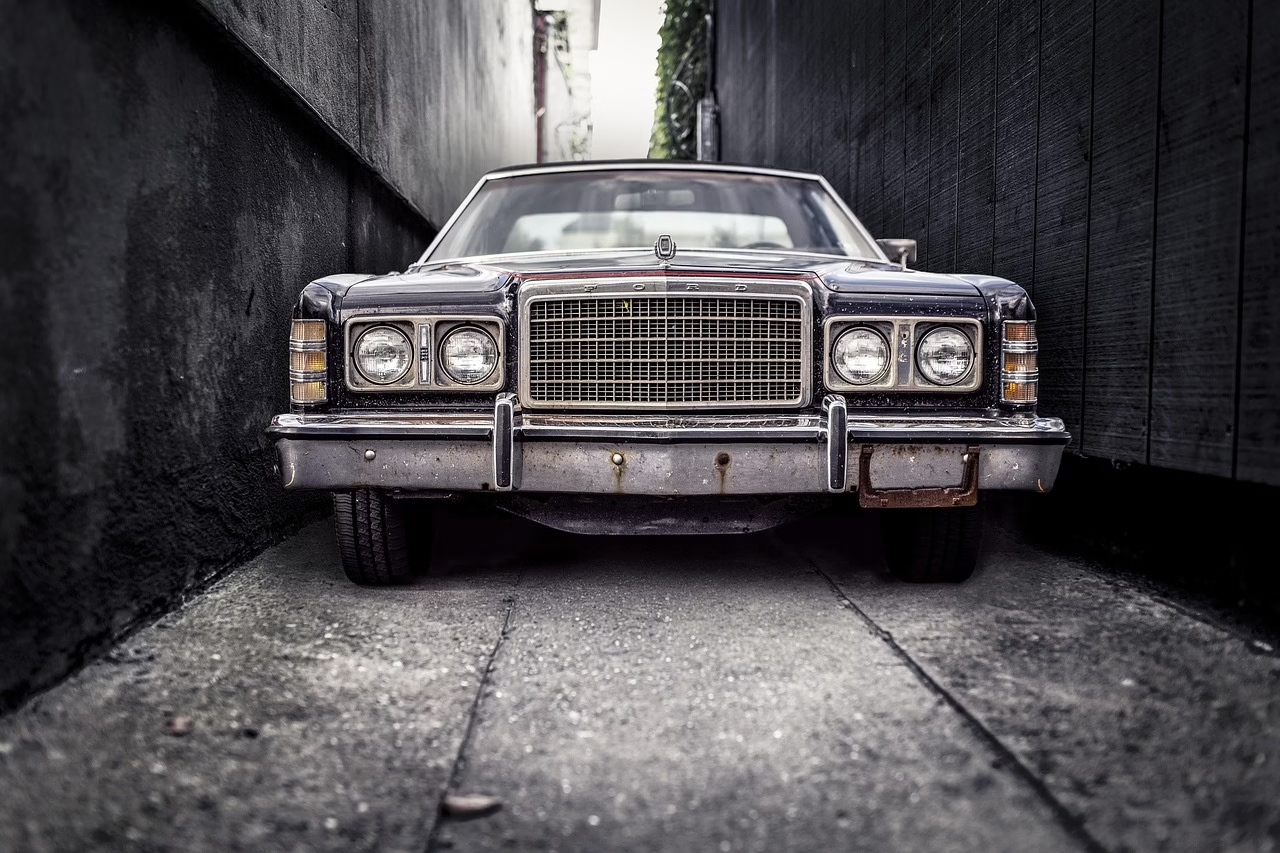
In the summer of 1976, the United States marked its 200th anniversary with a nationwide display of pageantry, fireworks, and commercial fervor. While the Bicentennial was officially designed to bolster national pride following the turmoil of the Vietnam War and the Watergate scandal, the celebration revealed a deeply ambivalent country struggling to reconcile its revolutionary ideals with a fractured political reality.
A Nation in Search of Reassurance
The Bicentennial arrived at a fragile moment in American history. The nation was still reeling from the resignation of President Richard Nixon in 1974 and the chaotic withdrawal from Saigon in 1975. Federal planners launched the American Revolution Bicentennial Administration (ARBA) with the specific goal of fostering unity through parades, historical reenactments, and the cross-country journey of the Freedom Train.
Despite the official push for patriotic cohesion, the public mood remained skeptical. Many Americans, weary of government overreach and economic instability, viewed the elaborate festivities with cynicism. Historians note that the 1976 celebrations were as much a commercial venture as a civic one, characterized by an unprecedented explosion of branded memorabilia ranging from commemorative plates to Farrah Fawcett posters.
The Dual Nature of the Celebration
The Freedom Train, a locomotive carrying historical artifacts across all 48 contiguous states, served as a primary centerpiece of the celebration. It provided a tangible connection to the nation’s founding documents, drawing millions of visitors who sought a sense of continuity amidst rapid social change. Simultaneously, the event underscored the rising influence of pop culture in the American consciousness.
While traditionalists gathered at historical sites, the broader public embraced the kitschy, high-energy aesthetic of the era. The meteoric rise of Farrah Fawcett, whose iconic red swimsuit poster became a symbol of the mid-70s, highlighted how the Bicentennial was experienced through the lens of celebrity and consumerism. This blend of historical reverence and contemporary pop culture created a unique, if somewhat disjointed, national portrait.
Expert Perspectives on the 1976 Climate
Sociologists analyzing the period point to the Bicentennial as a turning point for American public relations. According to data from the era, while official government-sponsored events often struggled to attract large crowds, grassroots celebrations and local fireworks displays saw record attendance. This disparity suggested that Americans were more interested in community-level engagement than centralized national narratives.




















Leave a Reply