


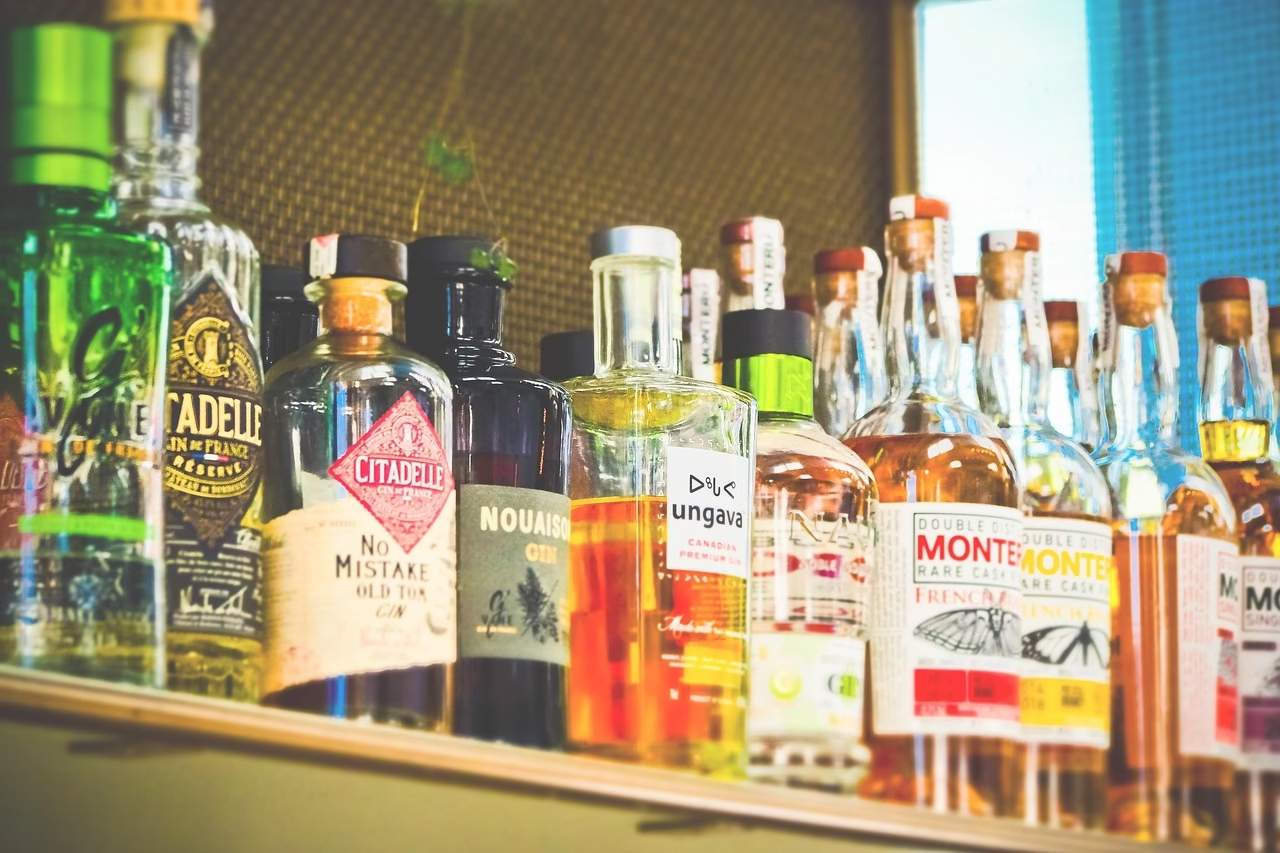
A quiet revolution is unfolding across the tribal belts of central India as Mahua, a traditional flower long associated with indigenous brewing, transitions into the formal spirits industry. Over the past twenty-four months, startups and established distillers have begun bottling the floral-scented blossoms, transforming what was once a localized, informal beverage into a premium, commercially viable liquor category dubbed ‘blue gold.’
Historical Context and Cultural Significance
For centuries, the Mahua tree (Madhuca longifolia) has served as a cultural and nutritional cornerstone for Adivasi communities in states like Madhya Pradesh, Chhattisgarh, and Odisha. Traditionally, the flowers are collected from the forest floor during the spring months and fermented to produce a raw, potent spirit.
Despite its deep roots, the drink remained largely outside the legal economy due to archaic excise laws and limited branding. Government initiatives in recent years have sought to formalize the industry, aiming to provide tribal collectors with a sustainable income stream while standardizing safety and quality protocols.
The Shift to Premium Distillation
Commercial producers are now applying modern distillation techniques to refine the raw spirit, removing impurities while preserving the flower’s distinct, nutty, and floral profile. Companies such as Desi Daru and various boutique craft distilleries are launching Mahua-based gins and vodkas, targeting both urban Indian consumers and international export markets.
This shift represents a significant departure from the ‘country liquor’ stigma. By positioning Mahua as a premium, indigenous craft spirit, producers are appealing to a growing demographic of consumers who prioritize authenticity and locally sourced ingredients in their beverage choices.
Economic Impact and Expert Perspectives
The economic potential for rural communities is substantial. According to data from the Tribal Cooperative Marketing Development Federation of India (TRIFED), millions of forest-dwelling families rely on Mahua collection for supplemental income. Formalizing the supply chain could increase earnings for these collectors by up to 30 percent.
Industry analysts note that the rise of Mahua mirrors the global trend of ‘terroir-driven’ spirits, similar to the growth of Mezcal in Mexico or Pisco in Peru. However, experts warn that scaling production requires careful management of natural resources. Sustainable harvesting practices are essential to ensure that the increased demand does not lead to the over-exploitation of forest ecosystems.
Industry Implications and Future Outlook
For the broader spirits industry, the emergence of Mahua creates a new category that competes directly with imported craft spirits. As regulatory hurdles are gradually lowered across various Indian states, the market is expected to see a surge in innovation and competition.
Observers should watch for how multinational beverage giants respond to this trend, as potential partnerships or acquisitions could accelerate the global distribution of the spirit. Furthermore, the development of geographical indication (GI) tags for specific Mahua varieties will be a critical factor in protecting the heritage of the product as it moves toward mass-market adoption.



















Leave a Reply