



The Mechanics of Modern Autocracy
For over two decades, Russian President Vladimir Putin has meticulously constructed a carefully curated public persona, transforming himself from an obscure intelligence officer into a global icon of strength and national revival. Through a sophisticated blend of state-controlled media, strategic photo opportunities, and deliberate stage management, the Kremlin has successfully projected an image of a leader who embodies the aspirations of the Russian state, both domestically and internationally.
The Evolution of the Strongman Narrative
Putin’s ascent to power in 1999 coincided with a period of profound national instability following the collapse of the Soviet Union. His early branding prioritized stability and order, contrasting sharply with the chaotic governance of his predecessor, Boris Yeltsin. By positioning himself as the antithesis of the 1990s oligarchic era, Putin solidified his support among a population seeking predictability and renewed national pride.
The Cult of Action and Masculinity
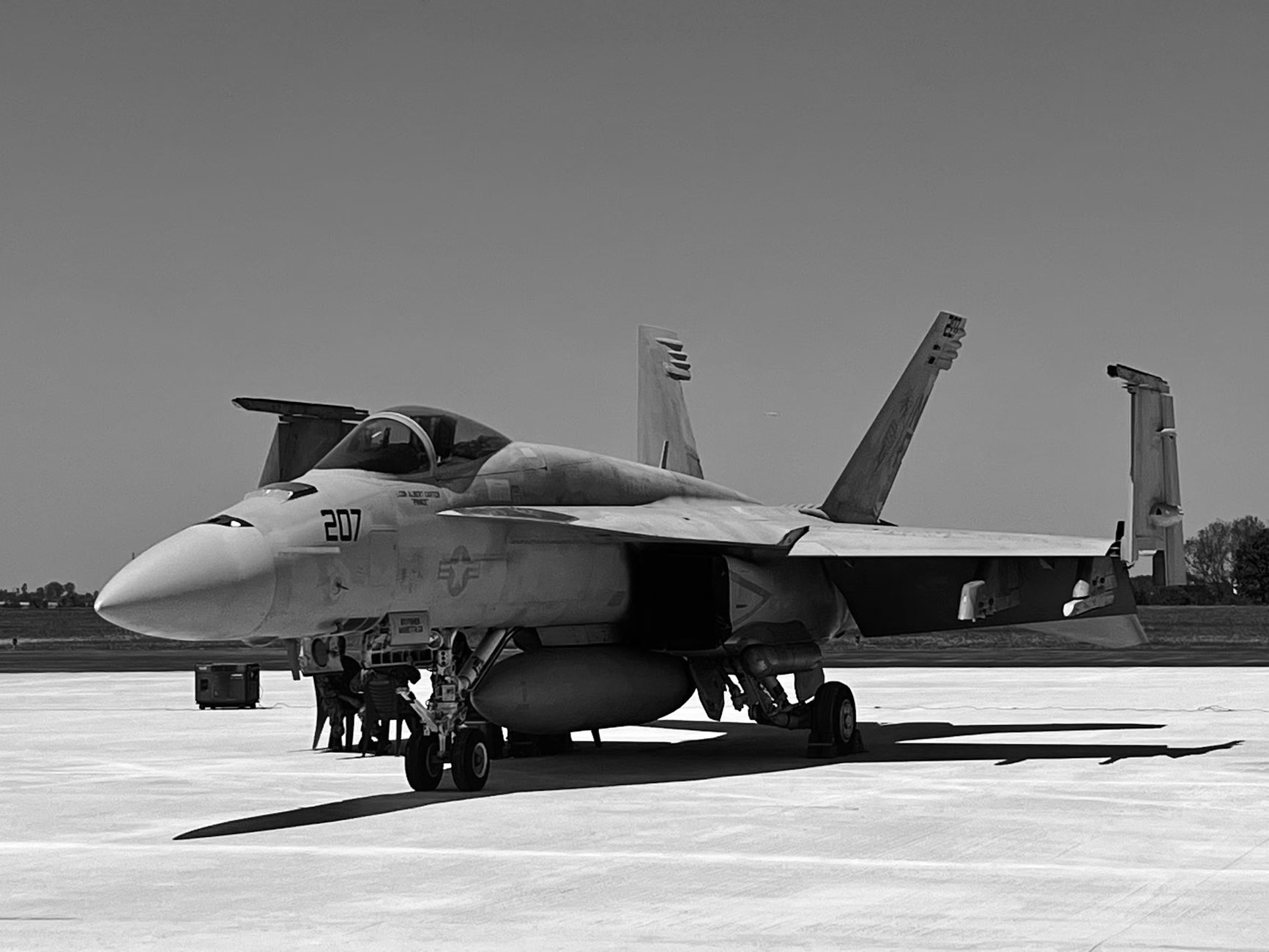
A central pillar of Putin’s image strategy is the performative display of physical prowess and traditional masculinity. From high-profile excursions featuring judo matches and hunting trips to piloting fighter jets, these spectacles serve a specific political function. These images are designed to resonate with a demographic that values traditional leadership archetypes, effectively framing the President as a protector and a man of action.
The Role of State Media and Digital Control
The Kremlin’s ability to dominate the domestic narrative relies on a monolithic media apparatus that stifles dissent while amplifying official messaging. Research from the Levada Center, an independent polling organization, has consistently shown that state-owned television remains the primary source of information for the majority of the Russian population. This centralized control ensures that the President’s image remains untarnished by critical investigation, as independent outlets face increasing restrictions and legal challenges.
Expert Perspectives on Political Branding
Political analysts suggest that Putin’s mastery of image control is not merely a vanity project but a vital tool of statecraft. Dr. Fiona Hill, a noted expert on Russian affairs, has frequently observed that Putin’s public displays are calculated communications meant to signal power to both domestic rivals and international adversaries. These signals are intended to project an aura of inevitability and strength, discouraging opposition while reinforcing the legitimacy of his tenure.
Implications for the Global Political Landscape
The success of the Kremlin’s image-making machine has significant implications for how modern political actors communicate with their constituents. As digital platforms become the primary arenas for political discourse, the ability to curate a narrative—and suppress counter-narratives—has become a key component of effective governance in authoritarian regimes. This trend suggests a growing divide between democratic systems, which require transparency, and systems that utilize strategic obfuscation to maintain public support.
Looking Toward the Future
As the geopolitical environment continues to shift, the reliance on constructed imagery is likely to intensify. Observers should monitor how the Kremlin adapts its branding strategy as the demographic makeup of Russia changes and the digital landscape evolves. The durability of this curated persona will ultimately depend on the regime’s ability to reconcile its manufactured image with the tangible realities of economic performance and domestic social stability in the coming years.













Leave a Reply