



A Strategic Pivot in European Security
The Netherlands’ Deputy Prime Minister Sophie Hermans recently affirmed that the United States is justified in demanding that NATO allies increase their national defense spending. Speaking on the shift in European security policy, Hermans acknowledged that the geopolitical landscape has fundamentally changed following Russia’s full-scale invasion of Ukraine in February 2022. This stance marks a significant departure from previous Dutch political norms, reflecting a broader movement across Europe to bolster military capabilities in response to renewed regional threats.
The Context of European Defense Spending
For decades, many European nations operated under the post-Cold War assumption that large-scale conflict was unlikely, leading to stagnant or declining defense budgets. The NATO target of spending 2% of GDP on defense was frequently missed by numerous member states, a point of recurring friction between Washington and its European counterparts. However, the conflict in Ukraine has acted as a catalyst for a radical reassessment of these priorities.
Five years ago, domestic public support for increased military expenditure in the Netherlands was minimal, with voters prioritizing social spending and economic stability over defense. Today, the perception of threat has shifted, and the political appetite for sustained military investment has grown significantly across the political spectrum.
The Multi-Front Challenge
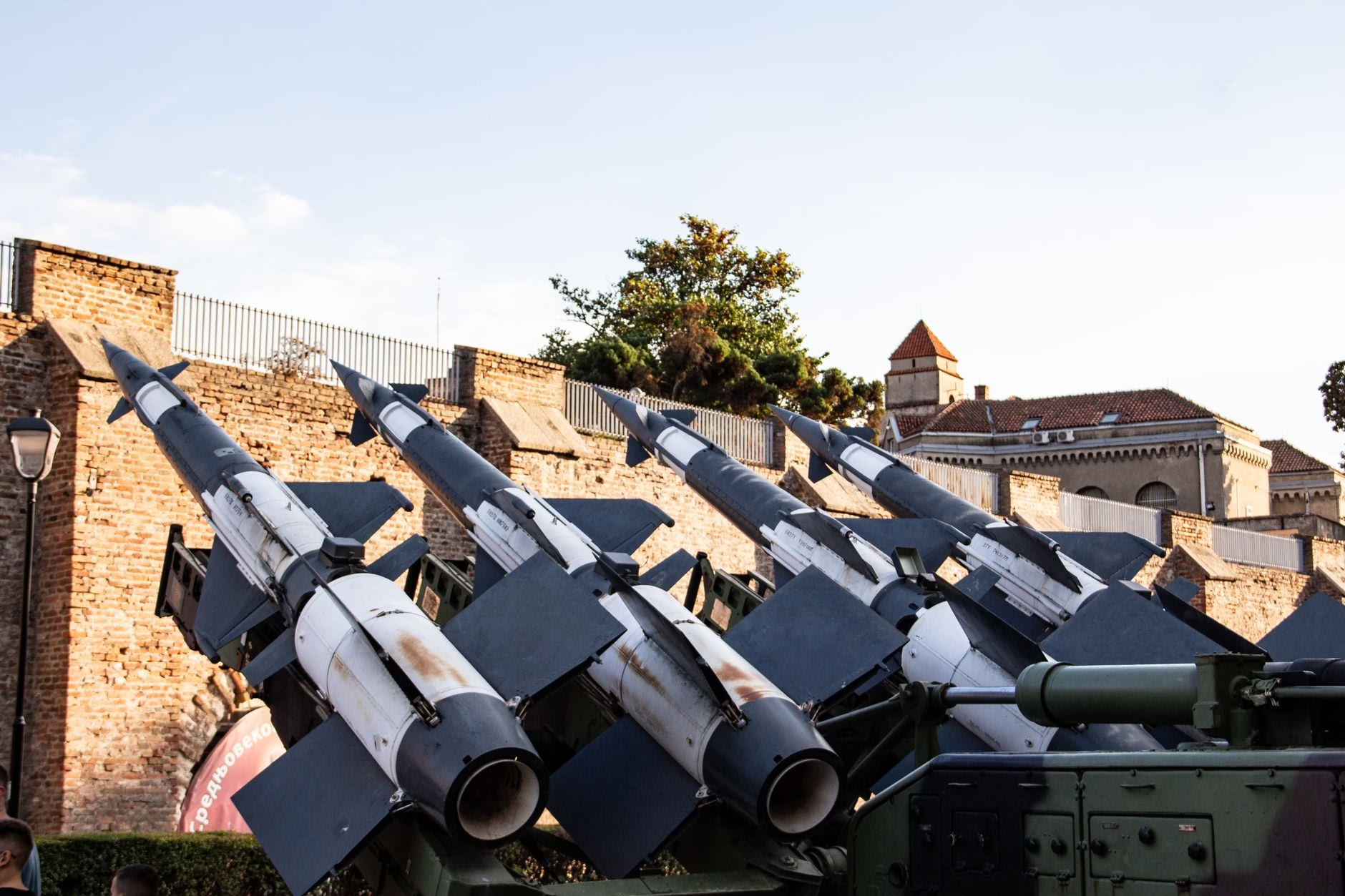
The push for higher defense spending is not merely about meeting arbitrary percentage targets; it is about addressing critical gaps in military readiness. European defense industries are currently struggling to scale up production to meet the sudden demand for artillery shells, air defense systems, and modern armor. Experts argue that the current funding increases are necessary to replace equipment donated to Ukraine and to modernize aging hardware.
According to recent data from the Stockholm International Peace Research Institute (SIPRI), European military spending reached record levels in 2023, reflecting the highest annual growth rate in decades. This surge is driven by a collective realization that the security architecture established in the 1990s is no longer sufficient to deter aggression from major powers.
Expert Perspectives and Economic Realities
Military analysts suggest that the transition to a higher spending model involves complex domestic trade-offs. While there is a broader political consensus for strengthening national security, governments must balance these investments against cost-of-living concerns and energy transition costs. The challenge lies in maintaining sustained public support for defense budgets as the immediacy of the invasion in Ukraine competes with other domestic economic pressures.
Future Implications for NATO
The shift in the Dutch position highlights a maturing relationship between the U.S. and its European allies. As the dialogue moves away from transactional disputes over budget percentages toward a shared commitment to long-term deterrence, the alliance appears to be entering a period of renewed cohesion. Observers will be watching to see how individual nations translate these policy pledges into concrete industrial contracts and troop readiness levels over the next 24 months. The focus will remain on whether these increased budgets can successfully foster a more integrated and capable European defense industrial base that reduces reliance on non-European supply chains.





















Leave a Reply