


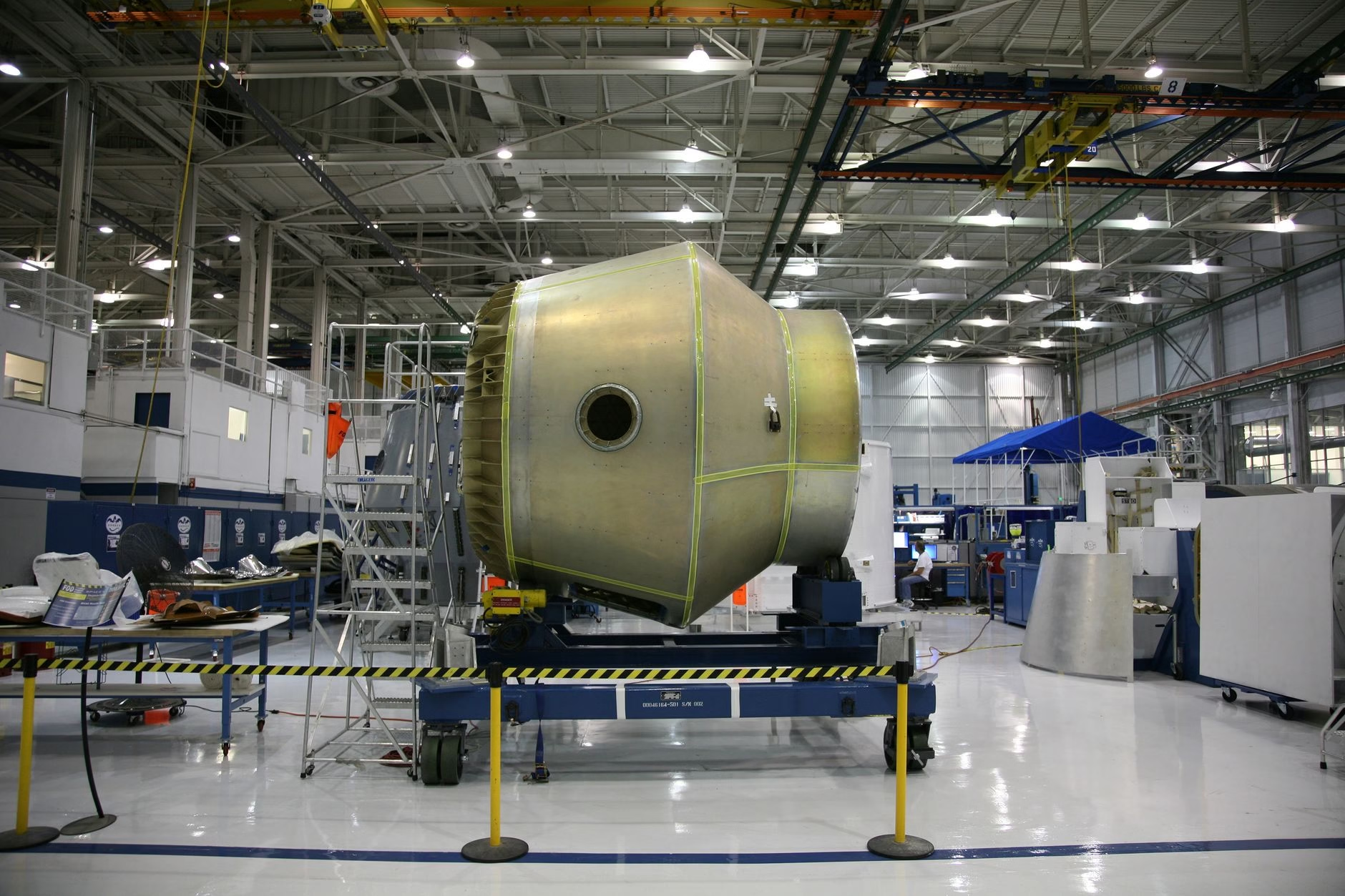
On Wednesday, Dutch semiconductor equipment giant ASML raised its full-year sales guidance for the second time this year at its headquarters in Veldhoven, Netherlands, driven by surging global demand for artificial intelligence (AI) chips. Despite the optimistic outlook, the companyu2019s shares fell during trading as investors booked profits and weighed broader macroeconomic pressures alongside persistent geopolitical uncertainties impacting the global semiconductor supply chain.
Understanding ASMLu2019s Pivotal Market Role
ASML occupies a near-monopoly position in the production of Extreme Ultraviolet (EUV) lithography machines. These multi-million-dollar systems use high-energy light to print microscopic circuits onto silicon wafers, making them indispensable for manufacturing the world’s most advanced microchips.
The current generative AI boom, led by technology giants investing heavily in massive data centers, relies directly on advanced processors manufactured by ASMLu2019s primary customers, which include TSMC, Intel, and Samsung.
This deep systemic dependency positions the Dutch firm as a key bellwether for the entire technology and hardware sector. Consequently, its financial updates and guidance adjustments often trigger widespread market movements across the global tech landscape.
Record AI Demand Clashes with Market Expectations
The decision to hike sales guidance reflects an unprecedented backlog of orders for ASML’s high-NA EUV systems. Tech companies worldwide are racing to secure the hardware necessary to train and deploy next-generation AI models.
According to ASMLu2019s latest financial report, net bookings for its lithography systems rose significantly, comfortably exceeding consensus estimates from Wall Street analysts. This surge demonstrates that the capital expenditure cycle for artificial intelligence infrastructure remains robust and well-funded.
However, ASML shares slipped by over three percent shortly after the announcement. Financial analysts attribute this paradox to a classic market reaction of “buying the rumor and selling the news,” alongside growing concerns over a lagging recovery in non-AI sectors like consumer smartphones and personal computers.
Expert Perspectives and Divergent Sector Recoveries
“While the AI segment is firing on all cylinders, the broader semiconductor market is exhibiting a distinct two-tier recovery,” noted senior technology analyst Sandeep Rao. “Consumer electronics and automotive chips are not rebounding at the same pace, which tempers overall market enthusiasm.”
ASML Chief Executive Officer Christophe Fouquet confirmed this trend in a public statement, noting that while AI-related demand remains exceptionally strong, other traditional market segments are taking longer to recover from post-pandemic inventory corrections.
Furthermore, investors remain highly sensitive to stock valuations. ASML shares have experienced a massive run-up over the past twelve months, leaving very little room for error in its earnings reports, even when those reports technically surpass previous guidance.
Geopolitical Pressures and Export Restrictions
Beyond immediate market dynamics, geopolitical tensions continue to cast a shadow over ASML’s long-term growth prospects. The United States and Dutch governments have progressively tightened export controls on advanced semiconductor manufacturing equipment to China.
China has historically represented a significant portion of ASMLu2019s revenue, particularly for its older Deep Ultraviolet (DUV) systems. Analysts warn that further regulatory restrictions could limit ASML’s ability to service existing machines or sell new equipment to Chinese clients, creating a structural headwind.
Company executives have acknowledged these regulatory challenges but maintain that global demand from other regions, particularly the United States and Europe under respective Chips Acts, will help absorb the impact of any lost Chinese revenue over the medium term.
Future Outlook and Industry Implications
Looking ahead, the semiconductor industry will closely monitor the execution of ASML’s manufacturing ramp-up. The company is currently tasked with delivering its next-generation High-NA EUV machines to key clients over the coming quarters, a crucial milestone for advancing chip density.
The success of these installations will determine the pace at which chipmakers can transition to 2-nanometer and smaller node technologies, which are critical for the next wave of ultra-powerful AI processors.
Additionally, market watchers will be observing whether the recovery in consumer electronics begins to catch up with the AI boom. A broader macroeconomic recovery could provide the necessary catalyst to align ASML’s stock performance with its strong financial forecasts in the quarters ahead.






















Leave a Reply