


Introduction
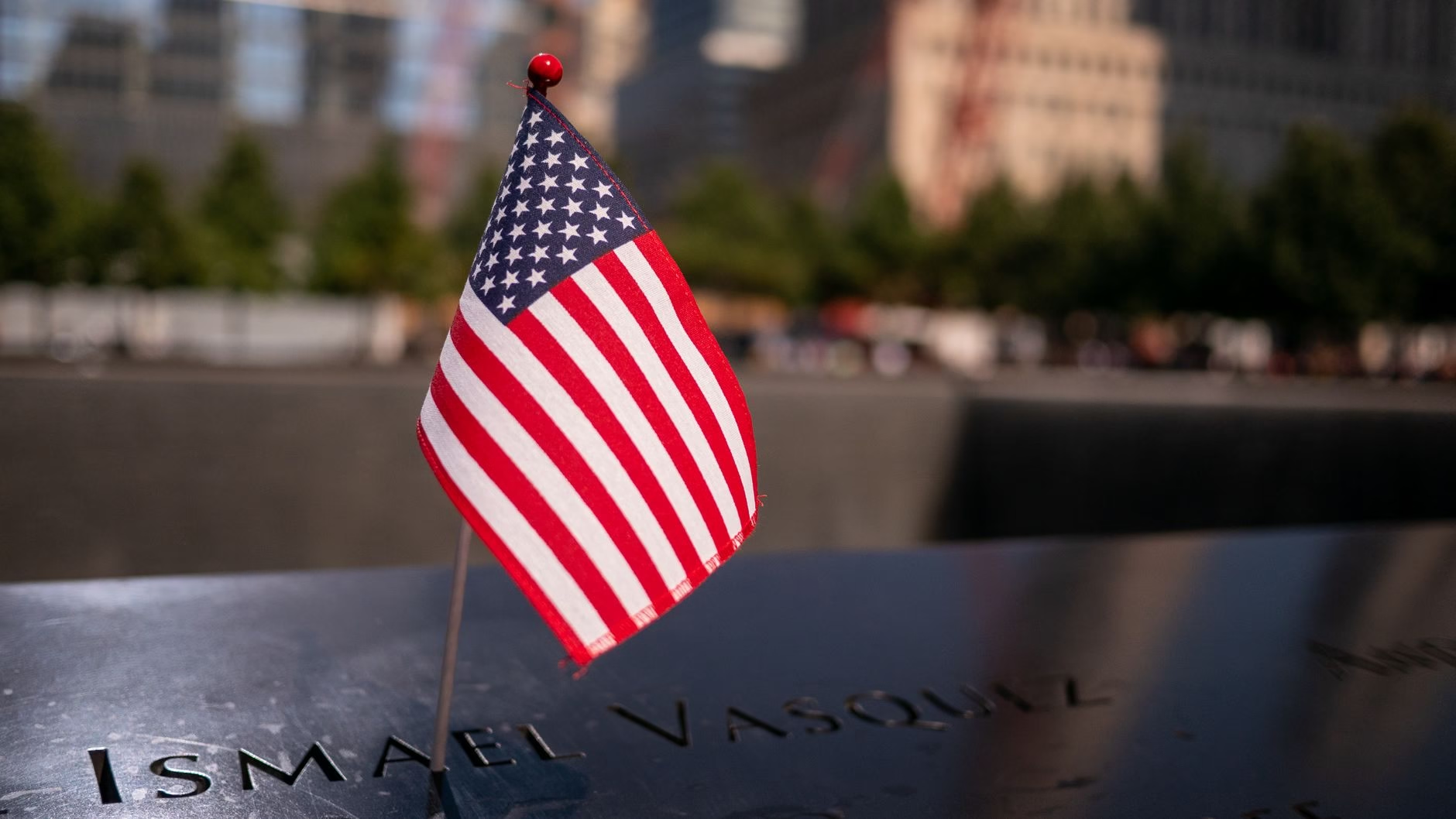
In the immediate aftermath of the tragic events of September 11, 2001, international relations analysts and political commentators widely anticipated the realization of the clash of civilizations theory. This concept, which gained significant popularity during the 1990s, suggested that cultural and religious identities would become the primary source of conflict in the post-Cold War era. Observers feared a deepening global divide between Western nations and the Islamic world, predicting long-term ideological warfare.
However, the reality of global politics over the subsequent decades proved to be far more complex and multifaceted than these initial rigid predictions suggested. Instead of a straightforward civilizational war, the international landscape transformed through a series of shifting alliances, evolving security priorities, and complex diplomatic engagements that defied simple categorization.
Shifting Security Paradigms
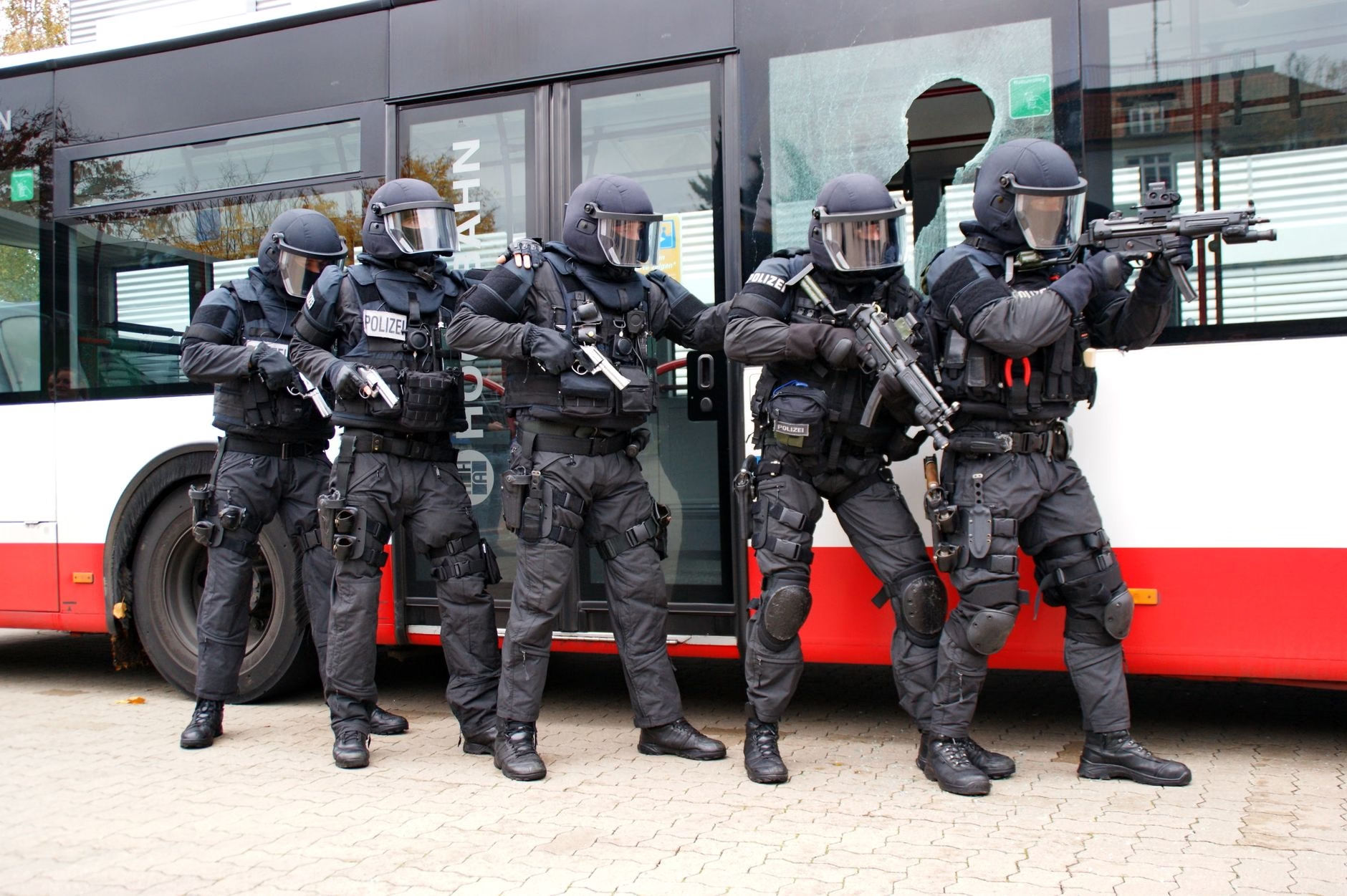
The most immediate impact of the 2001 attacks was a fundamental restructuring of national security and intelligence frameworks across the globe. Governments dramatically increased spending on counterterrorism measures, border security, and surveillance technologies. Traditional notions of national sovereignty were challenged as nations cooperated across borders to track terrorist financing and dismantle extremist networks.
This security-first approach often superseded traditional diplomatic norms. Military interventions in regions perceived as safe havens for terrorism reshaped the political geography of the Middle East and Central Asia. Yet, rather than uniting the international community under a single banner against a common threat, these interventions frequently highlighted deep strategic disagreements among major global powers.
Diplomatic Realignments and Alliances
Global diplomacy in the wake of the attacks did not fall neatly into a binary division of cultures. Instead, nations pursued pragmatic interests, leading to surprising diplomatic realignments. Countries that previously maintained distant or adversarial relationships found common cause in counterterrorism initiatives, sharing intelligence and coordinating law enforcement efforts.
At the same time, the protracted conflicts that followed strained traditional alliances. Disagreements over the legality and execution of military campaigns created friction between longstanding partners. Over time, the focus of global geopolitics began to expand beyond counterterrorism, incorporating emerging economic powers and regional disputes that complicated international relations even further.
Economic and Social Ramifications
Beyond military and diplomatic spheres, the aftermath of September 11 deeply influenced global travel, trade, and multicultural integration. Enhanced security protocols at airports and shipping ports altered the flow of international commerce and human mobility. Societies around the world grappled with the balance between maintaining open, pluralistic communities and implementing stringent security measures to protect public safety.
Public discourse surrounding immigration, national identity, and civil liberties shifted profoundly. Governments introduced new legal frameworks that granted expanded powers to intelligence agencies, sparking ongoing global debates regarding the preservation of privacy and fundamental human rights in an era of persistent security threats.
Looking Forward
Decades after the watershed events of 2001, the anticipated civilizational clash has not materialized in the simplistic terms once predicted by 1990s theorists. Instead, global relations are characterized by a decentralized network of shifting partnerships, transnational challenges, and competing geopolitical ambitions.
The legacy of September 11 serves as a reminder that international affairs are rarely dictated by a single overarching paradigm. As contemporary leaders navigate new technological, environmental, and economic crises, the diplomatic lessons learned from the post-2001 era continue to influence how nations assess risk, build coalitions, and manage global stability.


















Leave a Reply