


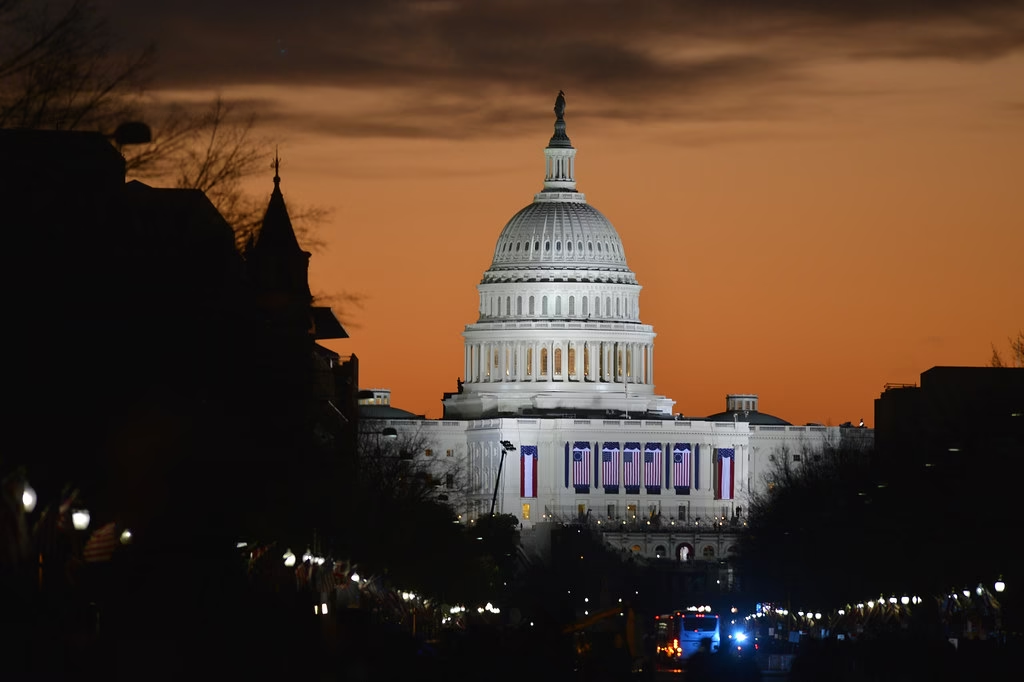
Senator James Lankford (R-Okla.) stated on Sunday that any potential agreement between the Trump administration and Iran regarding regional stability should be ratified by Congress to ensure long-term durability. Speaking on NBC News’ “Meet the Press,” the Senator emphasized that formal legislative approval would provide a more stable foundation for foreign policy than executive action alone.
The Legislative Context of Foreign Agreements
The debate over how the United States handles international treaties and agreements has long been a point of contention between the legislative and executive branches. Historically, the U.S. Constitution requires a two-thirds majority in the Senate to ratify formal treaties, yet recent administrations have increasingly relied on executive agreements to bypass this threshold.
Senator Lankford’s comments reflect a growing desire within Congress to reassert its constitutional role in foreign affairs. By advocating for a congressional vote, the Senator is suggesting that a bipartisan consensus would prevent the “yo-yo effect” often seen when new administrations unilaterally withdraw from the commitments of their predecessors.
Strategic Objectives in the Middle East
According to Senator Lankford, the primary motivation behind the administration’s outreach is to curb Iran’s persistent aggression toward American citizens, regional assets, and international allies. The Senator noted that the current geopolitical climate necessitates a strategy that addresses both immediate security threats and the underlying tensions that fuel regional instability.
Data from the U.S. Department of Defense has highlighted a consistent pattern of maritime harassment and proxy-led strikes in the Middle East over the past several years. Policy analysts suggest that a formal agreement could potentially serve as a framework to de-escalate these tensions, provided that both sides commit to verifiable security guarantees.
Expert Perspectives on Diplomatic Sustainability
Foreign policy experts generally agree that congressional involvement brings a degree of legitimacy that executive orders lack. Dr. Elena Rossi, a senior fellow at a Washington-based international security institute, noted that “agreements backed by the legislature are inherently more difficult to dismantle, which signals a higher level of commitment to international partners and adversaries alike.”
However, critics of this approach point to the potential for political gridlock. Given the deep polarization within the current Congress, achieving the necessary consensus for a formal treaty remains a significant hurdle. Any deal would likely face intense scrutiny regarding its enforcement mechanisms and the scope of its sanctions relief.
Future Implications for U.S. Foreign Policy
The call for congressional ratification signals a pivotal shift in how the U.S. may approach future diplomatic negotiations. If the administration moves toward a formal treaty process, it will likely necessitate a transparent dialogue between the White House and Capitol Hill regarding specific terms, such as nuclear non-proliferation and regional military posture.
Observers should watch for upcoming committee hearings that address the administration’s specific requirements for a deal. The extent to which the White House is willing to share sensitive negotiation details with lawmakers will be a key indicator of whether a formal ratification path is truly viable in the coming months.


























Leave a Reply