


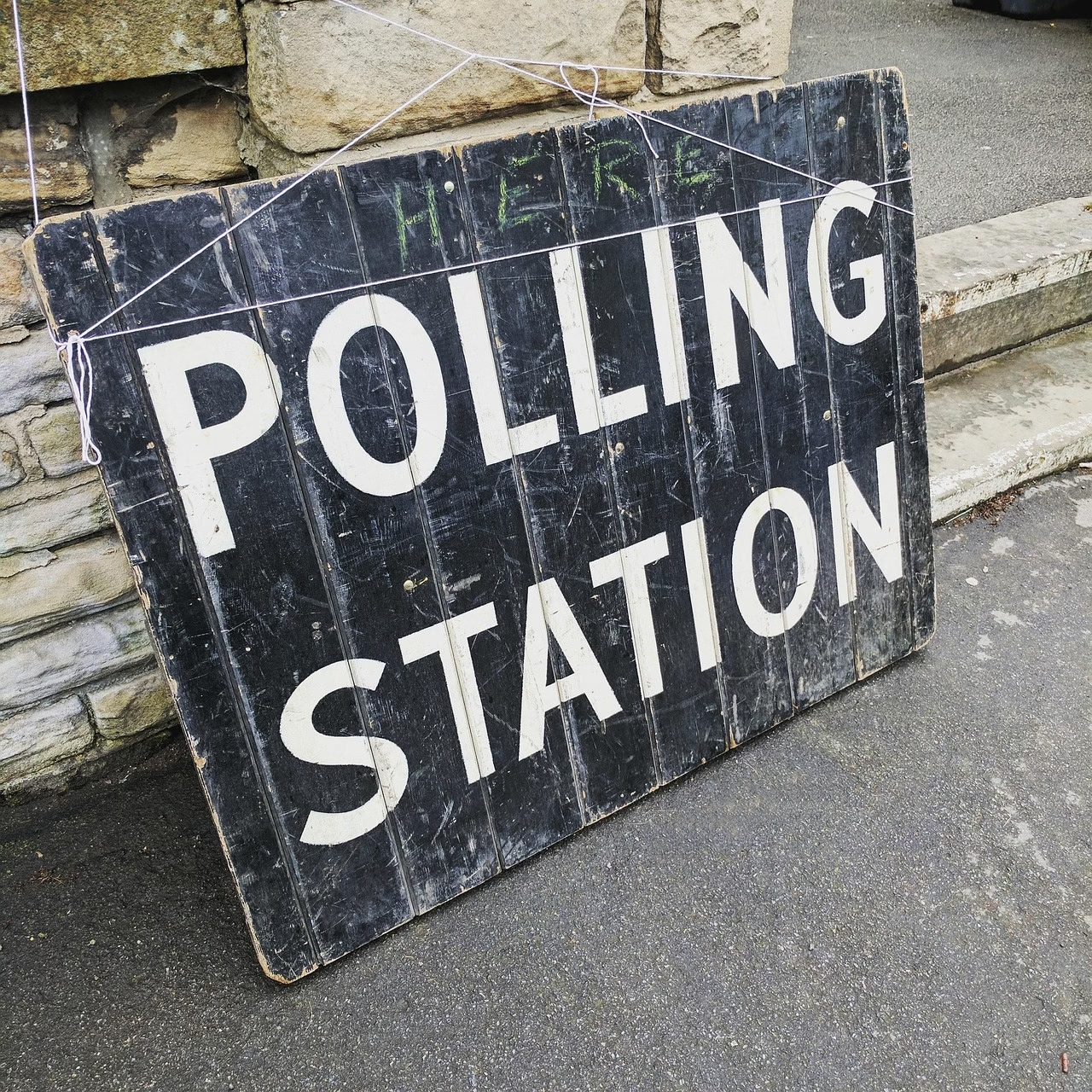
Republican party leaders in Georgia are confronting internal fractures and unconventional alliances as voters head to the polls for crucial primary runoffs this week. The contests, which will determine the GOP nominees for key U.S. Senate and gubernatorial seats, have exposed a widening ideological rift between establishment figures and insurgent candidates backed by populist factions.
The Context of Internal Discord
Georgia has transitioned into a premier battleground state, drawing intense national scrutiny following shifts in regional demographics and recent electoral outcomes. The current runoff cycle serves as a litmus test for the party’s direction, pitting traditional conservative orthodoxy against a growing movement that emphasizes voter integrity and anti-establishment rhetoric.
Historically, Republican primaries in the state have been defined by coalitional consensus. This cycle, however, has seen that unity disintegrate under the weight of competing endorsements and conflicting visions for the party’s future role in national politics.
Fragmented Alliances and Strategic Shifts
The campaign trail has witnessed the emergence of strange bedfellows, as candidates cross traditional factional lines to secure victory. Some candidates have sought support from both grassroots activists and party stalwarts, creating an unpredictable environment for voters attempting to decipher which platforms represent the party’s core mission.
Data from recent polling indicates that the undecided voter segment remains unusually high for a primary runoff. Analysts note that this volatility is a direct result of the mixed messaging coming from high-profile party influencers, some of whom have publicly sparred over which candidates are best positioned to defeat Democratic opponents in the general election.
Expert Analysis on Political Realignment
Political scientists suggest this phenomenon is symptomatic of a broader national trend where the GOP is grappling with its own identity. According to recent reports from the Cook Political Report, the intensity of these primary challenges often leaves the eventual nominee with diminished resources and a fractured base heading into the general election.
“The primary process is no longer just about selecting a candidate; it has become a proxy war for the soul of the party,” says Dr. Elena Vance, a political analyst specializing in Southern electoral trends. “When you have high-ranking officials backing opposing sides in the same state, it creates a vacuum of leadership that forces voters to look toward non-traditional influencers for guidance.”
Implications for the General Election
The immediate consequence of these divisions is the risk of voter apathy. If the party remains unable to reconcile its internal differences, the resulting lack of enthusiasm could prove detrimental in a general election where turnout is expected to be decisive.
Observers are closely watching how the losing candidates react to the final tallies. A unified post-election message is widely considered essential for maintaining donor confidence and keeping the state competitive in November. The coming days will reveal whether these bitter contests lead to a cohesive front or if the fractures will persist through the autumn, potentially altering the landscape of the U.S. Senate and the state executive office.





















Leave a Reply