


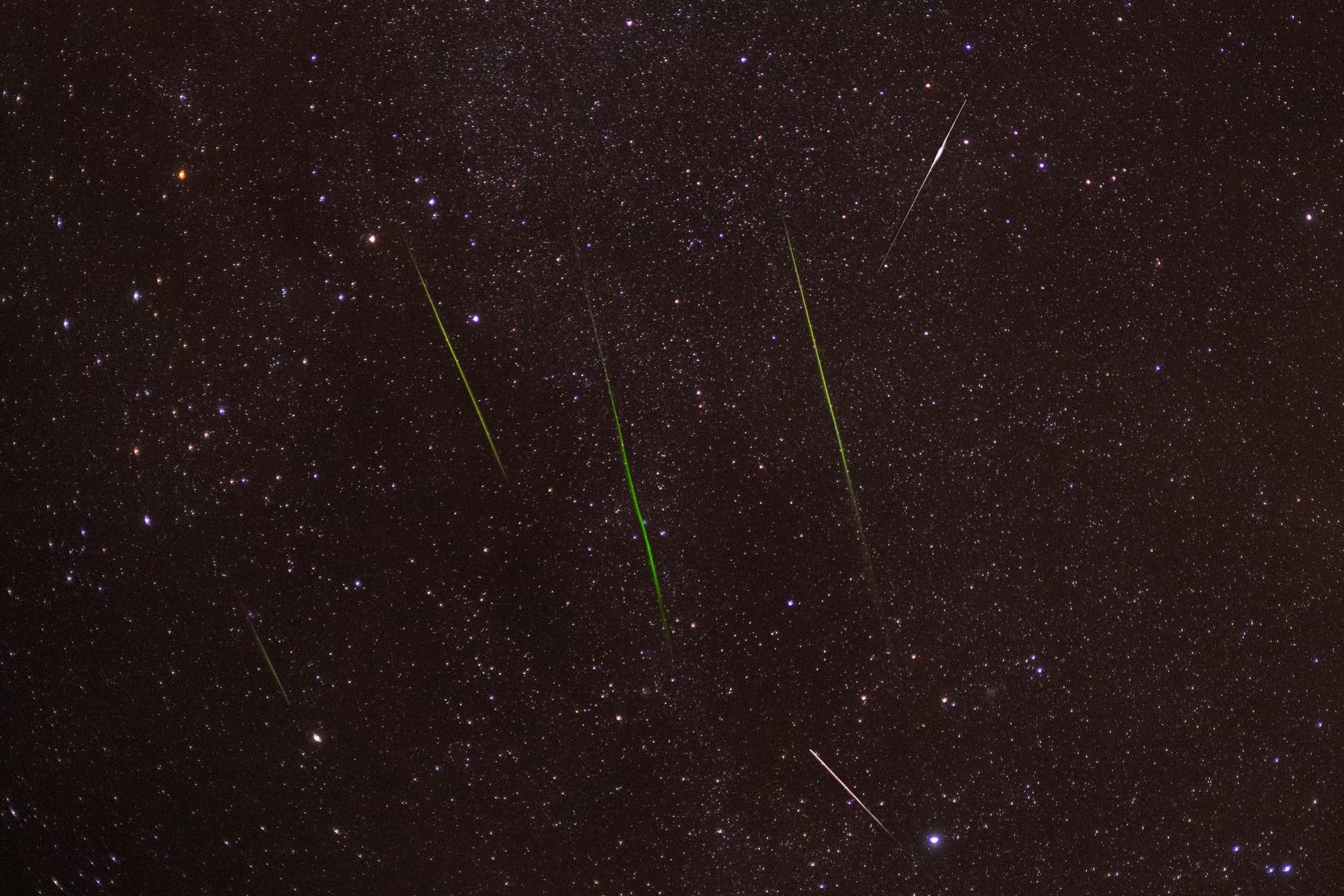
The night skies above desert landscapes often provide some of the most remarkable astronomical viewing experiences on Earth. Remote locations far away from urban light pollution create pristine conditions for observing celestial events. Recently, a stunning photographic achievement brought together two distinct nighttime phenomena in a single frame over the vast expanse of Egypts Western Desert.
Introduction to Night Sky Photography
Astrophotography requires immense patience, precise planning, and specialized equipment to capture the faint details of the cosmos. Photographers often travel to arid regions where dry air and cloudless nights offer exceptional clarity. The Egyptian desert serves as an ideal backdrop due to its towering sand formations and complete absence of artificial illumination.
Understanding the Perseid Meteor Shower
The Perseid meteor shower ranks among the most anticipated annual astronomical events for stargazers and scientists alike. These shooting stars are actually tiny debris particles left behind by Comet Swift-Tuttle as it orbits the sun. When Earth passes through this trail of cosmic dust, the particles collide with our upper atmosphere at incredible speeds, vaporizing and producing brilliant streaks of light.
Capturing Mesmerizing Star Trails
While meteors offer fleeting moments of brilliance, star trails provide a continuous representation of Earths rotation on its axis. By keeping a camera shutter open for extended periods, astrophotographers can document the apparent motion of stars across the night sky. The resulting images display concentric circles of light that anchor the transient flashes of the meteors in a harmonious visual composition.
The Unique Appeal of Desert Astronomy
Combining meteor showers with long-exposure star trails demands meticulous timing and technical skill. The remote terrain of the Western Desert enhances these celestial displays by providing an ancient, undisturbed foreground. Jagged rock formations and undulating sand dunes create a dramatic contrast against the infinite depth of the starry expanse.
Preserving Dark Skies
As light pollution continues to threaten astronomical observations worldwide, remote regions like the Western Desert become increasingly valuable for scientific research and astrophotography. Protecting these dark sky reserves ensures that future generations can witness the unhindered beauty of meteor showers and distant galaxies.
Conclusion
The convergence of Perseid meteors and rotating star trails above the Egyptian desert highlights the timeless wonder of the night sky. Through advanced photographic techniques, enthusiasts can share these ephemeral moments with audiences around the globe, fostering a deeper appreciation for the universe beyond our atmosphere.





















Leave a Reply