


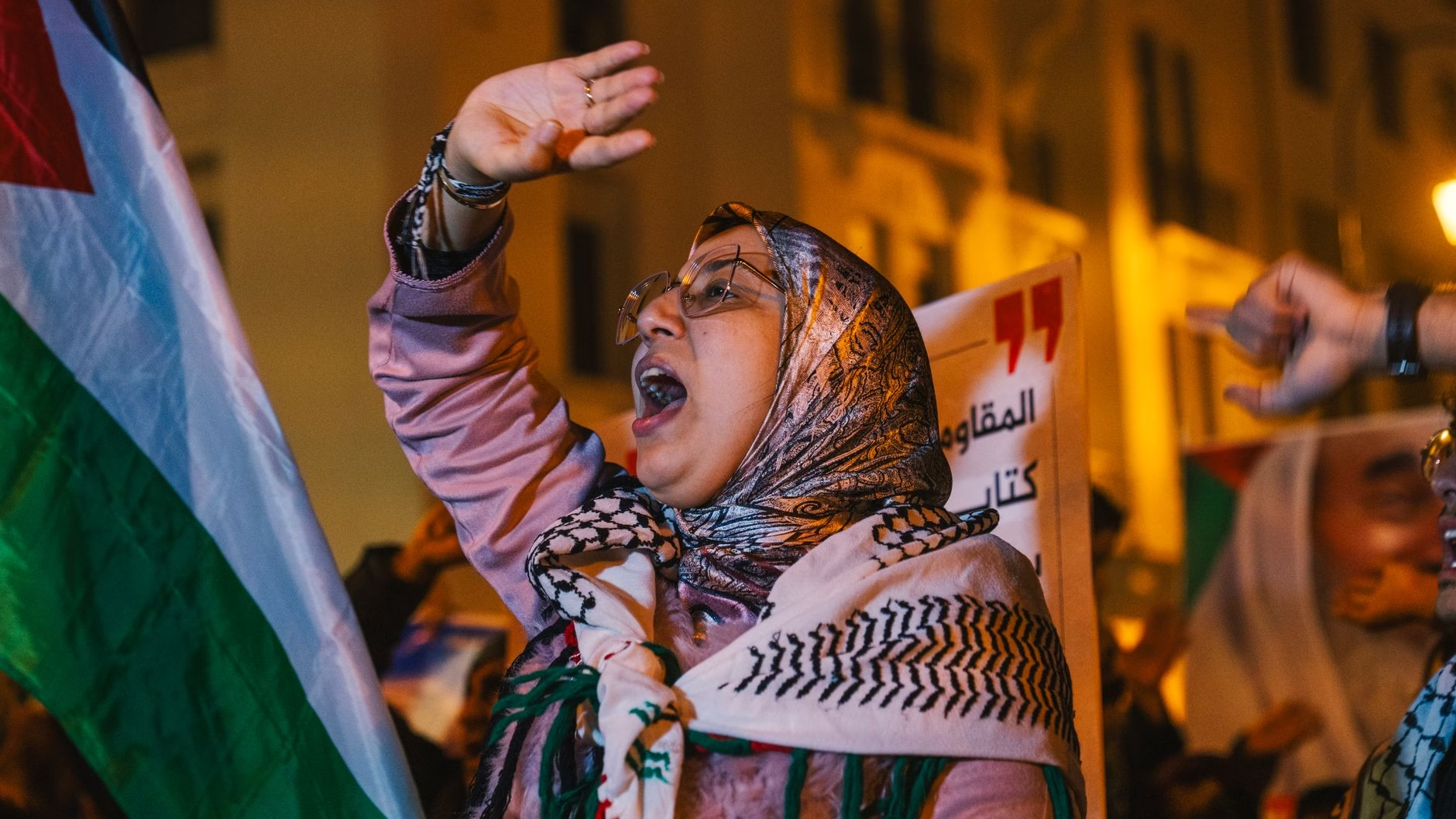
In the Gaza Strip, Palestinian women seeking to dissolve their marriages frequently encounter a complex web of legal and societal obstacles. The process of divorce, governed by Islamic Sharia law, often presents significant hurdles that can prolong proceedings, complicate financial settlements, and impact child custody arrangements. These challenges are further exacerbated by the unique socio-economic and political conditions prevalent in the besieged territory, creating an environment where women’s access to equitable legal outcomes is severely tested.
Understanding the intricacies of the Sharia court system and the specific legal provisions is crucial to comprehending the difficulties faced by these women. While Islamic law offers various avenues for divorce, the practical application and interpretation within Gaza’s courts can place a disproportionate burden on female petitioners.
Legal Framework for Divorce in Gaza
The personal status laws applied in Gaza are primarily derived from Islamic Sharia principles, administered through religious courts. These courts handle matters such as marriage, divorce, child custody, and inheritance. For women, initiating a divorce can take several forms, each with distinct requirements and implications.
One common path is ‘khula,’ where a woman can seek a divorce by returning her dowry or other financial considerations to her husband. While this offers a relatively straightforward route, it often comes at a significant financial cost to the woman, who may already be in a precarious economic situation. The husband’s consent is generally required for khula, though courts may intervene if he unreasonably withholds it.
Another avenue is ‘tafreeq,’ a judicial divorce granted by a judge based on specific grounds such as harm (darar), desertion, or the husband’s inability to provide financial support. Proving ‘darar’ can be particularly challenging, requiring substantial evidence of physical or psychological abuse, which can be difficult to gather and present in court, especially in a society where domestic issues are often kept private.
Specific Legal and Procedural Obstacles
Palestinian women in Gaza often confront several specific legal and procedural hurdles during divorce proceedings. A primary challenge lies in the burden of proof, particularly for tafreeq cases. Women are typically required to provide compelling evidence of harm, which can range from medical reports of physical abuse to witness testimonies of emotional distress. Obtaining such evidence can be daunting, and the process itself can be re-traumatizing.
Financial considerations represent another significant barrier. While Sharia law stipulates a woman’s right to a deferred dowry and alimony, enforcing these rights can be arduous. Many women struggle to secure adequate financial support for themselves and their children post-divorce, leading to economic vulnerability. Court orders for financial provisions are not always promptly or fully enforced, leaving women in prolonged legal battles and financial distress.
Child custody disputes also add a layer of complexity. While mothers are generally favored for custody of young children, fathers often gain custody as children grow older. The legal process for determining custody can be lengthy and emotionally draining, with decisions often influenced by patriarchal interpretations of religious law and societal norms.
Societal Pressures and Economic Vulnerability
Beyond the legal framework, societal pressures play a substantial role in the divorce experiences of Palestinian women in Gaza. Divorce still carries a significant social stigma, which can lead to isolation and judgment from family and community members. This stigma can deter women from pursuing divorce, even in abusive or untenable marriages, out of fear of social ostracization or difficulty in remarrying.
Economic vulnerability is a pervasive issue. The ongoing blockade and high unemployment rates in Gaza mean that many women lack independent financial resources. This economic dependence on their husbands or male relatives can make the prospect of divorce, and the subsequent need for self-sufficiency, incredibly daunting. The absence of robust social safety nets further compounds these challenges, leaving divorced women and their children in precarious situations.
Impact of the Geopolitical Context
The broader geopolitical context of the Gaza Strip significantly impacts the legal system and women’s access to justice. The frequent conflicts, internal political divisions, and severe restrictions on movement and resources strain the judicial infrastructure. Court operations can be disrupted, legal aid services may be limited, and the overall environment of instability can make it even harder for women to navigate complex legal processes.
Furthermore, the psychological toll of living in a conflict zone can exacerbate personal and marital tensions, potentially increasing the demand for divorce while simultaneously making the legal process more difficult to manage for all parties involved.
Advocacy and Support for Women’s Rights
Despite these formidable challenges, various local women’s rights organizations and legal aid groups in Gaza are actively working to support women through divorce proceedings. These organizations provide legal counseling, representation, and awareness campaigns to inform women of their rights and assist them in navigating the judicial system. They advocate for legal reforms that would ensure more equitable outcomes and challenge discriminatory practices within the courts.
These efforts are vital in empowering women to assert their rights and seek justice. However, the scale of the problem necessitates broader systemic changes, including legislative reforms, enhanced judicial training, and increased public awareness to shift prevailing societal attitudes towards divorce and women’s autonomy.
Conclusion
The struggle for equitable divorce rights for Palestinian women in Gaza is a multifaceted issue, deeply embedded in legal, social, and political complexities. While Sharia law provides a framework for divorce, its application within Gaza’s courts, coupled with profound societal pressures and economic constraints, often creates significant hurdles for women. Addressing these challenges requires a concerted effort involving legal reforms, strengthened support systems, and a sustained commitment to promoting gender equality and women’s empowerment within the community. Only through such comprehensive approaches can Palestinian women in Gaza hope to achieve true justice and autonomy in their marital and post-marital lives.






















Leave a Reply