


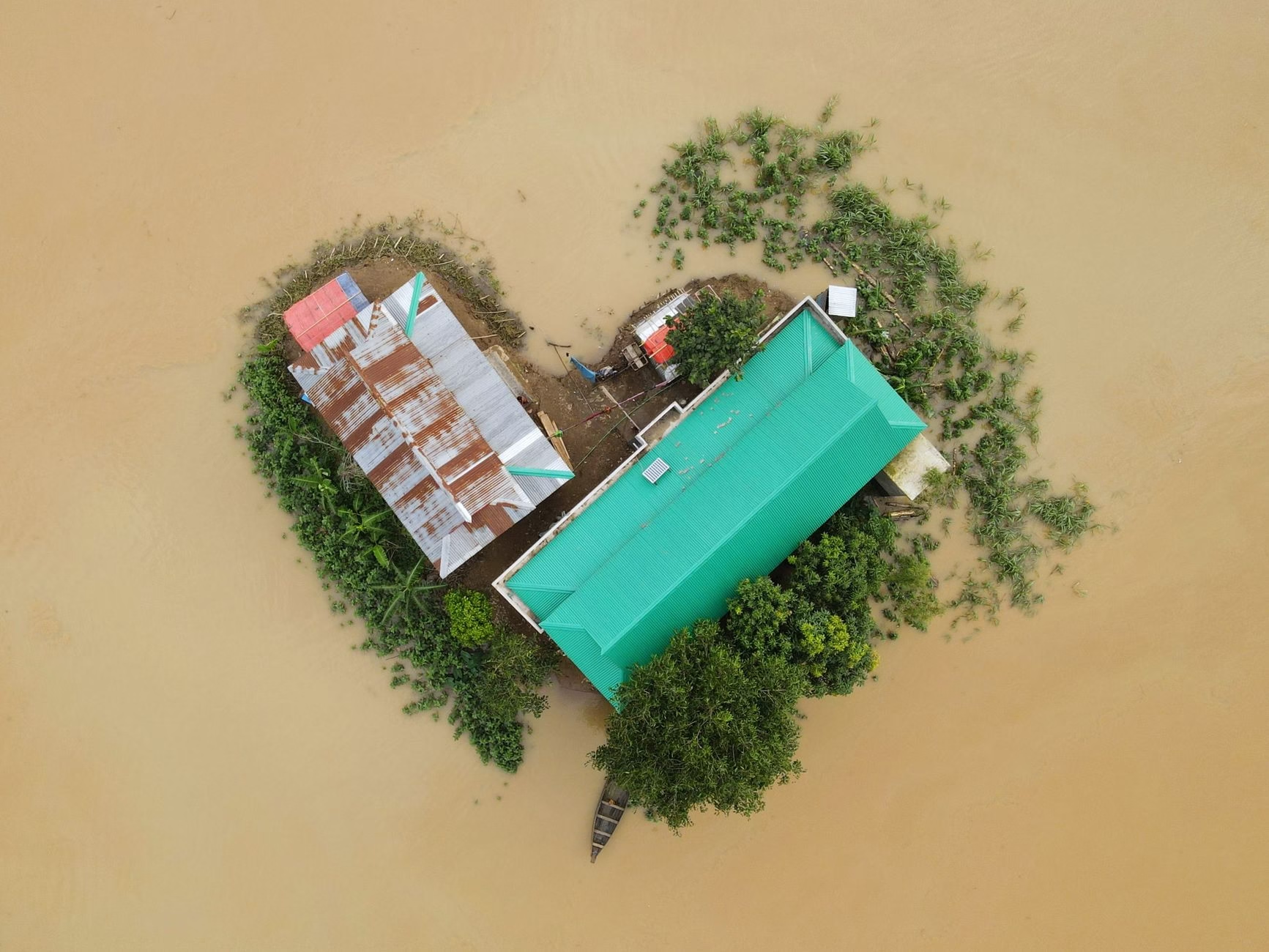
Authorities recently made the difficult decision to temporarily suspend ongoing rescue operations following a devastating flash flood along the Himalayan Nepal-China border. This critical pause was enacted due to serious concerns that a newly formed, overflowing lake could precipitate additional catastrophic flooding in areas already severely impacted by the initial deluge. The decision underscores the complex and perilous nature of disaster response in challenging geographical terrains.
Understanding Himalayan Flash Floods
The Himalayan region, characterized by its steep topography, fragile geology, and intense monsoon seasons, is inherently vulnerable to flash floods. These rapid-onset events are often triggered by heavy rainfall, glacial lake outbursts, or landslides that can temporarily dam rivers. The immense power of flash floods can quickly overwhelm communities, destroying infrastructure, displacing populations, and tragically claiming lives with little to no warning.
Such events pose significant challenges for emergency responders. The rugged and often inaccessible terrain makes it difficult to reach affected areas, assess damage, and deploy necessary resources. Communication lines can be severed, and roads rendered impassable, further complicating relief efforts.
The Peril of Newly Formed Lakes
The primary reason for the halt in rescue efforts was the emergence of a new, overflowing lake. In mountainous regions, flash floods or landslides can create natural dams, blocking river flow and leading to the rapid formation of temporary lakes. These lakes are inherently unstable. Their natural dams, often composed of loose soil, debris, or ice, are susceptible to sudden collapse or overtopping.
When such a dam breaches, it can unleash a massive volume of water downstream, creating a secondary, even more destructive flood wave. This phenomenon, often referred to as a Glacial Lake Outburst Flood (GLOF) if glacial in origin, or a landslide-dammed lake outburst, represents an extreme hazard. The potential for a second, larger flood event poses an unacceptable risk to both the already vulnerable communities and the dedicated rescue personnel operating in the affected zones.
Prioritizing Rescuer Safety
The decision to suspend rescue operations, while agonizing, is a testament to the paramount importance of rescuer safety. Emergency responders, including military personnel, police, and civilian volunteers, put their lives on the line during disaster relief. Exposing them to the imminent threat of a secondary flood from an unstable lake would be a grave dereliction of duty.
Authorities must constantly balance the urgency of saving lives with the need to protect those undertaking the rescue missions. Pausing operations allows for a critical reassessment of the situation, including monitoring the stability of the newly formed lake, evaluating potential evacuation routes, and developing safer operational strategies. This strategic withdrawal is not an abandonment of effort but a tactical repositioning to ensure future, safer interventions.
Challenges of Mountainous Rescue Operations
Rescue operations in the Himalayas are among the most arduous globally. The high altitudes, unpredictable weather patterns, and lack of developed infrastructure present formidable obstacles. Search and rescue teams often rely on specialized equipment, including helicopters for aerial reconnaissance and transport, and highly trained personnel capable of navigating treacherous landscapes.
Furthermore, the sheer scale of devastation caused by flash floods can be overwhelming. Identifying survivors, recovering victims, and providing immediate medical aid in remote areas requires immense coordination and resources. The presence of an additional, dynamic threat like an unstable lake compounds these difficulties, demanding extreme caution and continuous risk assessment.
Impact on Affected Communities and Long-Term Recovery
The immediate aftermath of a flash flood is devastating for local communities. Homes are destroyed, agricultural land is submerged, and vital infrastructure such as bridges and roads are washed away. The psychological trauma experienced by survivors, who may have lost loved ones or their entire livelihoods, is profound.
Beyond the immediate crisis, the long-term recovery process is extensive and complex. Rebuilding infrastructure, restoring livelihoods, and ensuring the safety and well-being of displaced populations require sustained effort and significant investment. The threat of recurrent natural disasters in the region necessitates robust disaster preparedness and mitigation strategies.
Future Preparedness and Mitigation Strategies
To mitigate the impact of future flash floods and similar hydrological events, a multi-faceted approach is essential. This includes investing in early warning systems that can detect heavy rainfall, monitor glacial lakes, and predict potential flood paths. Developing resilient infrastructure, such as flood-resistant buildings and elevated roads, is also crucial.
Community-based disaster preparedness programs, which educate local populations on evacuation procedures and emergency response, empower residents to act swiftly when disaster strikes. International cooperation and knowledge sharing are also vital, allowing countries in the Himalayan region to leverage best practices and resources in disaster management. Continuous scientific research into climate change impacts on glacial melt and precipitation patterns will further enhance predictive capabilities and inform policy decisions.
Conclusion
The temporary suspension of Nepal Flood Rescue Operations along the Nepal-China border highlights the severe and multifaceted challenges posed by natural disasters in the Himalayan region. While the immediate priority remains the safety of both affected populations and rescue personnel, the incident also serves as a stark reminder of the urgent need for enhanced disaster preparedness, robust infrastructure, and continuous monitoring of environmental hazards. The difficult decision to pause operations underscores a commitment to strategic, safety-conscious response in the face of overwhelming natural forces.




















Leave a Reply