


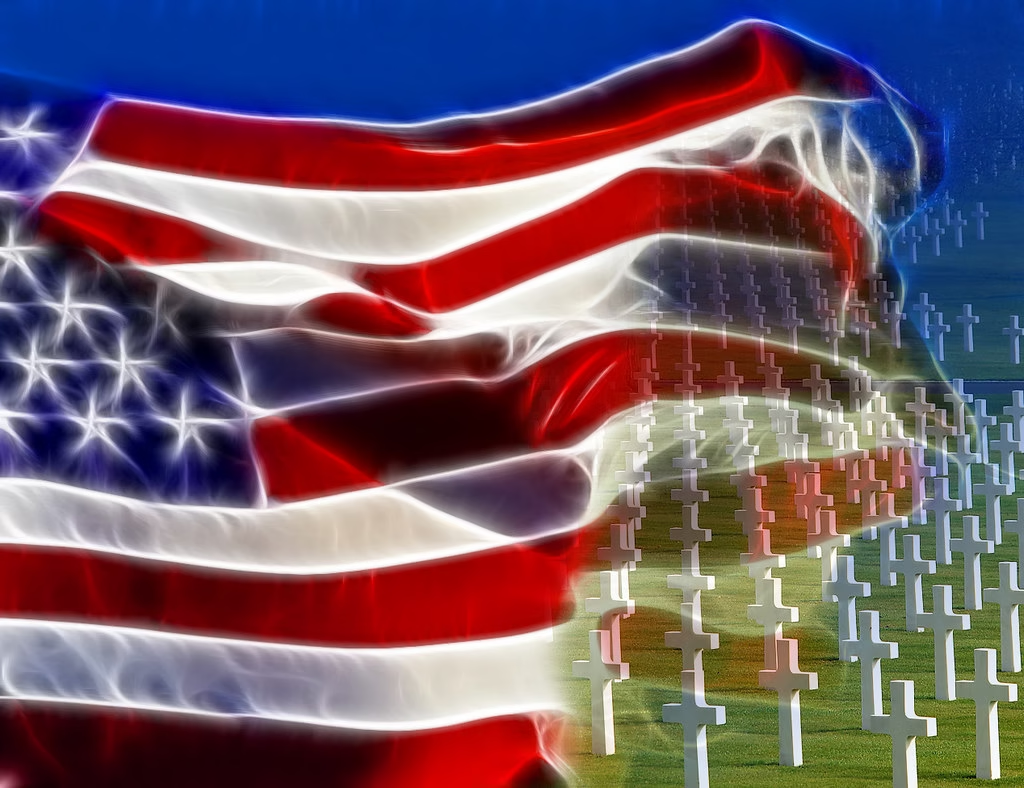
Memorial Day, observed annually on the last Monday of May, is a solemn federal holiday dedicated to honoring and mourning the U.S. military personnel who have died while serving in the armed forces. Originating in the aftermath of the Civil War, the day has evolved from a specific commemoration of those lost in that conflict to a broader remembrance of all American service members who have made the ultimate sacrifice, often marked by ceremonies, parades, and a moment of silence.
Origins in the Civil War
The tradition of decorating graves with flowers began during the Civil War, a conflict that claimed more American lives than any other war. While no single person or place is definitively credited with establishing Memorial Day, Waterloo, New York, is recognized by Congress as the birthplace of Memorial Day for its observance on May 5, 1866.
Following the war, communities across the nation began holding similar observances. These early commemorations were often referred to as “Decoration Day.” Initially, these events primarily honored the Union soldiers who died fighting to preserve the nation.
Evolution and National Recognition
After World War I, the focus broadened to include all Americans who died in any war. In 1971, Memorial Day was declared a national holiday by Congress and officially moved to the last Monday in May. This change aimed to create a three-day weekend, which inadvertently led to a shift in how the holiday is observed by many.
While the solemn purpose remains, the holiday weekend has also become a de facto start to summer for many Americans. This dual nature often sparks discussion about maintaining the day’s original meaning amidst widespread recreational activities.
Observances Across the Nation
Traditional observances continue across the country. Many cities and towns hold parades featuring veterans, active-duty military personnel, and local community groups. Cemeteries and national monuments, such as Arlington National Cemetery, host ceremonies where wreaths are laid, and the names of fallen service members are read.
A national moment of silence is traditionally observed at 3 p.m. local time, encouraging Americans to pause and reflect on the sacrifices made. Many veterans’ organizations, like the VFW and American Legion, play active roles in organizing these events.
Data and Expert Perspectives
According to the Department of Veterans Affairs, over 41 million Americans have served in the armed forces since the nation’s founding. The exact number of those who died in service is difficult to pinpoint across all conflicts, but historical estimates suggest hundreds of thousands have made the ultimate sacrifice.
“It’s crucial to remember that Memorial Day isn’t just a day off; it’s a day of remembrance for those who gave everything,” stated Dr. Evelyn Reed, a historian specializing in military history. “The rituals, like placing flags on graves or attending ceremonies, are vital for passing down the legacy of sacrifice to younger generations.”
Implications for the Present and Future
The ongoing relevance of Memorial Day is tied to the nation’s continued involvement in global conflicts and the sacrifices made by its service members. As new generations experience military service and loss, the meaning of Memorial Day continues to be shaped.
For many, the holiday serves as a critical reminder of the human cost of war and the importance of supporting those who serve and have served. The challenge lies in balancing the patriotic commemoration with the broader societal observance of the long weekend.
What to Watch Next
As discussions around national service and military engagement continue, the way Americans commemorate Memorial Day may evolve further. Attention will likely remain on how communities and national organizations strive to keep the day’s solemn purpose at the forefront, ensuring that the sacrifices of fallen service members are not forgotten amidst the changing cultural landscape of the holiday.
















Leave a Reply