


Background and Context
Security tensions in the Baltic region heightened recently following a significant airspace incident. An Italian fighter jet operating under a NATO mission successfully intercepted and destroyed an unidentified aerial drone flying over Lithuanian territory. Government officials and military analysts immediately began evaluating the trajectory and origin of the device to determine the broader implications for regional security.
The Incident in Lithuanian Airspace
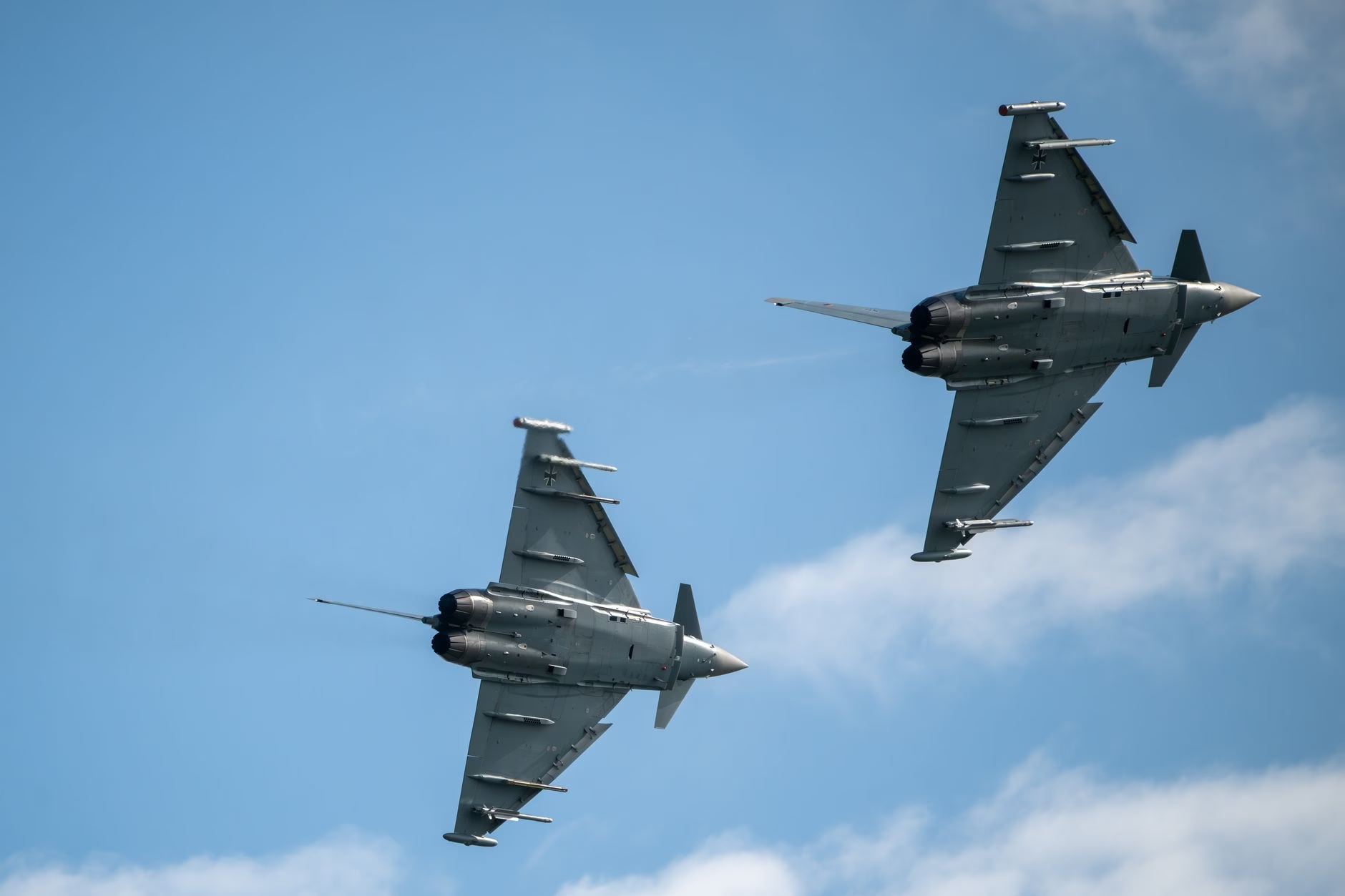
According to defense reports, the unauthorized unmanned aerial vehicle crossed into Lithuanian airspace without prior clearance. The intrusion prompted a rapid response from the North Atlantic Treaty Organization alliance forces stationed in the area. An Italian military aircraft assigned to the regional air policing detachment scrambled quickly to intercept the target.
After tracking the device and assessing potential risks to civilian infrastructure and population centers, the pilot executed the order to neutralize the threat. The drone was brought down in a secure zone, preventing any potential damage or casualties on the ground. Military experts subsequently recovered debris from the site to conduct thorough forensic and technical examinations.
Assessing the Origin of the Drone
In the aftermath of the interception, high-ranking government ministers addressed the public regarding the likely source of the aerial vehicle. Initial intelligence and trajectory assessments strongly suggest that the drone originated from Russian territory. This assessment aligns with ongoing concerns among Baltic nations regarding frequent incursions and near-border military activities.
Defense authorities emphasized that such unauthorized entries present serious challenges to regional stability and commercial aviation safety. The incident underscores the critical importance of maintaining robust air defense capabilities along the eastern flank of the alliance.
Broader Regional Implications
Lithuania, alongside its Baltic neighbors Latvia and Estonia, continues to rely heavily on allied protection through rotational air policing operations. These missions are designed to safeguard sovereign skies and deter potential provocations by neighboring actors.
Diplomatic channels are expected to address the event through formal consultations among member states. As investigations continue, defense officials reiterate their commitment to protecting allied territory and responding decisively to any future airspace violations.



















Leave a Reply