


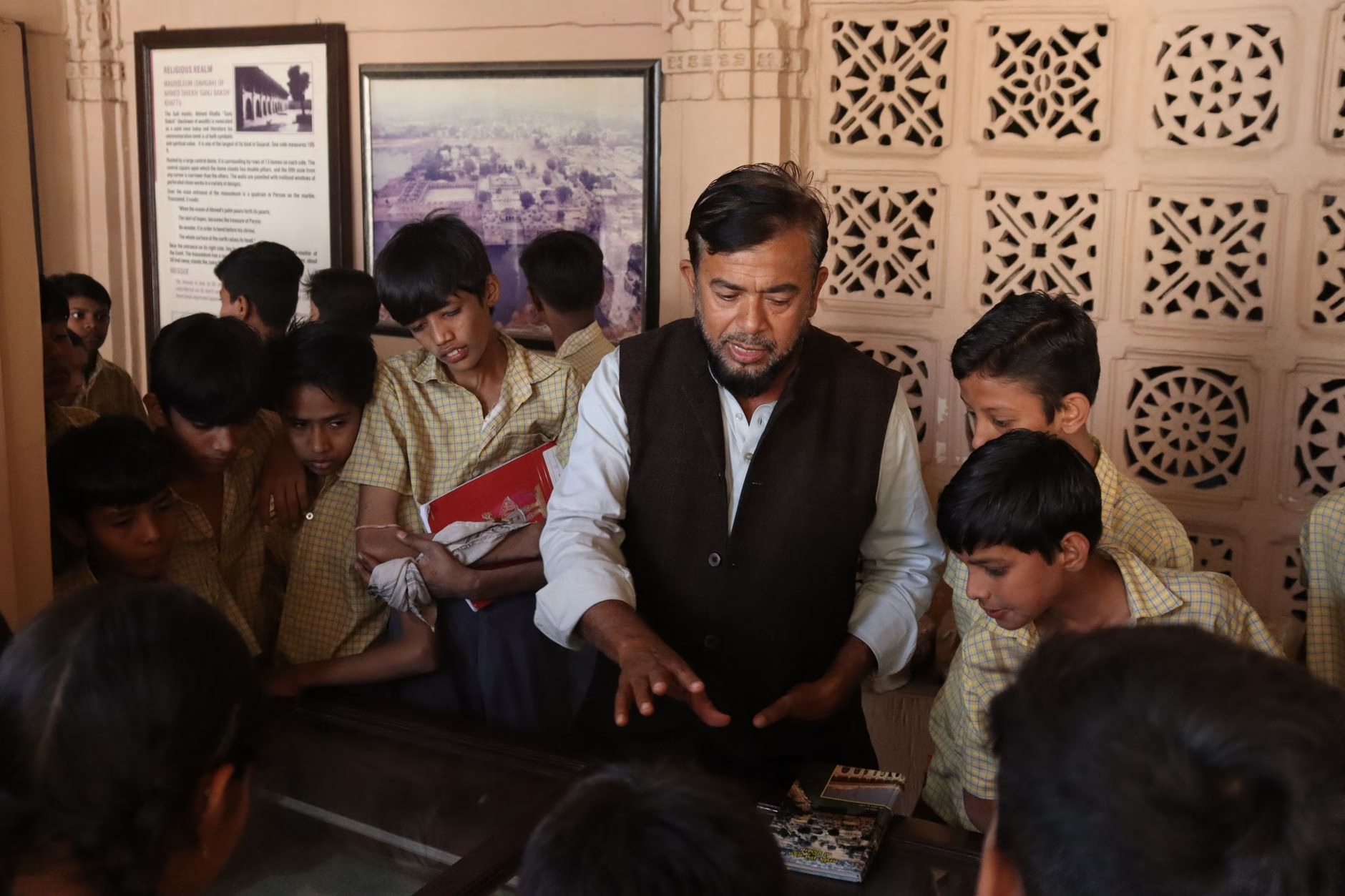
Iranian President Masoud Pezeshkian has made a strong diplomatic statement during his inaugural official visit to India. He declared that his administration will refuse to capitulate to pressures from the United States and Israel. This high-profile visit comes at a critical geopolitical juncture, drawing significant international attention to regional stability and diplomatic relations across Asia and the Middle East.
Background of the Official Visit
The trip marks President Pezeshkian’s first official journey to India since assuming office. Throughout the diplomatic engagements, discussions have heavily focused on bilateral ties, economic cooperation, and broader regional security concerns. India has maintained a delicate balancing act in its foreign policy, preserving strong economic and strategic partnerships with various global powers while simultaneously advocating for stability in West Asia.
Stance Against External Pressures
During his engagements in New Delhi, the Iranian leader addressed the ongoing geopolitical tensions involving Washington and Tel Aviv. He emphasized that the government in Tehran remains resolute in defending its sovereignty. According to the Iranian president, any demands for surrender or unconditional submission to external political and military pressure will be categorically rejected. This firm position highlights the continuous friction between Iran and Western-aligned nations amid prolonged diplomatic stalemates and regional conflicts.
India’s Call for Dialogue and De-escalation
In response to the developments, Indian leadership utilized the diplomatic platform to advocate for peaceful resolutions. Prime Minister Narendra Modi reiterated New Delhi’s steadfast commitment to dialogue and diplomacy as the primary means to resolve international disputes. India urged all involved parties to exercise maximum restraint to prevent further escalation in a volatile global climate. Emphasizing peace aligns with India’s long-standing foreign policy of strategic autonomy and multilateral engagement.
Implications for Regional Stability
The intersection of Iran’s firm defensive posture and India’s diplomatic appeals for peace underscores the complex web of international diplomacy. As regional conflicts continue to impact global supply chains, energy markets, and security frameworks, the role of neutral or balancing nations like India becomes increasingly vital. Observers globally are closely monitoring these high-level discussions to gauge whether renewed diplomatic channels can foster meaningful de-escalation in the near future.
















Leave a Reply