


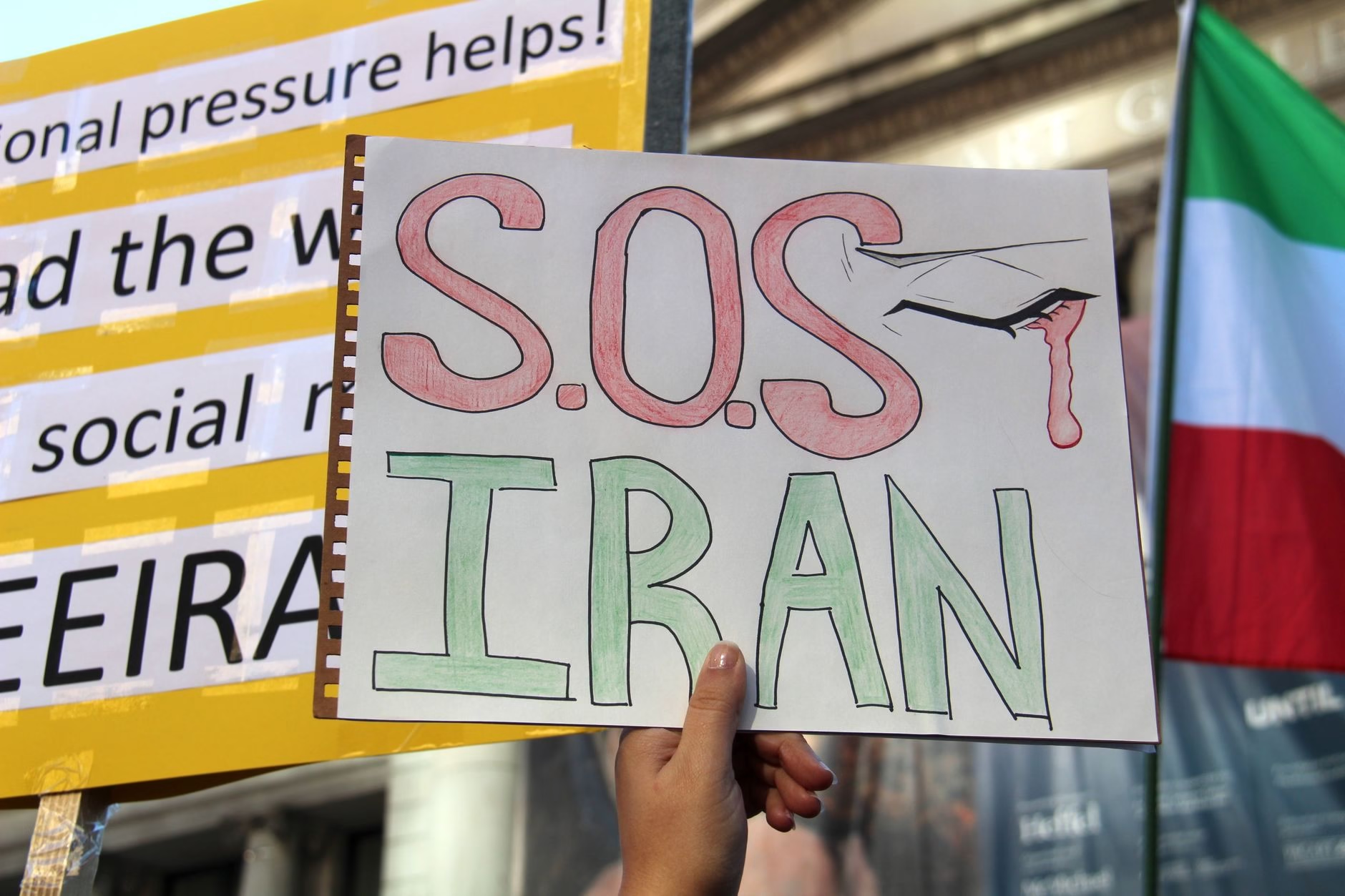
In the wake of Supreme Leader Ayatollah Ali Khamenei’s passing, Iran has reportedly intensified its anti-U.S. messaging, marking a significant escalation in its propaganda efforts. This campaign is characterized by overt calls for retribution, prominently displayed on public billboards, and a notable integration of artificial intelligence technologies to amplify its reach and impact. The phrase ‘revenge is inevitable’ encapsulates the assertive tone of this renewed communication strategy.
This development signals a critical juncture in Iran’s internal and external communications, reflecting a period of transition and potential reassertion of nationalistic and anti-Western sentiments. The strategic deployment of advanced technological tools underscores a sophisticated approach to shaping public opinion and projecting a specific narrative on both domestic and international stages.
Shifting Geopolitical Landscape
The death of a long-serving Supreme Leader often precipitates a period of introspection and strategic recalibration within a nation’s leadership. For Iran, the post-Khamenei era presents a complex landscape, potentially influencing its foreign policy stances and internal cohesion. The intensification of anti-U.S. rhetoric can be interpreted as a move to consolidate power, rally domestic support around a common adversary, and project an image of unwavering resolve during a sensitive transition period.
Such campaigns serve multiple purposes, including reinforcing ideological principles, deterring perceived external threats, and shaping the narrative surrounding the nation’s future direction. The timing suggests a deliberate effort to maintain continuity in the face of leadership change, ensuring that core tenets of the Islamic Republic’s foreign policy remain prominent.
The Nature of Anti-U.S. Propaganda
The current propaganda thrust is marked by its explicit and often confrontational nature. The use of ‘violent billboards’ as a medium for conveying messages like ‘revenge is inevitable’ is a potent visual strategy designed to evoke strong emotional responses. These public displays are not merely informational; they are instruments of psychological warfare, intended to instill a sense of collective purpose and resolve among the populace while sending a clear, defiant message to external adversaries.
Historically, anti-Western sentiment has been a cornerstone of Iran’s revolutionary ideology. This renewed emphasis leverages existing historical grievances and nationalistic fervor, channeling them into a unified message. The visual and textual elements of these campaigns are carefully crafted to resonate deeply with the target audience, reinforcing a narrative of resistance against perceived foreign aggression and interference.
Artificial Intelligence in Modern Propaganda
A significant aspect of this intensified campaign is the prominent role attributed to artificial intelligence. AI offers unprecedented capabilities for the creation, dissemination, and optimization of propaganda content, allowing for greater scale, precision, and impact than traditional methods. Its applications are diverse and transformative.
For content generation, AI algorithms can rapidly produce vast quantities of text, images, and even video, tailored to specific themes and emotional triggers. This includes generating compelling slogans, designing impactful visuals for billboards, and crafting narratives that align with the campaign’s objectives. The ability to iterate and refine content quickly based on audience engagement data makes propaganda more adaptive and effective.
In terms of dissemination, AI-powered tools can analyze vast datasets to identify optimal channels and timing for message delivery. This enables highly targeted messaging, ensuring that specific demographics receive content most likely to influence them. Social media platforms, in particular, become powerful conduits when augmented by AI for automated posting, trend analysis, and even the creation of synthetic accounts to amplify narratives.
Furthermore, AI can be leveraged for sophisticated media manipulation, including the creation of deepfakes or synthetic media, though the specific extent of such usage in this campaign is not detailed. However, the general capability of AI to generate highly realistic but fabricated content poses significant challenges in distinguishing truth from manufactured reality, enhancing the potential for persuasive disinformation.
AI also facilitates the monitoring and analysis of public sentiment, allowing propagandists to gauge the effectiveness of their messages in real-time and adjust strategies accordingly. This feedback loop ensures that the campaign remains dynamic and responsive, maximizing its persuasive power and reach across various media landscapes.
Objectives of the Propaganda Campaign
The overarching objectives of Iran’s intensified propaganda campaign are multifaceted. Domestically, it aims to foster national unity and mobilize public support, particularly during a period of leadership transition. By framing external powers, specifically the U.S., as a common adversary, the leadership seeks to consolidate popular backing and deflect attention from internal challenges.
Internationally, the campaign serves as a deterrent, projecting an image of strength and unwavering resolve to regional rivals and global powers. The explicit calls for ‘revenge’ are intended to signal a readiness to retaliate against perceived provocations, thereby influencing geopolitical calculations and potentially shaping the behavior of other state and non-state actors in the region.
Moreover, the campaign endeavors to shape international perception, challenging dominant narratives and asserting Iran’s perspective on regional and global events. By leveraging modern communication tools, Iran seeks to bypass traditional media filters and directly engage with a global audience, presenting its ideological stance with greater autonomy.
Implications for Regional and International Relations
The escalation of Iran’s anti-U.S. propaganda, particularly with its aggressive tone and technological sophistication, carries significant implications for regional and international relations. Such rhetoric can exacerbate existing tensions, making diplomatic de-escalation more challenging and increasing the risk of miscalculation.
For regional stability, the messages of retribution could embolden proxy groups and contribute to a more volatile security environment in the Middle East. The explicit nature of the threats could also prompt stronger reactions from targeted nations, potentially leading to a cycle of escalation.
Globally, the campaign tests the boundaries of information warfare in an era dominated by digital media and artificial intelligence. It highlights the growing challenge for international bodies and democratic societies to counter state-sponsored propaganda that leverages advanced technology, underscoring the need for robust strategies to promote factual accuracy and media literacy.
Conclusion
Iran’s intensified anti-U.S. propaganda campaign, characterized by assertive messaging on public billboards and a significant reliance on artificial intelligence, represents a strategic adaptation to the post-Khamenei era. This sophisticated approach to information warfare aims to consolidate domestic support, deter external adversaries, and shape international perceptions.
The integration of AI into these efforts signifies a new frontier in state-sponsored communication, enabling unprecedented scale and precision. As this propaganda war continues to evolve, its implications for regional stability and the broader landscape of international relations will remain a critical area of observation and analysis.


















Leave a Reply