


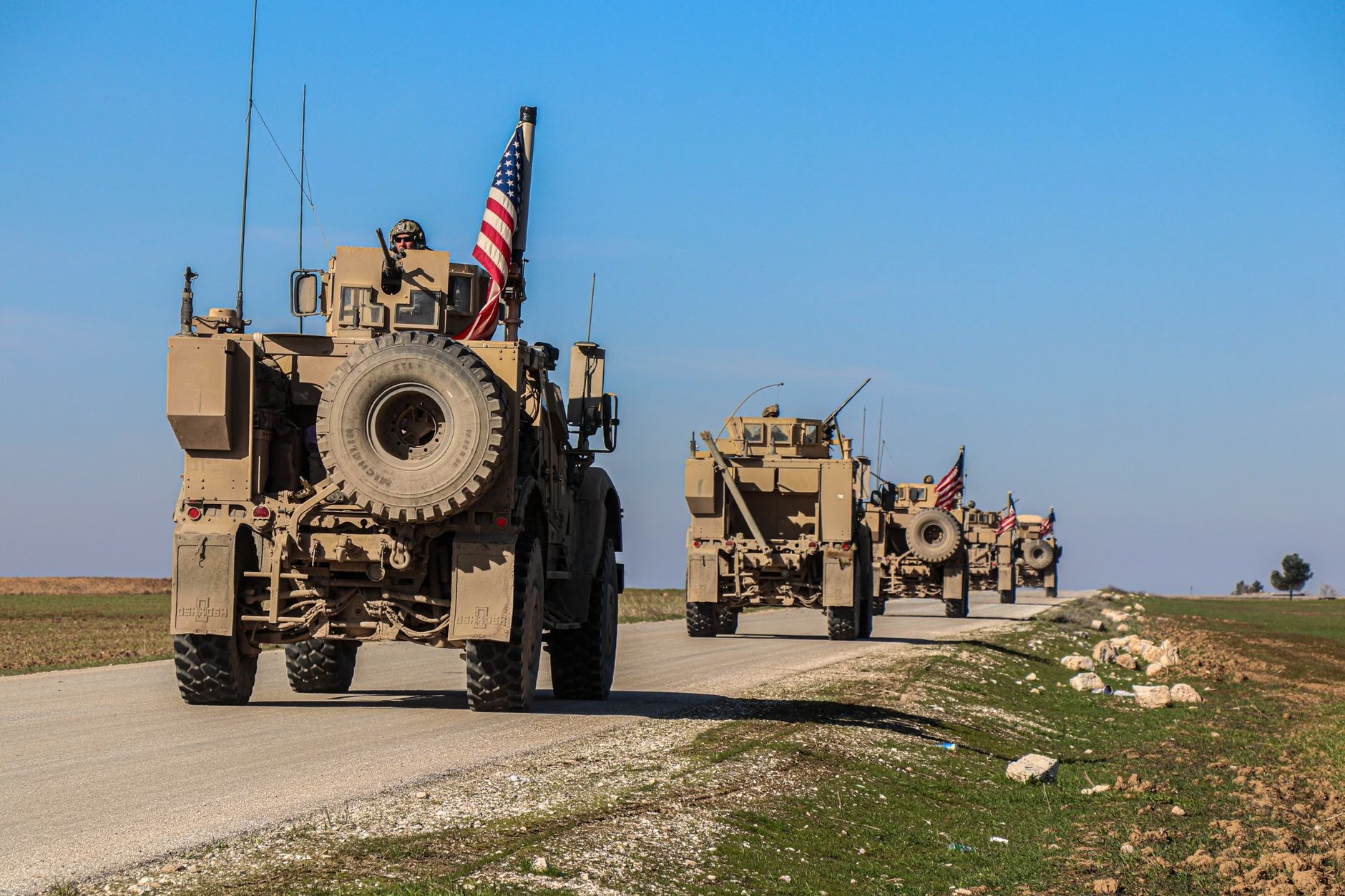
Recent reports indicate that Iran’s military has issued a statement claiming to have initiated attacks against key United States assets and military installations situated in both Kuwait and Bahrain. This declaration from Iran’s armed forces introduces a new layer of complexity to the already intricate geopolitical landscape of the Middle East, potentially signaling a significant escalation of regional tensions.
The announcement, attributed to Iran’s army, specifically references strategic U.S. assets and military bases. While the precise nature and scale of these alleged operations remain unconfirmed by independent sources, the very act of making such a claim carries substantial weight in international relations and defense circles. Such statements often serve multiple purposes, from asserting military capabilities to influencing regional narratives and signaling deterrence.
Understanding the context of these claims requires an examination of the long-standing tensions between Iran and the United States. The two nations have been at odds over various issues, including Iran’s nuclear program, its regional influence, and its support for various non-state actors. The presence of U.S. military forces in the Persian Gulf region has historically been a point of contention, with Iran often viewing it as a direct threat to its national security.
The strategic significance of Kuwait and Bahrain as host nations for U.S. military operations cannot be overstated. Both countries play crucial roles in maintaining regional security and stability, serving as vital hubs for American naval and air power. Bahrain, for instance, hosts the U.S. Fifth Fleet, a critical component of naval operations in the Persian Gulf, Red Sea, Arabian Sea, and parts of the Indian Ocean. This fleet is responsible for safeguarding maritime stability and security in a region vital to global commerce.
Kuwait also maintains a robust partnership with the United States, providing essential logistical support and hosting various U.S. military personnel and equipment. These bases are integral to U.S. efforts to counter terrorism, deter aggression, and project power across the Middle East. Any alleged targeting of these locations, even if only claimed, underscores the potential for broader regional instability and the vulnerability of international security arrangements.
The implications of Iran’s military claims are far-reaching. At a minimum, such statements contribute to an atmosphere of heightened vigilance and uncertainty. They can prompt allied nations to review their defense postures and increase their readiness levels. Furthermore, these claims could have diplomatic repercussions, leading to increased international scrutiny and potentially calls for de-escalation from global powers concerned about the prospect of open conflict.
Economically, the Persian Gulf is a critical artery for global energy supplies. Any perceived threat to stability in this region, particularly involving key energy-producing nations and transit routes, can trigger volatility in international oil markets. Investors and businesses operating in the region closely monitor such developments, as they can impact trade, shipping, and overall economic confidence.
One of the inherent challenges in assessing such military claims is the difficulty of independent verification. In regions characterized by complex political dynamics and limited transparency, obtaining definitive proof of alleged military actions can be arduous. Both state and non-state actors often use information as a tool in geopolitical maneuvering, making it imperative for international observers to exercise caution and seek corroborating evidence before drawing conclusions.
When military claims of this nature emerge, the international community typically responds with calls for restraint and dialogue. Diplomatic channels become crucial for preventing miscalculation and unintended escalation. Regional organizations and global bodies often play a role in facilitating communication and urging all parties to adhere to international norms and laws.
For the United States and its allies, such claims necessitate a careful assessment of intelligence and a potential re-evaluation of security protocols. The protection of personnel and assets in forward-deployed locations is a paramount concern. Any credible threat, or even the assertion of one, triggers a review of defensive measures and contingency plans to ensure the safety and operational effectiveness of military forces.
In conclusion, the statement from Iran’s army regarding alleged attacks on strategic U.S. assets and military bases in Kuwait and Bahrain represents a significant development in the ongoing regional tensions. While the specifics of these claims require further investigation and independent verification, their mere announcement has the potential to reshape perceptions of security, influence diplomatic efforts, and underscore the fragile nature of peace in the Middle East. The international community will undoubtedly be monitoring the situation closely, advocating for stability and de-escalation in a region that remains central to global security interests.



















Leave a Reply