


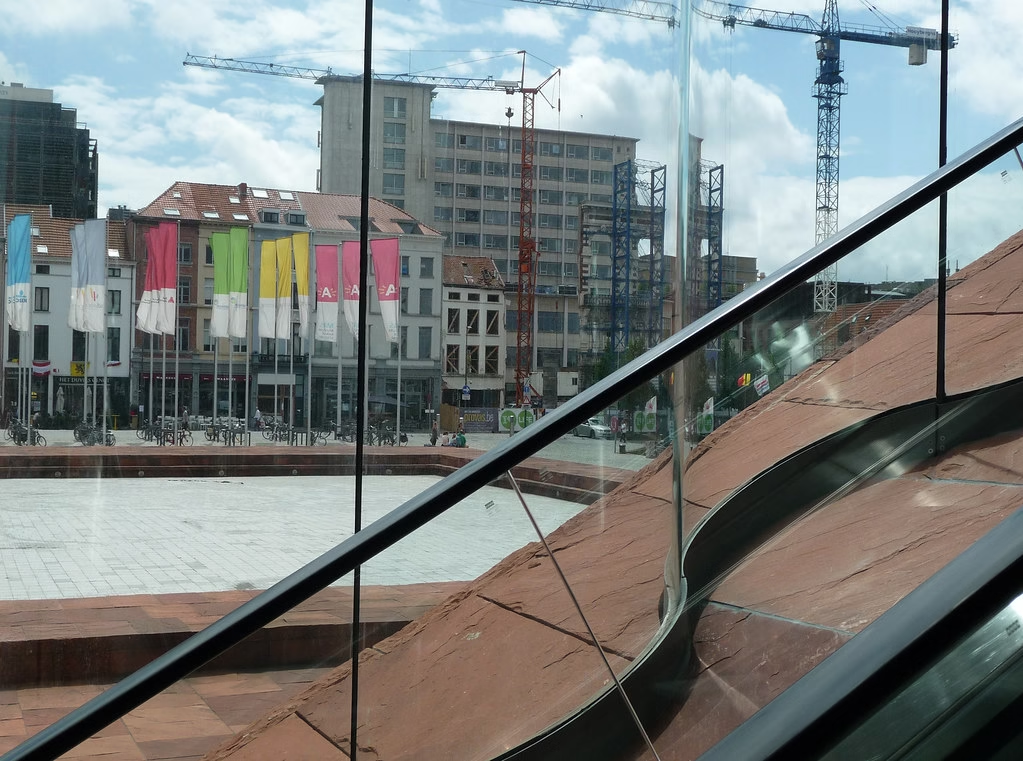
A New Landmark in Chicago
The Obama Presidential Center, an $850 million project situated in Chicago’s historic Jackson Park, is preparing for its highly anticipated opening this Juneteenth. As the first presidential library to charge a $30 general admission fee, it stands as the most expensive project of its kind in modern American history, aiming to serve as both a cultural anchor and an economic engine for the South Side.
The Evolution of Presidential Libraries
For decades, the National Archives and Records Administration (NARA) managed presidential libraries as traditional repositories for government documents. The Obama Foundation has departed from this legacy by opting for a private, non-governmental model, allowing for greater flexibility in programming and revenue generation. This shift reflects a broader trend among modern institutions to move away from static archives toward interactive, community-focused hubs.
Architectural and Economic Impact
Spanning 19 acres, the campus features a museum tower, a public library branch, an athletic center, and an expansive plaza designed to integrate with the surrounding landscape. Project organizers project that the center will generate millions in annual economic activity for the local neighborhood, attracting thousands of tourists to the South Side. Critics, however, have raised concerns regarding potential gentrification and the displacement of long-term residents as property values continue to rise near the park.
Setting a New Price Point
The $30 ticket price sets a new record for presidential museums, which historically have been priced lower or, in some cases, offered free of charge. Foundation officials argue that the cost is necessary to maintain the facility without relying on taxpayer funding, emphasizing that the center will offer free access to local residents and students. Financial analysts note that this pricing strategy mirrors the model of major private museums like the Art Institute of Chicago, signaling a shift in how these institutions view their fiscal sustainability.
Community Engagement and Future Prospects
Beyond the exhibition halls, the center emphasizes community-led initiatives, including workforce development programs and youth mentorship opportunities. By embedding these social services directly into the campus, the foundation hopes to create a blueprint for how future philanthropic projects can address systemic inequality. The success of these programs will likely be measured by the long-term retention of local residents and the measurable growth of small businesses in the immediate vicinity.
Looking Ahead
As the Juneteenth opening approaches, industry observers will watch to see if the high admission fee creates a barrier to entry for the general public or if the high-tech, immersive experience justifies the cost. The long-term viability of the Obama Center’s private funding model will likely influence how future presidents approach the financing and construction of their own legacies. Whether this project succeeds as a community catalyst or remains a destination primarily for elite tourism remains the central question for the South Side’s future.





















Leave a Reply