


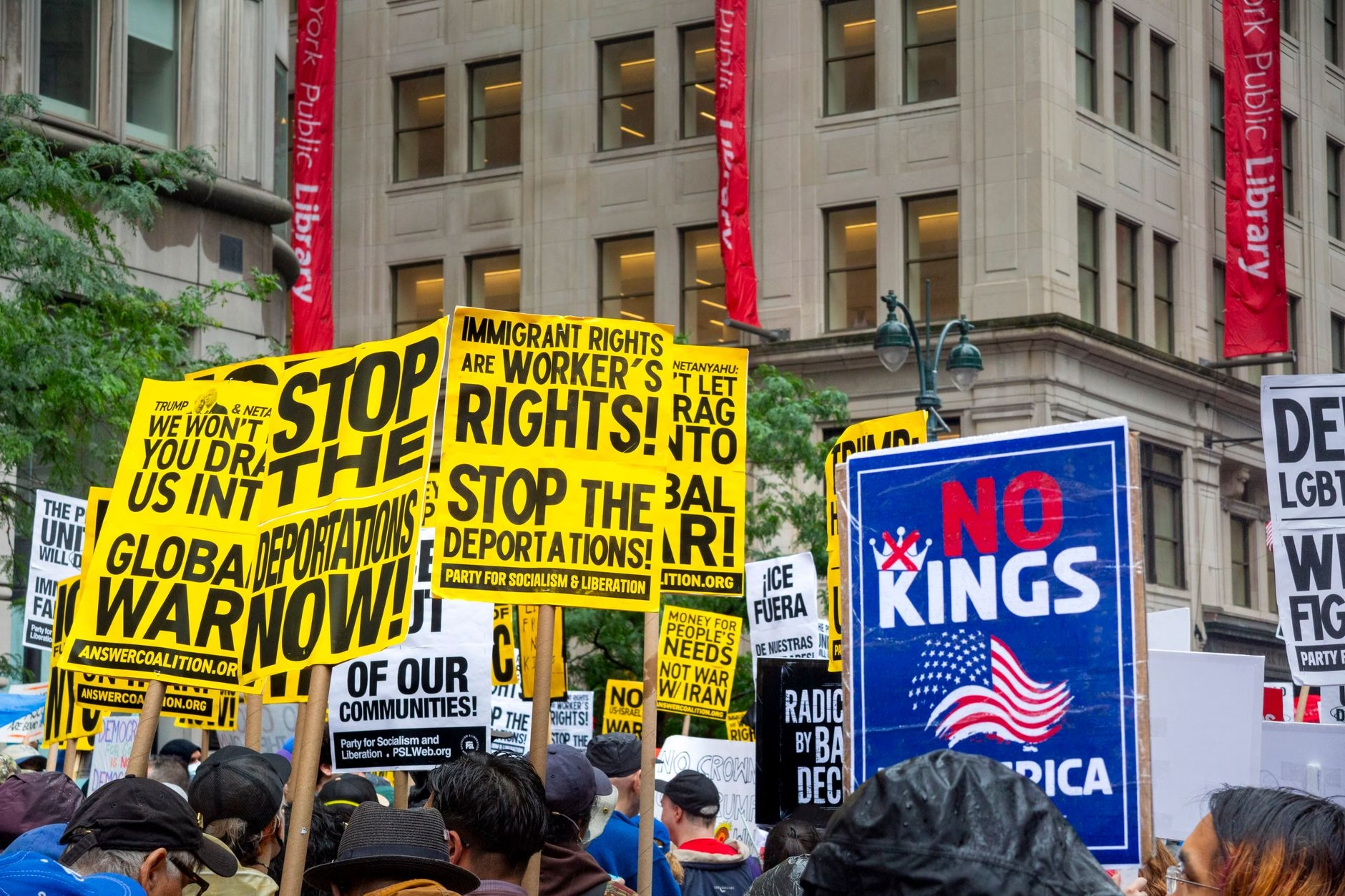
Expanding International Deportation Partnerships
Guyana has formally agreed to accept individuals deported from the United States, becoming the latest sovereign state to enter into a bilateral arrangement with Washington. This agreement reflects an ongoing shift in American immigration enforcement strategy, which increasingly relies on third-country repatriation deals to manage foreign nationals who lack legal authorization to remain in the United States.
The administration in Washington has aggressively pursued agreements with nations across the globe to facilitate the removal process. With the addition of this South American republic, the total number of countries participating in these specific repatriation frameworks has surpassed thirty. These diplomatic pacts are designed to streamline deportations, particularly when direct removal to a deportee’s home nation presents logistical, diplomatic, or legal challenges.
Global Scope of Repatriation Accords
The strategy of utilizing third countries for deportations is a central pillar of contemporary U.S. immigration policy. By securing cooperation from a diverse group of international partners, federal immigration authorities gain greater flexibility in executing removal operations. While details regarding the specific volume of individuals designated for relocation to this particular destination remain limited, the agreement underscores the broad geographical scope of American diplomatic outreach on migration issues.
International relations experts note that these bilateral understandings often involve complex negotiations. Governments that agree to accept non-national deportees frequently evaluate these arrangements within the broader context of foreign aid, trade discussions, and diplomatic relations with Washington. Consequently, each new partnership represents a significant milestone for executive branch enforcement initiatives.
Implications for Regional Migration
The inclusion of a South American nation in the network of receiving countries highlights the shifting dynamics of regional mobility and border management. As enforcement measures intensify within the United States, destination countries are adapting to new flows of arriving individuals who originate from various parts of the world. Humanitarian organizations and policy analysts continue to monitor these developments closely to assess the administrative and legal frameworks governing third-country removals.
Ultimately, the formalization of this agreement marks another step in the implementation of stricter removal protocols. As federal agencies pursue bilateral compacts worldwide, the international landscape of migration management continues to evolve in response to shifting policy priorities in Washington.






















Leave a Reply