


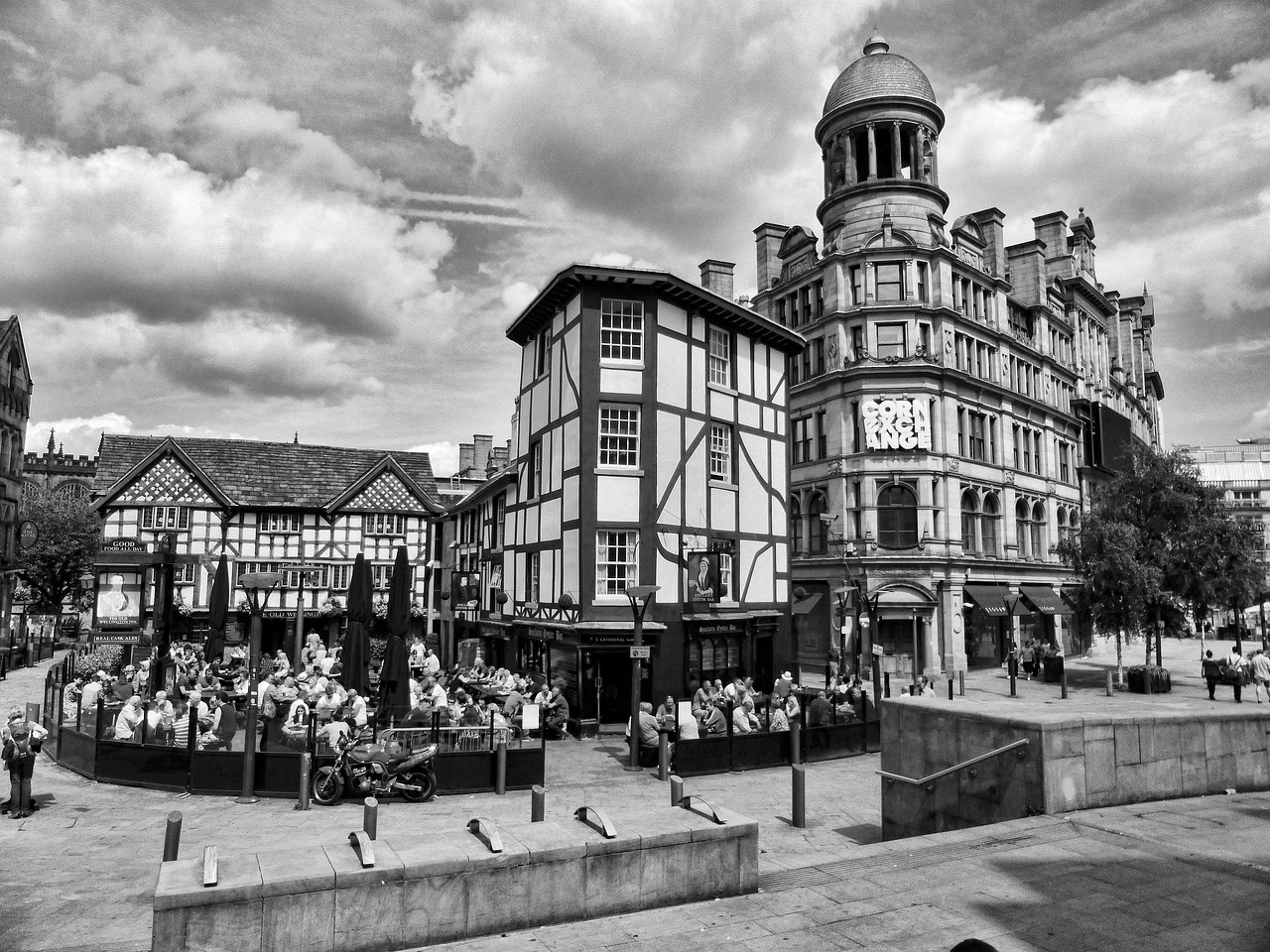
Greater Manchester Mayor Andy Burnham is facing increased scrutiny of his record in office as speculation mounts about his potential to succeed Keir Starmer as leader of the Labour Party and, by extension, a future Prime Minister of the United Kingdom. His tenure as Mayor, which began in 2017, is being closely examined by political commentators and the public alike, particularly as he continues to champion the devolution agenda for the North of England.
Burnham’s Mayoral Tenure and Key Initiatives
Since taking office, Andy Burnham has focused on several key areas aimed at improving life and opportunities in Greater Manchester. These include transport, housing, and economic development, with a strong emphasis on devolving power from Westminster to local authorities.
A significant initiative has been the push for a London-style integrated transport system. Burnham has advocated for greater public control over bus services, aiming to improve reliability, affordability, and accessibility across the region. This has involved navigating complex negotiations and securing funding, a process that has drawn both praise and criticism.
On the housing front, the Mayor has outlined ambitious plans to address the region’s housing crisis. These plans often involve calls for increased investment in social housing and greater local control over planning and development to ensure new homes meet the needs of the community.
The Devolution Debate and Northern Powerhouse
Burnham has been a vocal proponent of “devolution” – the transfer of powers from the central government to regional and local authorities. He has often positioned himself as a champion for the North, arguing that it has been historically underserved by London-centric policies.
His vision extends beyond Greater Manchester, aiming to strengthen the “Northern Powerhouse” concept, which seeks to boost economic growth in the North of England. However, the effectiveness and pace of these devolutionary efforts have been subjects of ongoing debate.
Scrutiny and Political Positioning
As Burnham’s national profile rises, so does the intensity of political scrutiny. Opponents and critics often point to challenges in delivering on some of his more ambitious promises, such as the complete overhaul of the transport network or the speed of housing development.
His public statements and policy proposals are frequently analyzed through the lens of potential leadership aspirations. This attention often highlights perceived inconsistencies or areas where progress has been slower than initially anticipated. For instance, the progress on bus franchising, while a flagship policy, has faced numerous hurdles and delays.
Expert Perspectives and Data
Political analysts suggest that Burnham’s strong regional base and his clear articulation of a vision for the North have positioned him as a significant figure within the Labour Party. “His ability to connect with voters on issues of regional inequality and public services is a key strength,” noted Dr. Eleanor Vance, a political scientist at the University of Manchester.
However, data on public transport improvements or housing delivery in Greater Manchester often presents a mixed picture. While some metrics may show positive movement, others indicate persistent challenges. For example, while passenger numbers on public transport have been recovering post-pandemic, the integration of services and fare structures remains a complex undertaking.
“The challenge for any mayor, especially one with national ambitions, is to translate regional successes into tangible, measurable improvements that resonate with a broader electorate,” commented political strategist David Chen. “The perception of delivery is as crucial as the delivery itself.”
Implications for the Labour Party and Beyond
Burnham’s prominence inevitably raises questions about the future leadership of the Labour Party. Should Keir Starmer face significant political challenges, Burnham would likely be considered a frontrunner by many within the party’s left and centrist factions.
His platform, which emphasizes regional fairness, public services, and a more equitable distribution of national resources, could offer a compelling alternative to current government policies. The success of his mayoral initiatives in Greater Manchester will therefore be closely watched as a potential blueprint for national policy.
For the electorate, Burnham’s increasing visibility signals a potential shift in political discourse, with greater emphasis placed on regional disparities and the need for localized solutions. His journey from Manchester to Westminster, if it materializes, would represent a significant moment in contemporary British politics, highlighting the growing influence of directly elected mayors and the ongoing debate about the UK’s centralized governance structure.




















Leave a Reply