


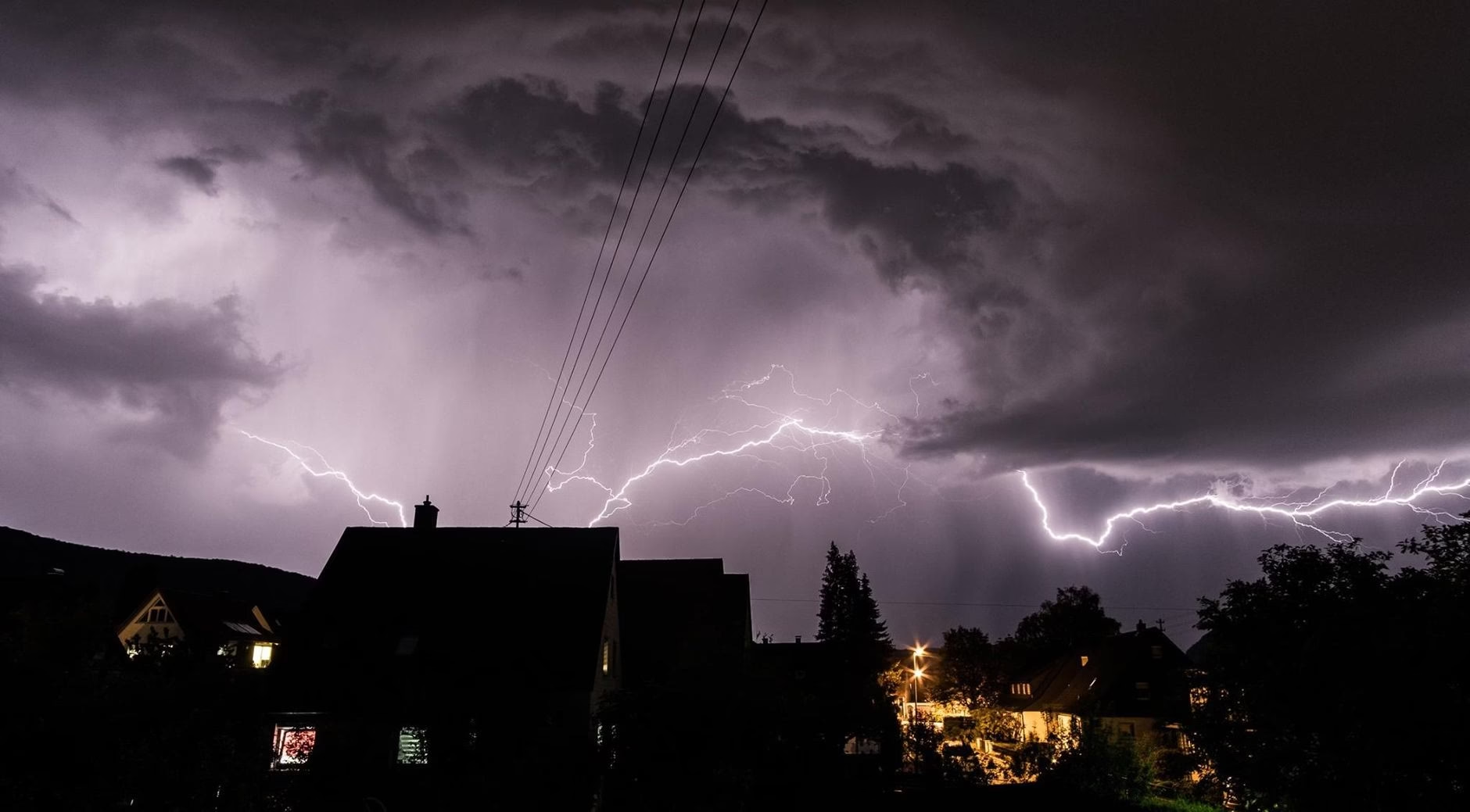
Germany, renowned for its diverse landscapes and temperate climate, has increasingly experienced the profound effects of severe weather phenomena. While often associated with milder weather patterns, the nation is no stranger to powerful storms, intense rainfall, and even tornadoes. Recent years have brought a heightened focus on the frequency and intensity of these atmospheric disturbances, prompting a deeper examination of their causes and consequences. This evolving weather landscape necessitates a comprehensive understanding of the risks involved and the strategies required for effective mitigation and public safety.
The Dynamics of Severe Storms in Germany
The meteorological conditions across Germany are complex, influenced by its position in Central Europe. This geographical location makes it susceptible to various weather systems, including those originating from the Atlantic and continental air masses. Consequently, the country regularly experiences thunderstorms, which can escalate into severe events characterized by heavy precipitation, strong winds, and hail. These severe storms are not isolated incidents but rather a recurring feature, particularly during the warmer months when atmospheric instability is more pronounced.
Understanding the atmospheric dynamics behind these events is crucial. Factors such as significant temperature differences, high humidity levels, and strong wind shear contribute to the development of powerful convective systems. When these elements align, they create an environment conducive to the formation of supercell thunderstorms, which are known for their potential to produce extreme weather, including large hail and destructive winds. The impact of such storms can be far-reaching, affecting urban centers, agricultural regions, and natural ecosystems alike.
Tornado Activity: A Shifting Perception
While tornadoes are often perceived as a phenomenon primarily associated with regions like the American Midwest, Germany has a documented history of experiencing these rotating columns of air. Although less frequent and typically less intense than their North American counterparts, tornadoes in Germany are a serious concern. They can cause localized but devastating damage, tearing through buildings, uprooting trees, and disrupting infrastructure. The perception of Germany as immune to significant tornado activity is gradually changing as awareness grows regarding their occurrence.
Meteorological agencies and researchers continuously monitor the conditions that foster tornado development within Germany. These conditions typically involve strong updrafts and downdrafts within supercell thunderstorms, combined with specific wind shear profiles that induce rotation. While the exact number of tornadoes varies annually, improved detection methods and increased public reporting have contributed to a clearer picture of their prevalence. This enhanced understanding is vital for developing more accurate warning systems and educating the public on appropriate safety measures.
Impacts on Infrastructure and Communities
The consequences of severe weather events in Germany extend beyond immediate danger to individuals. Infrastructure, including transportation networks, power grids, and communication systems, is particularly vulnerable. Heavy rainfall can lead to flash flooding, inundating roads, railways, and basements, causing significant disruption and economic losses. Strong winds can damage buildings, bring down power lines, and create hazardous debris, leading to widespread power outages and safety risks.
Agricultural sectors also face substantial challenges. Hailstorms can decimate crops in a matter of minutes, resulting in considerable financial setbacks for farmers. The cumulative effect of these events can strain local emergency services, requiring coordinated responses for rescue operations, damage assessment, and recovery efforts. Communities often bear the brunt of these impacts, facing the daunting task of rebuilding and recovering in the aftermath of severe weather.
Preparedness and Mitigation Strategies
In response to the increasing threat of severe weather, Germany has implemented robust preparedness and mitigation strategies. These efforts involve a multi-faceted approach, combining advanced meteorological forecasting with public awareness campaigns and infrastructure resilience planning. The German Weather Service (Deutscher Wetterdienst – DWD) plays a critical role, providing timely and accurate weather warnings to authorities and the public. These warnings are disseminated through various channels, including media, mobile applications, and emergency alert systems.
Local and regional emergency management agencies work in close coordination to develop and execute response plans. This includes training first responders, establishing evacuation routes, and ensuring the availability of resources for post-event recovery. Furthermore, there is an ongoing focus on making infrastructure more resilient to extreme weather conditions, such as improving drainage systems to prevent flooding and reinforcing building codes. Public education initiatives are also crucial, empowering citizens with the knowledge and tools to protect themselves and their property during severe weather events.
Climate Change and Future Outlook
The observed trends in severe weather in Germany are often discussed within the broader context of global climate change. While attributing any single weather event directly to climate change is complex, scientific consensus suggests that a warming planet can influence the frequency and intensity of extreme weather phenomena. Changes in atmospheric energy, moisture content, and circulation patterns could contribute to more volatile weather conditions, including more powerful storms and potentially altered tornado activity.
Looking ahead, continuous research and adaptation will be essential. Climate models provide insights into potential future scenarios, guiding long-term planning for urban development, agriculture, and disaster management. International cooperation and data sharing are also vital for enhancing predictive capabilities and developing effective strategies to cope with an evolving climate. Germany’s commitment to sustainable practices and climate resilience underscores its proactive approach to safeguarding its population and environment against future weather challenges.
Conclusion
Severe weather, including intense storms and tornadoes, represents a significant and evolving challenge for Germany. The increasing awareness and scientific understanding of these phenomena are driving comprehensive efforts in forecasting, preparedness, and mitigation. By investing in robust infrastructure, fostering public education, and adapting to the realities of a changing climate, Germany aims to enhance its resilience and minimize the impact of future atmospheric events. The ongoing commitment to these strategies will be crucial in protecting lives, livelihoods, and the natural heritage of the nation.




















Leave a Reply