


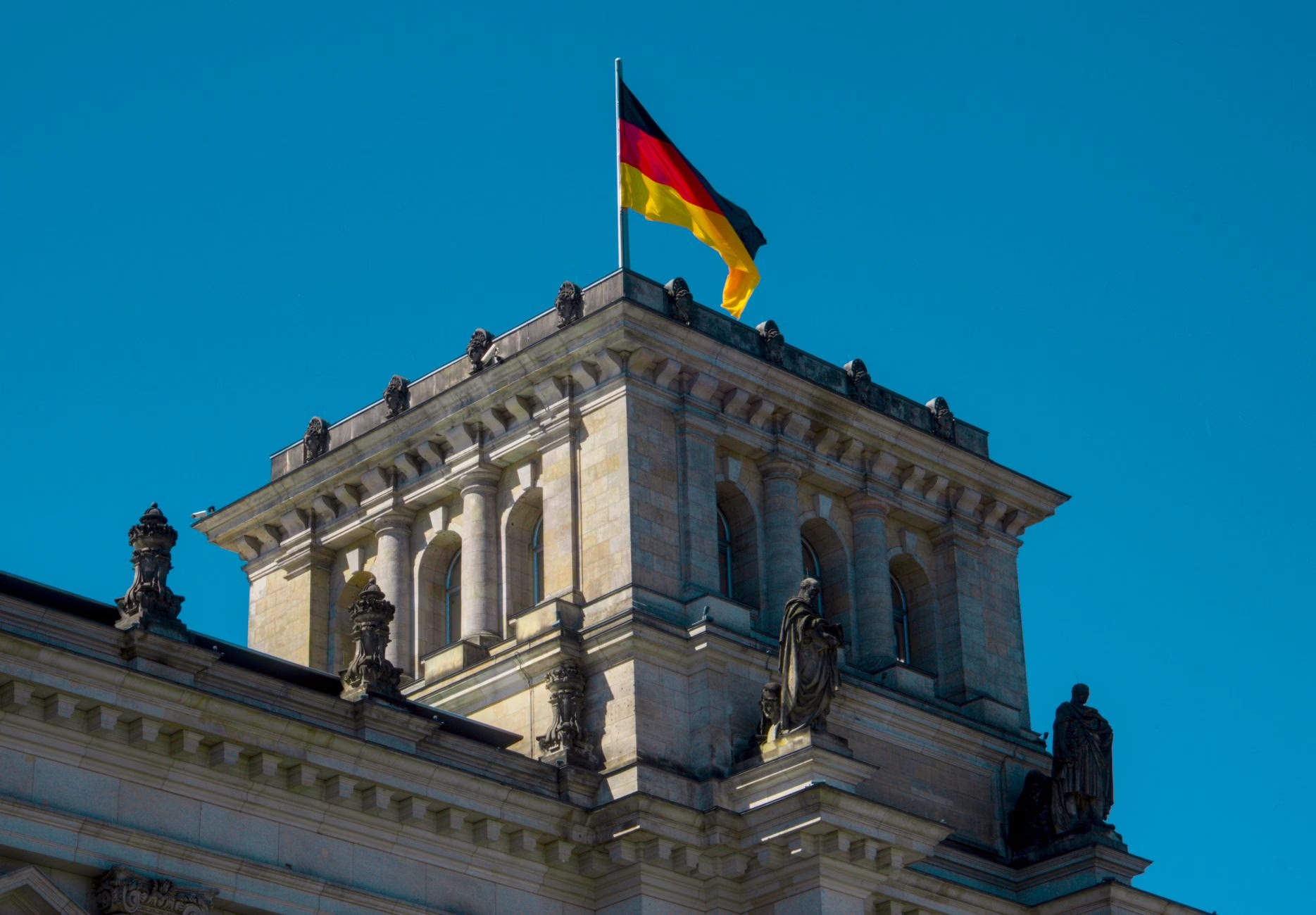
Economic Uncertainty Deepens in Germany
Recent regional election results have delivered a significant blow to the governing Christian Democratic Union, sparking renewed concerns among financial analysts and economists regarding the nation’s political stability. This latest electoral setback adds to a growing pattern of local defeats for the ruling party, signaling a broader shift in voter sentiment across the country. Experts warn that the resulting political fragmentation could severely hinder the government’s ability to implement crucial legislative measures.
The Rise of Alternative Political Forces
As mainstream parties lose ground, German voters are increasingly shifting their support toward political alternatives on both the far-left and far-right of the spectrum. This polarization reflects deep public frustration with current economic conditions and policy directions. The fragmentation of the electorate makes consensus-building significantly more difficult for federal leaders, creating an environment of heightened unpredictability that market participants monitor closely.
Threats to Pro-Growth Reforms
The immediate casualty of this political shifting is the legislative agenda aimed at stimulating economic expansion. Economists have pointed out that proactive reforms designed to boost productivity, modernize infrastructure, and encourage business investment now face an uncertain path forward. Without a cohesive coalition and strong parliamentary backing, essential policy adjustments risk getting delayed or diluted entirely.
Broader Implications for the European Economy
Given Germany’s position as the economic engine of the European Union, domestic political turmoil carries significant weight beyond its borders. Neighboring nations and international financial markets rely on steady leadership and robust growth in Berlin to support broader regional stability. Analysts stress that prolonged political gridlock could dampen investor confidence not just locally, but across the entire eurozone.
Looking Ahead
Navigating this challenging landscape will require strategic maneuvering by political leaders to regain public trust and secure legislative cooperation. Whether the ruling administration can successfully pivot its strategy to address voter concerns while advancing necessary economic reforms remains the central question for the nation’s immediate future.























Leave a Reply