


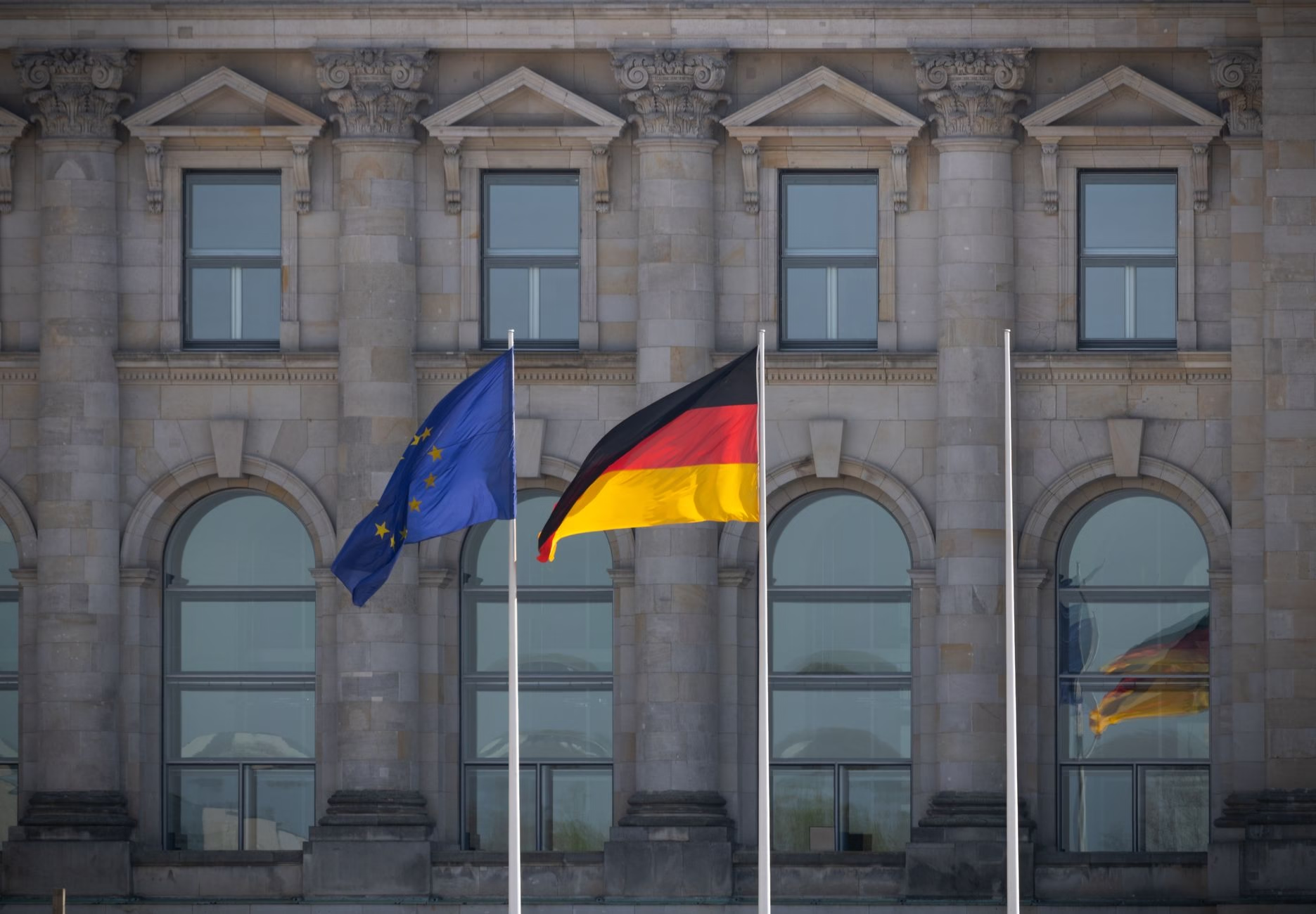
The Landscape of Global Commerce
International trade dynamics are undergoing a profound transformation as European nations reassess their economic dependencies. In recent years, policymakers and industry leaders alike have scrutinized supply chain vulnerabilities and market access imbalances. Amidst this shifting global environment, corporate sentiment within Europe’s largest economy has experienced a notable evolution regarding diplomatic and commercial relations with Beijing.
Shifting Corporate Attitudes
Recent data indicates that a decisive majority of German enterprises now advocate for a more assertive regulatory approach by Brussels concerning Asian markets. Business leaders are increasingly vocal about the necessity of protecting domestic industries from unfair competition and addressing structural trade disparities. Rather than maintaining the status quo, corporate decision-makers are urging authorities to implement robust defensive measures that safeguard regional economic interests.
Ensuring Fair Market Access
At the core of this policy shift is the demand for reciprocity in commercial dealings. German firms have frequently reported encountering barriers when operating abroad, while foreign competitors often enjoy fewer restrictions within European markets. Industry representatives argue that a firmer stance by regional authorities is essential to establish balanced rules. This approach aims to foster fair competition without completely severing vital economic ties that sustain multinational supply chains.
Mitigating Economic Vulnerabilities
Recent disruptions have underscored the risks associated with over-reliance on single markets for critical components and raw materials. Consequently, corporate strategies increasingly emphasize diversification and risk reduction. Business associations recommend that regional policymakers support these initiatives by establishing clear frameworks that encourage domestic production and alternative sourcing partnerships.
Navigating Future Diplomatic Relations
As the debate continues, the primary objective for German enterprises remains achieving strategic autonomy while preserving constructive dialogue. Leaders emphasize that a firm stance does not equate to complete decoupling, but rather represents a necessary adjustment to current geopolitical realities. By adopting stringent regulatory tools, the trading bloc can better defend its economic sovereignty while engaging with global partners on equitable terms.




















Leave a Reply