


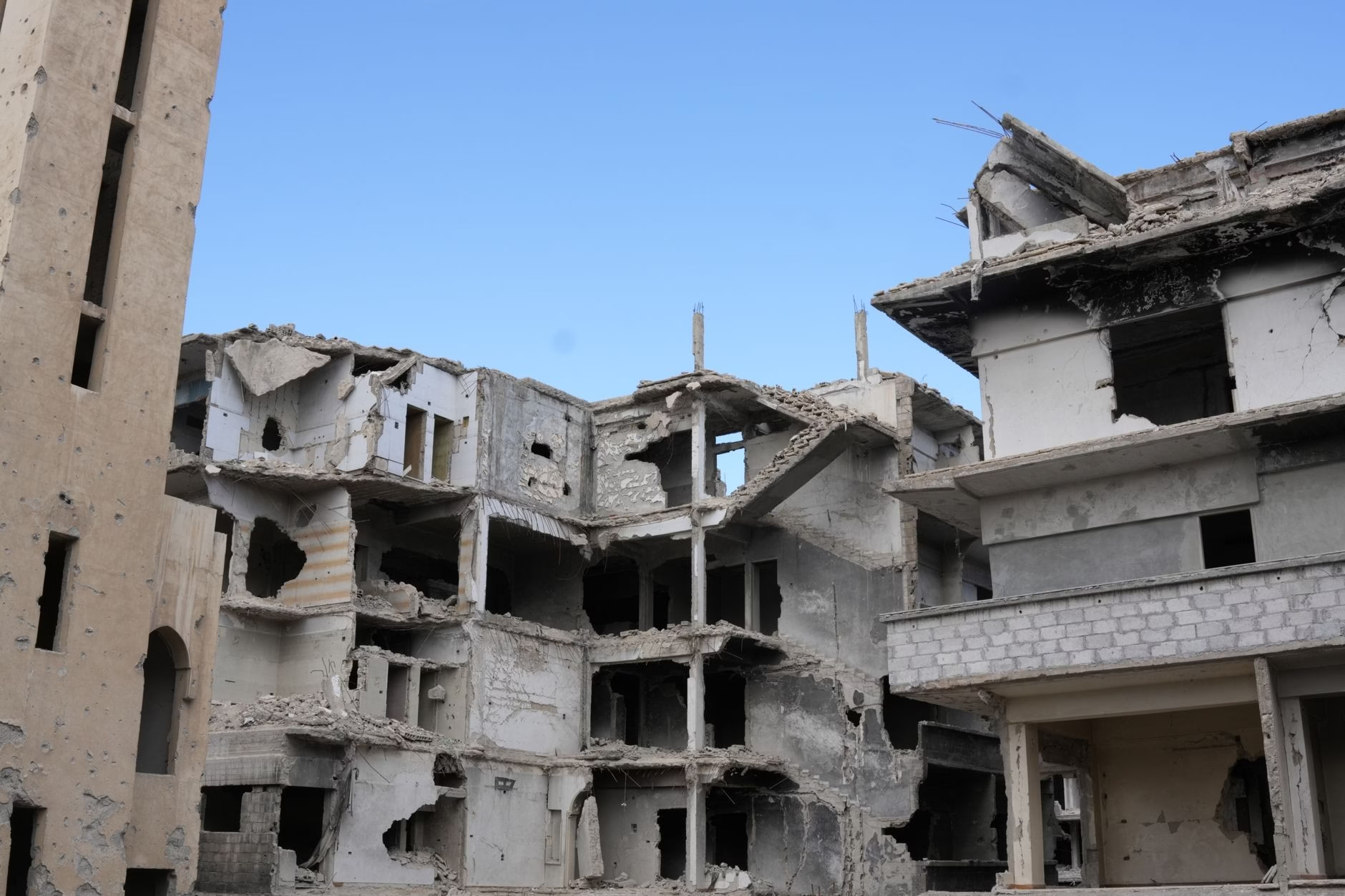
The ongoing humanitarian crisis in the Gaza Strip has taken a new and perilous turn as structural collapses claim lives among populations already displaced by conflict. With vast numbers of residential and commercial structures heavily impacted by continuous military operations, safety standards have vanished. Civilians searching for any form of shelter are increasingly forced to inhabit compromised structures that teeter on the edge of complete collapse.
Faced with a severe lack of alternative accommodation and overwhelming overcrowding, families routinely move into buildings bearing visible scars from earlier bombardments. Concrete slabs hang precariously, foundational pillars are fractured, and internal stairwells often lack sufficient support. Despite these glaring dangers, the absence of viable housing options leaves vulnerable populations with virtually no safer choices.
Understanding the Structural Risks
The physical integrity of numerous structures across the region has been severely compromised. Engineers and humanitarian observers note that even properties remaining partially standing often suffer from internal micro-fractures that weaken their load-bearing capacity over time. Heavy rains, shifting rubble, and recurring tremors from distant explosions further destabilize these already fragile edifices.
When inhabitants occupy these unstable spaces, the risk of sudden interior collapse rises exponentially. Ceilings frequently cave in without warning, trapping residents beneath heavy debris. Because emergency response infrastructure is severely strained and lacks heavy equipment, rescue operations are frequently delayed, lowering the chances of survival for those caught inside.
The Plight of Displaced Families
Displacement has reached unprecedented levels, forcing hundreds of thousands of people into temporary and makeshift arrangements. Makeshift tent camps are overwhelmed, and public facilities are filled far beyond capacity. Under such dire pressures, families often view a broken, concrete shell as preferable to sleeping entirely out in the open, particularly as weather conditions deteriorate.
Parents face agonizing choices daily. They must balance the immediate need for overhead protection against the latent threat of a catastrophic structural failure. Many report hearing groaning sounds and shifting masonry throughout the night, enduring constant psychological distress while residing in such volatile environments.
Implications for Humanitarian Aid
Humanitarian organizations face immense challenges in addressing this secondary crisis. While immediate food, water, and medical supplies remain the top priorities, structural safety evaluations are increasingly vital. However, conducting comprehensive engineering assessments across densely populated zones remains exceedingly difficult due to ongoing security concerns and resource limitations.
Without significant intervention to provide secure temporary housing or the materials needed to stabilize existing spaces, accidental collapses will likely continue to claim lives. International observers emphasize that addressing the shelter shortage is just as critical as delivering traditional humanitarian relief if further preventable casualties are to be avoided.
Path Forward and Safety Measures
Efforts to mitigate these dangers require coordinated logistical responses. Experts suggest establishing community-led hazard identification initiatives to warn residents away from the most dangerous structures. Additionally, providing basic stabilization tools and reinforcing materials could help reduce the frequency of sudden collapses in semi-damaged homes.
Ultimately, the fundamental solution relies on achieving sustainable stability and allowing the entry of adequate construction supplies for temporary and permanent housing reconstruction. Until safe living conditions are re-established, the structural hazards within damaged buildings will remain a persistent and deadly threat to families trying to survive the crisis.















Leave a Reply