


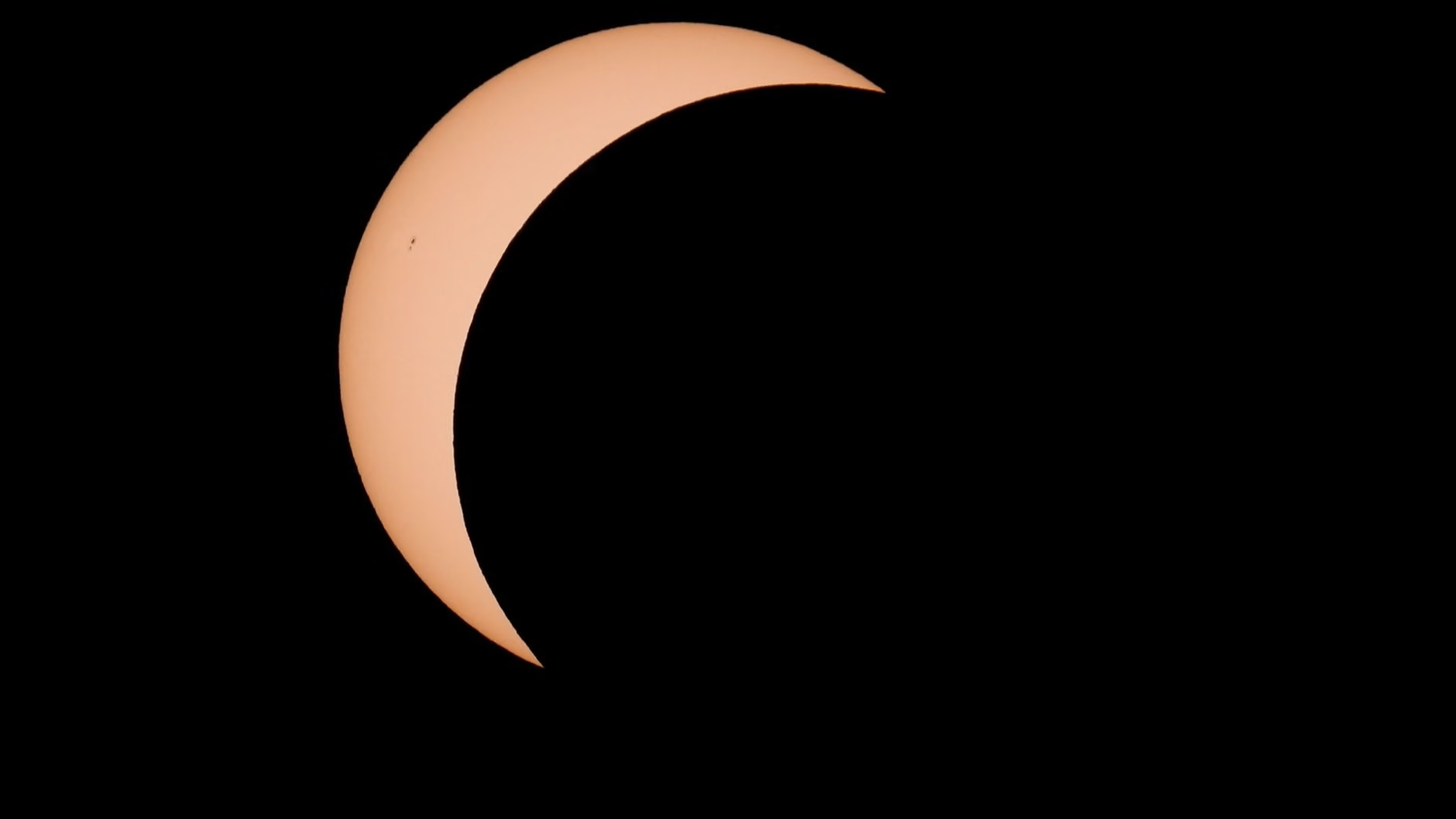
On August 12, 2026, the skies above Europe presented a truly remarkable astronomical event: a total solar eclipse that captivated millions. This celestial phenomenon, widely regarded as the most significant of its kind for the continent since 1999, saw the moon completely obscure the sun along a narrow path stretching across Iceland and Spain. Simultaneously, a vast majority of other European nations were treated to a dramatic partial eclipse, turning the afternoon sky into a memorable spectacle. The event not only offered a breathtaking visual experience but also generated considerable economic activity, as businesses across affected regions capitalized on the surge in public interest and tourism.
Understanding the Celestial Phenomenon
A solar eclipse occurs when the Moon passes directly between the Sun and Earth, casting a shadow on our planet. The type of eclipse witnessed depends on the alignment of these three celestial bodies and the observer’s location. A total solar eclipse, the most dramatic form, happens when the Moon entirely blocks the Sun’s disk, revealing the Sun’s ethereal corona, a sight rarely visible. During a total eclipse, daylight gives way to a twilight glow, temperatures drop, and stars may become visible. A partial solar eclipse, conversely, occurs when the Moon only covers a portion of the Sun, creating a crescent shape of light. Both forms require proper eye protection for safe viewing, emphasizing the importance of public awareness and preparation for such events.
The Path of Totality: Iceland and Spain
The August 12, 2026, eclipse carved a distinct path of totality, beginning its journey over the North Atlantic. Iceland was among the first landmasses to experience the full grandeur of the total eclipse. Observers in various parts of the island nation, known for its dramatic landscapes, were plunged into temporary darkness, witnessing the sun’s corona against a backdrop of glaciers and volcanic terrain. This unique setting provided an unparalleled viewing experience for both residents and a significant influx of international visitors who had traveled specifically for the event.
As the eclipse progressed eastward, its path continued across the Atlantic before making landfall in Spain. Regions across northern Spain, including parts of Galicia, Asturias, Cantabria, and the Balearic Islands, were privileged to be within the zone of totality. Cities and towns along this trajectory became focal points for eclipse chasers and enthusiasts. The clear skies often associated with Spanish summers offered optimal conditions for observation, allowing millions to witness the rare spectacle of the sun’s corona in a truly unforgettable display. The anticipation leading up to the event in these areas was palpable, transforming them into temporary hubs for scientific observation and public celebration.
A Partial Spectacle Across Europe
While the total eclipse was confined to a specific corridor, the vast majority of the European continent experienced a significant partial solar eclipse. From the British Isles to Eastern Europe, and from Scandinavia to the Mediterranean, millions of people observed the moon taking a substantial bite out of the sun. The degree of obscuration varied depending on geographical location, with areas closer to the path of totality experiencing a more pronounced partial eclipse. This widespread visibility meant that the event was a shared experience across diverse cultures and nations, fostering a sense of global connection and wonder.
Public viewing events were organized in numerous cities, drawing large crowds to parks, observatories, and open spaces. Schools and educational institutions often incorporated the eclipse into their curriculum, using it as a practical lesson in astronomy and celestial mechanics. The collective experience of witnessing the partial eclipse, even without the full totality, served as a powerful reminder of the dynamic nature of our solar system and the beauty of cosmic alignments.
Economic Boost from the Eclipse
The rare astronomical event generated significant demand across various sectors, leading to a notable economic uplift. Local economies in the path of totality, particularly in Iceland and Spain, saw a substantial surge in tourism. Hotels, guesthouses, and short-term rentals experienced peak occupancy rates as enthusiasts traveled from around the globe to secure prime viewing locations. Restaurants and cafes reported increased patronage, catering to both international visitors and domestic travelers seeking to combine their eclipse viewing with local culinary experiences.
Retailers specializing in eclipse viewing glasses and related merchandise also saw a substantial boost in sales leading up to the event, highlighting the importance of safe viewing practices. Transportation services, including airlines and local transit, managed increased passenger volumes, reflecting the widespread interest in witnessing the celestial spectacle. Beyond direct tourism, the eclipse also spurred demand for guided tours, specialized photography workshops, and educational programs, further contributing to local economies and showcasing the broader appeal of astronomical tourism.
Preparing for the Viewing Experience
Given the inherent risks of looking directly at the sun, extensive public information campaigns were crucial in the lead-up to the August 12, 2026, eclipse. Authorities and scientific organizations emphasized the absolute necessity of using certified solar viewing glasses or indirect projection methods to protect eyesight. Retailers were encouraged to stock ISO-certified eclipse glasses, and warnings were issued against using inadequate substitutes like regular sunglasses. Observatories and astronomical societies played a vital role in educating the public, hosting workshops, and distributing safe viewing equipment.
For those within the path of totality, specific advice was provided on when it was safe to remove eye protection – only during the brief period of totality when the sun’s disk is completely covered. This careful preparation ensured that millions could safely enjoy the eclipse, transforming a potentially hazardous event into a widely accessible and awe-inspiring experience.
Scientific and Cultural Significance
Beyond its visual appeal and economic impact, the Solar Eclipse Europe 2026 held considerable scientific and cultural significance. For astronomers, total solar eclipses offer unique opportunities to study the sun’s corona, the outermost layer of its atmosphere, which is usually obscured by the sun’s bright face. Observations during totality can provide valuable data on coronal heating, solar winds, and space weather phenomena. Scientists deployed specialized equipment along the path of totality to capture images and collect data that would contribute to ongoing solar research.
Culturally, solar eclipses have historically inspired awe, fear, and wonder across civilizations. The 2026 event continued this tradition, sparking conversations about astronomy, our place in the universe, and the delicate balance of celestial mechanics. It served as a powerful educational tool, inspiring a new generation of scientists and fostering a deeper appreciation for the natural world and the cosmos.
Reflecting on a Memorable Event
The Solar Eclipse Europe 2026 on August 12 stands as a testament to the enduring power of celestial events to unite and inspire. From the dramatic totality witnessed in Iceland and Spain to the widespread partial views across the continent, it was an event that transcended national borders and captivated a diverse audience. The careful planning, public education, and robust economic activity surrounding the eclipse underscored its multifaceted impact. As memories of the darkened skies and the shimmering corona fade, the experience of this significant astronomical alignment will undoubtedly remain a cherished moment for all who had the privilege to witness it, reinforcing humanity’s timeless fascination with the wonders of the universe.






















Leave a Reply