



The shifting geopolitical landscape across Europe has brought new vulnerabilities to the forefront of continental defense. Recent incidents involving unauthorized aerial vehicles and suspicious activities near critical infrastructure have alarmed regional leaders. In response to these growing threats, top European officials are advocating for a coordinated approach to safeguard member states against hybrid warfare tactics.
Introduction to the Emerging Security Challenges
For decades, European nations focused primarily on traditional defense strategies and border protection. However, the modern era has introduced unconventional threats that bypass conventional military defenses. Unmanned aerial vehicles, commonly known as drones, have become a frequent tool for espionage and disruption. These devices often operate at low altitudes, making them difficult to detect and neutralize using legacy radar systems.
At the same time, critical infrastructure such as undersea communication cables, energy pipelines, and transport networks face unprecedented risks. Sabotage attempts targeting these vital arteries can paralyze economies and cut off essential supplies to millions of citizens. Because these networks often span multiple borders, a localized response is rarely sufficient to address the root causes of the disruption.
Call for a Unified European Defense Strategy
Recognizing the transnational nature of these vulnerabilities, the leadership of the European Commission has formally proposed the establishment of a dedicated security mechanism. This initiative aims to bridge the gap between individual national defenses and collective continental resilience. By pooling resources, intelligence, and technological capabilities, member states can create a comprehensive shield against emerging threats.
Proponents of the plan emphasize that current fragmented approaches leave critical gaps that malicious actors can easily exploit. A centralized framework would allow for real-time information sharing regarding suspicious drone flights and infrastructure tampering. Furthermore, it would streamline decision-making processes during crises, ensuring that a swift and effective response can be deployed regardless of where an incident occurs.
Enhancing Technological Capabilities and Detection
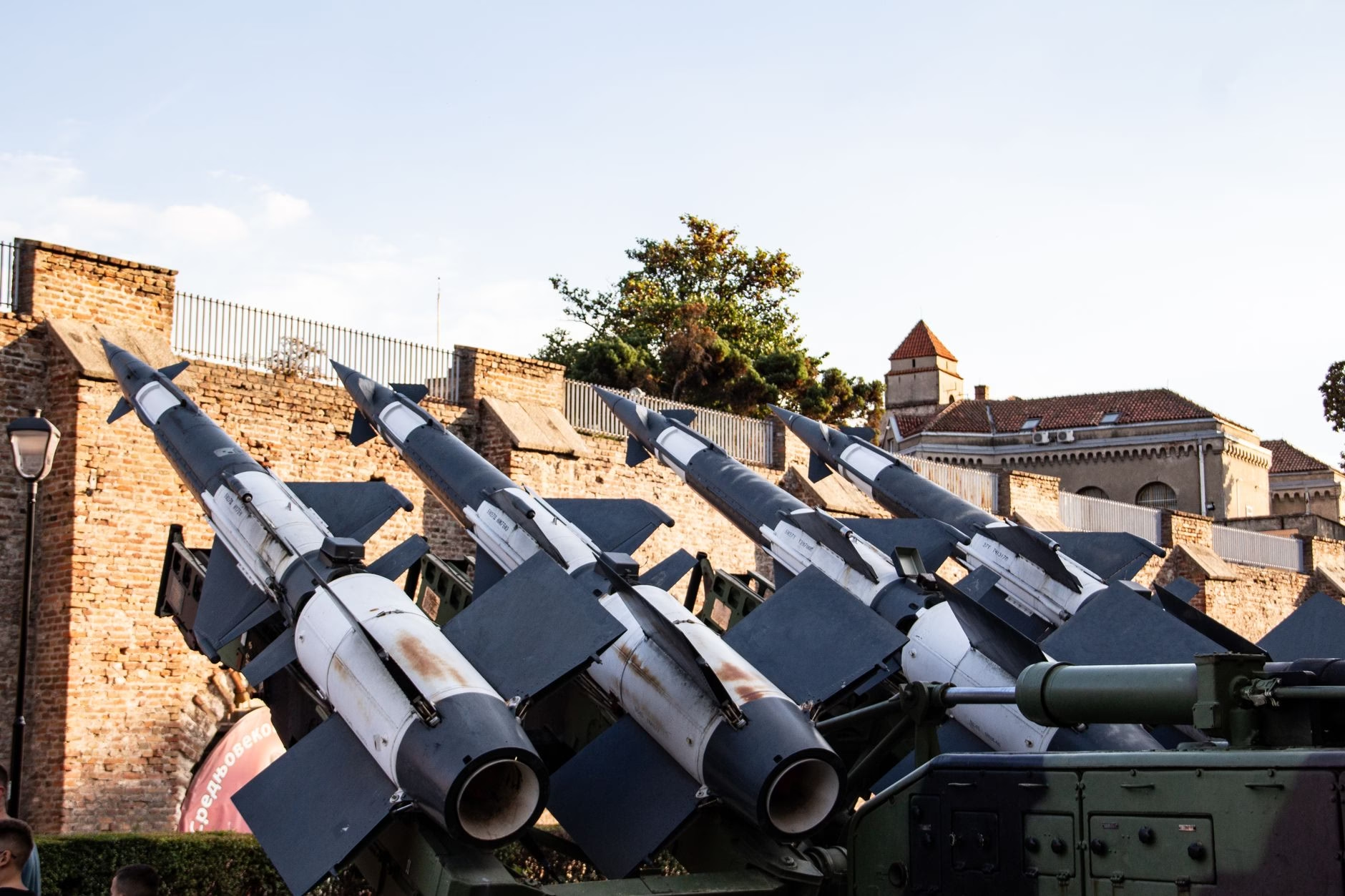
A cornerstone of the proposed security mechanism involves heavy investment in advanced detection and countermeasure technologies. Traditional air defense systems are often too costly and ill-suited for intercepting small, consumer-grade or specialized military drones in civilian airspace. Therefore, European authorities must acquire specialized equipment designed specifically to jam, track, or safely disable unauthorized aircraft without endangering local populations.
In addition to hardware upgrades, the initiative stresses the importance of artificial intelligence and machine learning in threat analysis. Automated systems can process vast amounts of radar and sensor data far quicker than human operators, identifying patterns and potential threats before they materialize into active sabotage operations.
Protecting Critical Infrastructure Across Borders
Securing physical assets requires a combination of enhanced physical surveillance and legal harmonization. Many European laws regarding airspace management and property protection vary significantly from one country to another. The new security framework seeks to harmonize these regulations, closing legal loopholes that hinder cross-border investigations and preventive security measures.
Operators of energy grids, telecommunications networks, and transport hubs will also be required to adopt higher baseline security standards. Public-private partnerships will play a vital role in this regard, ensuring that commercial entities work closely with national and European intelligence agencies to share threat assessments and implement robust defensive protocols.
Looking Ahead to a Resilient Future
Implementing a continent-wide security mechanism is not without its challenges. Member states fiercely guard their national sovereignty, particularly regarding defense and domestic law enforcement. Convincing governments to cede a degree of control to a central European framework requires delicate diplomatic negotiation and a shared recognition of the stakes involved.
Nevertheless, the frequency and sophistication of recent drone incursions and sabotage attempts have created a strong consensus that inaction is no longer an option. As the continent navigates an increasingly complex security environment, establishing a unified response mechanism represents a crucial step toward ensuring long-term stability and protecting the safety of citizens across all member nations.



















Leave a Reply