


The current international landscape is marked by a deepening diplomatic impasse between the United States and Iran. This stalemate has been underscored by recent declarations from President Trump, who has not only echoed a demand for compensation previously voiced by Iran but has also asserted American authority over the strategically vital Strait of Hormuz. These developments highlight a complex and entrenched disagreement, where both parties appear to be adopting firm positions, contributing to an environment of heightened tension and uncertainty. The mirroring of demands and the assertion of control over a critical global chokepoint signal a significant phase in the ongoing negotiations or lack thereof.
The Nature of a Diplomatic Stalemate
A diplomatic stalemate represents a critical juncture in international relations where progress towards resolution becomes exceedingly difficult. Characterized by an inability of opposing parties to reach a mutually agreeable solution, such impasses often arise when fundamental disagreements persist, and neither side is willing to concede on core issues. In the context of the current situation between the U.S. and Iran, the deepening nature of this stalemate suggests that initial attempts at negotiation or de-escalation have proven ineffective, leading to a hardening of stances. This can manifest in various forms, including reciprocal demands, public declarations of sovereignty or control, and a general reluctance to compromise. The absence of forward momentum can prolong disputes, potentially leading to increased friction and a more entrenched state of disagreement. Understanding the dynamics of such a deadlock is crucial for appreciating the challenges inherent in resolving the present international situation.
Reciprocal Demands for Compensation
A notable aspect of the evolving situation is President Trump’s mirroring of Iran’s demand for compensation. The concept of compensation in international disputes typically involves one party seeking redress for perceived damages, losses, or grievances inflicted by another. Such demands can stem from a variety of historical, economic, or political factors. When one nation presents a claim for compensation, and the opposing nation subsequently issues a similar or reciprocal demand, it often signifies a profound lack of agreement on accountability and responsibility. This mirroring action can serve multiple purposes: it might be a strategic maneuver to neutralize the opponent’s claim, a genuine belief in one’s own entitlement to redress, or a tactic to escalate the diplomatic pressure. In this specific instance, the reciprocal nature of the compensation demands underscores the deep-seated grievances and the difficulty in establishing a common ground for resolution, as both sides appear to believe they are owed something by the other. This dynamic further complicates any potential path towards reconciliation, as it shifts the focus from finding a compromise to asserting claims of victimhood or entitlement.
The Strategic Importance of the Strait of Hormuz
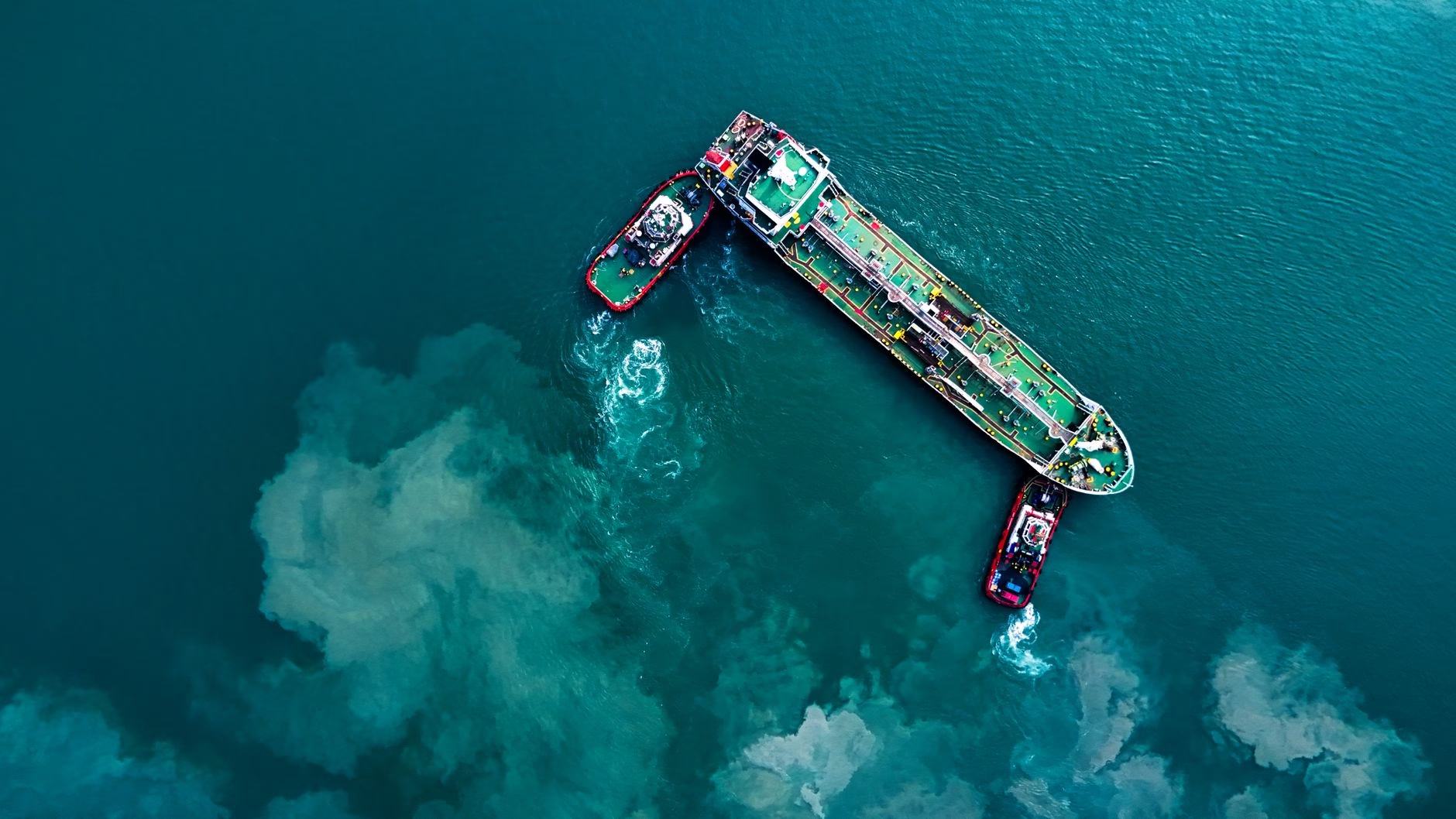
The Strait of Hormuz is globally recognized as one of the most critical maritime chokepoints, connecting the Persian Gulf with the Arabian Sea and the broader Indian Ocean. Its geographical significance is immense, as a substantial portion of the world’s oil supply transits through its narrow waters daily. This makes any assertion of control over the Strait a matter of profound international concern, impacting global energy markets, trade routes, and geopolitical stability. The ability to influence or control passage through this waterway grants considerable strategic leverage. Therefore, claims of authority over the Strait are not merely symbolic; they carry significant practical implications for international shipping, energy security, and regional power dynamics. The inherent sensitivity of this waterway means that any unilateral declaration of control by a major power is likely to be met with scrutiny and potential challenges from the international community, given its status as a vital artery for global commerce.
President Trump’s Claim of U.S. Control
Amidst the deepening stalemate and reciprocal demands, President Trump’s assertion that the United States controls the Strait of Hormuz introduces a significant new dimension to the diplomatic discourse. Such a claim, particularly concerning an international waterway of this magnitude, carries substantial weight and implications. Assertions of control can be interpreted in various ways: they might refer to a de facto operational presence, a perceived legal right, or a declaration of intent to ensure freedom of navigation and security. Regardless of the precise interpretation, a claim of control over such a vital chokepoint by a global power like the U.S. inevitably sends a strong signal regarding its strategic priorities and its willingness to project influence in the region. This declaration could be intended to reinforce a position of strength, to deter potential adversaries, or to underscore a commitment to safeguarding international maritime passage. The implications of such a claim extend beyond the immediate parties involved, resonating across global energy markets and international security frameworks.
Implications for International Relations and Stability
The combination of a deepening stalemate, reciprocal compensation demands, and a significant claim of control over a critical international waterway has profound implications for international relations and regional stability. Such a complex situation can lead to increased geopolitical uncertainty, as other nations observe the unfolding dynamics and assess potential impacts on their own interests. The assertion of control over the Strait of Hormuz, in particular, could prompt reactions from various international actors, including those reliant on the waterway for trade and energy. It raises questions about the future of international maritime law, freedom of navigation, and the balance of power in a strategically sensitive region. The challenge for diplomacy in such an environment is immense, requiring careful navigation to prevent further escalation and to seek pathways for de-escalation and eventual resolution. The current trajectory suggests a period of sustained tension, where the actions and declarations of the involved parties will be closely monitored for their potential to either exacerbate or alleviate the existing impasse.
Navigating the Diplomatic Impasse
Resolving a diplomatic impasse characterized by such firm stances and significant claims requires a multifaceted approach. Traditional diplomatic tools, such as negotiation, mediation, and dialogue, become even more critical, though potentially more challenging, when positions are deeply entrenched. The involvement of international bodies or third-party facilitators might be considered to bridge the divide between the two nations. However, the reciprocal nature of the demands and the assertion of control over a vital waterway indicate a high degree of complexity that transcends typical diplomatic disagreements. The path forward would likely necessitate a re-evaluation of core positions, a willingness to explore creative solutions, and a commitment from both sides to de-escalate tensions. Without such efforts, the stalemate risks becoming a protracted feature of the international landscape, with ongoing implications for global stability and economic security. The current situation serves as a stark reminder of the intricate challenges inherent in managing high-stakes international disputes.
Conclusion
The ongoing diplomatic stalemate between the United States and Iran, exacerbated by President Trump’s mirroring of compensation demands and his assertion of U.S. control over the Strait of Hormuz, represents a significant moment in contemporary international relations. These developments underscore a period of heightened tension and entrenched positions between the two nations. The strategic importance of the Strait of Hormuz amplifies the global implications of these claims, affecting international trade, energy security, and regional stability. As the situation continues to unfold, the international community watches closely for any signs of de-escalation or potential pathways toward a resolution. The intricate web of reciprocal demands and assertive declarations highlights the profound challenges in navigating complex geopolitical disputes, emphasizing the need for sustained diplomatic efforts to prevent further hardening of stances and to explore avenues for a peaceful resolution.




















Leave a Reply