


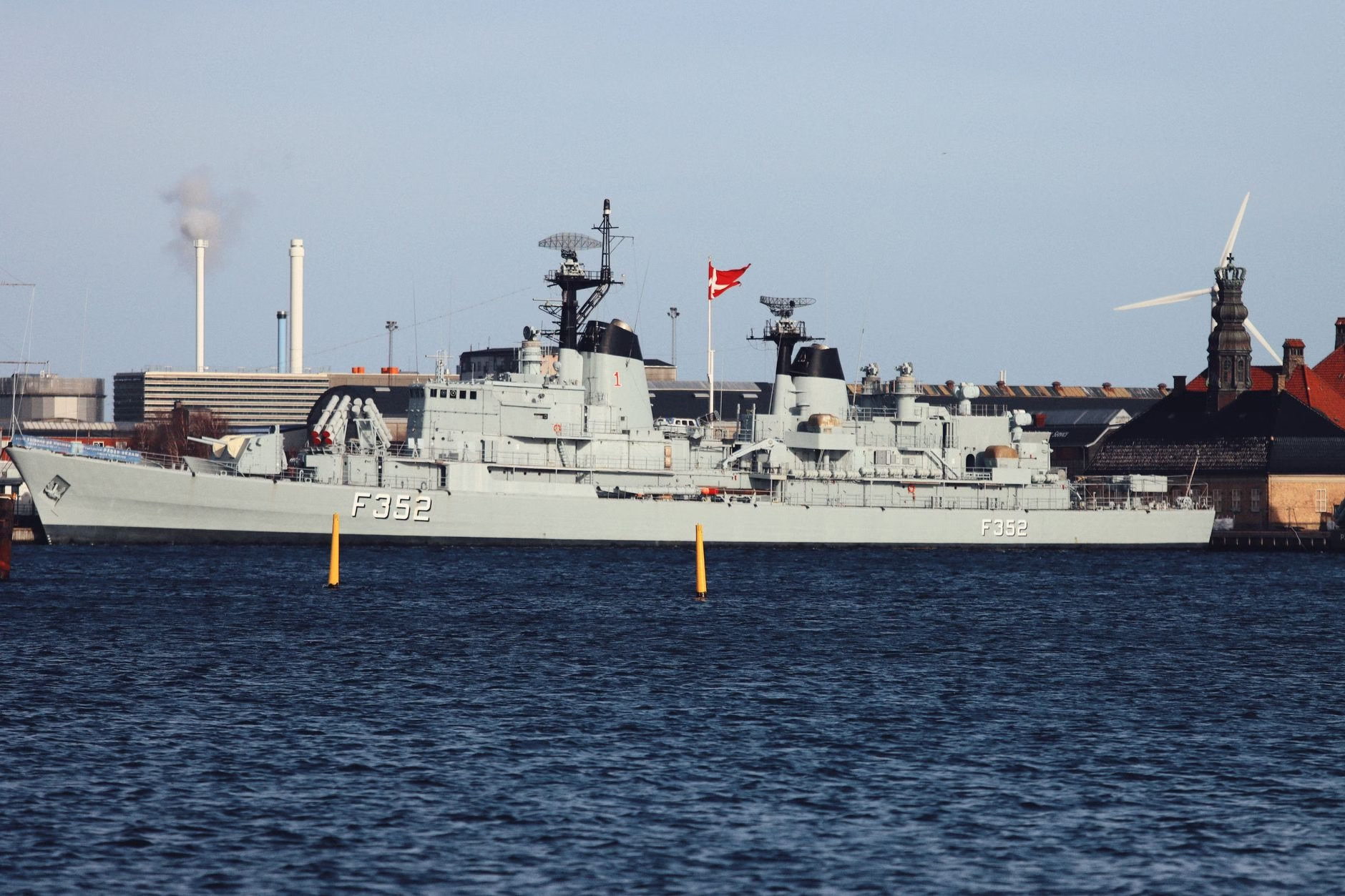
International maritime tensions have escalated following a concerning incident involving Danish and Russian military assets. Government officials in Denmark have publicly stated that a Russian naval vessel discharged flares in close proximity to a military helicopter operating in international waters. This event has sparked diplomatic concern and heightened scrutiny regarding safety protocols in northern European waters.
Background of the Maritime Incident
The encounter occurred during a routine patrol and monitoring operation conducted by the Danish armed forces. Military authorities confirmed that the aircraft was performing standard surveillance duties when the confrontation transpired. The deployment of flares by a warship directly toward an active aircraft represents a significant deviation from standard peacetime protocols and maritime safety regulations.
Government and Military Response
Danish defense officials reacted swiftly to the provocation, registering formal concerns regarding the safety of their personnel and equipment. Representatives emphasized that military operations conducted in shared or international domains must adhere to established international law to prevent accidental escalations. The Ministry of Defense is currently reviewing the collected radar and visual evidence to determine the precise sequence of events leading up to the flare deployment.
Broader Regional Security Implications
This latest event adds to a growing list of friction points between NATO members and Russian military forces operating in the Baltic Sea and surrounding regions. Security analysts note that close-quarters interactions between naval vessels and airborne units carry inherent risks of miscalculation. Maintaining open channels of communication and strictly observing safety guidelines remain critical priorities for regional defense planners seeking to avoid further diplomatic fallout from such incidents.




















Leave a Reply