


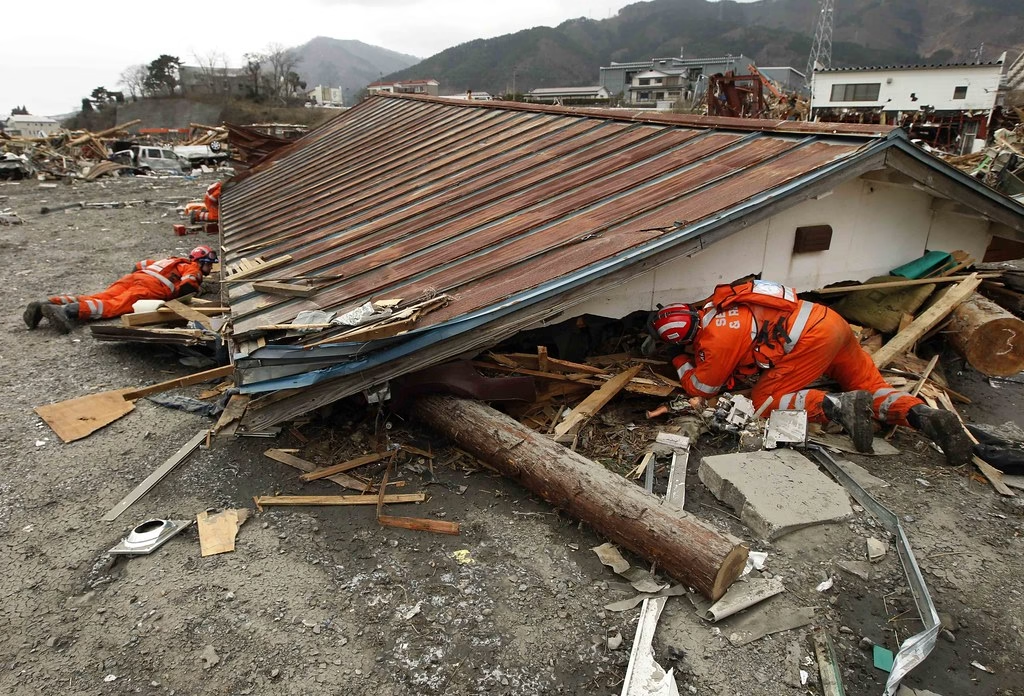
Crisis Response in the Aftermath
Emergency rescue teams in Venezuela confirmed on Tuesday that the death toll from the massive earthquake that struck the nation’s northern coast has climbed to 3,685. The seismic event, which occurred late last week, has left thousands more injured and displaced, prompting a massive international humanitarian mobilization in the capital and surrounding affected regions.
Context of the Seismic Event
Venezuela sits near the complex boundary where the Caribbean and South American tectonic plates meet, making the region prone to seismic activity. This particular earthquake, categorized as one of the most powerful in recent decades, struck during the early hours of the morning while many residents were asleep, significantly increasing the vulnerability of the population.
Rescue Operations and Challenges
Search and rescue efforts remain in full swing, though they are increasingly hampered by damaged infrastructure and blocked transit routes. Heavy machinery has struggled to navigate narrow, debris-filled streets in urban centers, while remote mountain villages remain largely cut off from traditional supply chains.
Government officials have declared a national state of emergency, allowing for the rapid deployment of military assets to assist with excavation and medical triage. Despite these efforts, the sheer scale of the destruction has overwhelmed local hospitals, many of which have also sustained structural damage.
Expert Analysis and Data
Seismologists from the Venezuelan Foundation for Seismological Research (FUNVISIS) noted that the shallow depth of the earthquake’s epicenter exacerbated the intensity of the ground shaking. Data suggests that the duration of the tremors lasted nearly 45 seconds, causing widespread collapse of multi-story residential buildings that were not built to modern seismic codes.
International aid organizations, including the Red Cross and various United Nations agencies, have begun coordinating the delivery of clean water, field hospitals, and trauma kits. These organizations emphasize that the next 72 hours are critical for locating survivors trapped under the rubble, though the window of opportunity is closing rapidly.
Long-term Implications
The economic impact of the disaster is expected to be profound, as the country grapples with the destruction of essential infrastructure and power grids. Experts warn that the recovery phase will require years of sustained investment in building resilient housing and updating early warning systems to mitigate future casualties.
As the international community continues to pledge support, observers are monitoring the government’s ability to distribute aid equitably to the most isolated regions. The coming weeks will reveal the true extent of the economic and social fallout, as well as the effectiveness of the government’s long-term reconstruction strategy in the face of this unprecedented national tragedy.



















Leave a Reply