


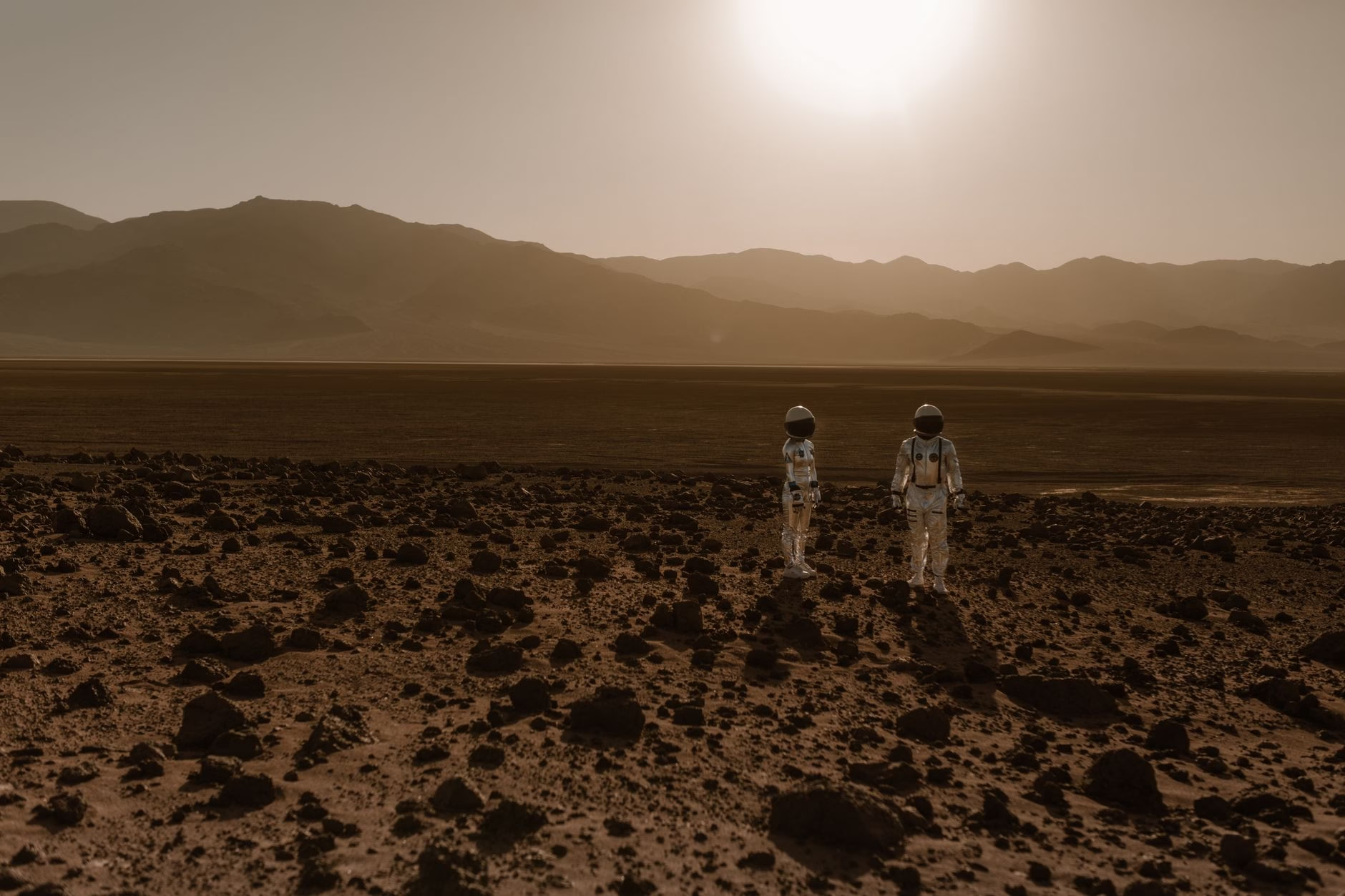
The global race to explore the Red Planet and unlock its deepest secrets has entered a dramatic new phase. International space agencies are currently locked in a high-stakes competition to achieve a monumental milestone in planetary science. Among the primary contenders, China is advancing rapidly with an ambitious timeline that could outpace traditional space leaders and successfully return the first Martian samples to Earth.
Introduction to the Mars Sample Return Race
For decades, exploring Mars has captivated scientists and space enthusiasts alike. Rovers and orbiters have gathered unprecedented amounts of data, capturing images of ancient riverbeds and analyzing atmospheric composition. However, the ultimate goal for planetary geologists has always been sample return. Bringing physical pieces of the Red Planet back to terrestrial laboratories allows for exhaustive testing using advanced instrumentation that cannot fit onto a spacecraft.
While multiple space programs have expressed interest in this endeavor, the logistical hurdles are immense. The mission requires a complex sequence of events, including landing on the Martian surface, collecting geological specimens, launching a rocket from another planet for the first time, and executing a precise rendezvous in orbit before embarking on the long journey back to Earth. Despite these staggering challenges, recent developments suggest that the timeline for completion is accelerating faster than many analysts previously anticipated.
China’s Strategic Plan for 2031
Recent announcements and technical updates from the nation’s space administration outline a clear path toward retrieval. By leveraging the momentum from previous successful planetary missions, engineering teams have refined their mission architecture. The projected target for delivering these precious materials back to Earth is currently set for the year 2031.
This aggressive schedule places considerable pressure on competing international agencies. The methodical approach taken by the space program relies on proven technologies while introducing innovative propulsion and autonomous navigation systems. If successful, this undertaking will mark a historic turning point in space exploration, cementing a leading role in deep space science and extraterrestrial sample analysis.
Implications for NASA and Global Space Exploration
Meanwhile, traditional leaders in planetary exploration have faced unexpected setbacks and budgetary recalibrations. The complexity of orchestrating a multi-stage sample retrieval mission has led to restructuring within major agencies, causing delays in their respective timelines. As a result, the window of opportunity for Western space programs to claim the first successful return is narrowing significantly.
This dynamic fosters a renewed spirit of competition reminiscent of historical space races, albeit with modern scientific motivations. The successful acquisition of pristine Martian geology will provide crucial insights into whether ancient microbial life ever existed on our neighboring world. Furthermore, understanding the composition of the soil and rock samples will be vital for planning future crewed missions to the surface.
Looking Ahead to the Next Decade
As the decade progresses, all eyes will be turned toward the technical milestones achieved by planetary missions. Engineers and researchers will closely monitor upcoming launches, orbital maneuvers, and technological demonstrations. The outcome of this interplanetary endeavor will not only redefine our understanding of the solar system but also reshape the geopolitical landscape of space exploration for generations to come.






















Leave a Reply