


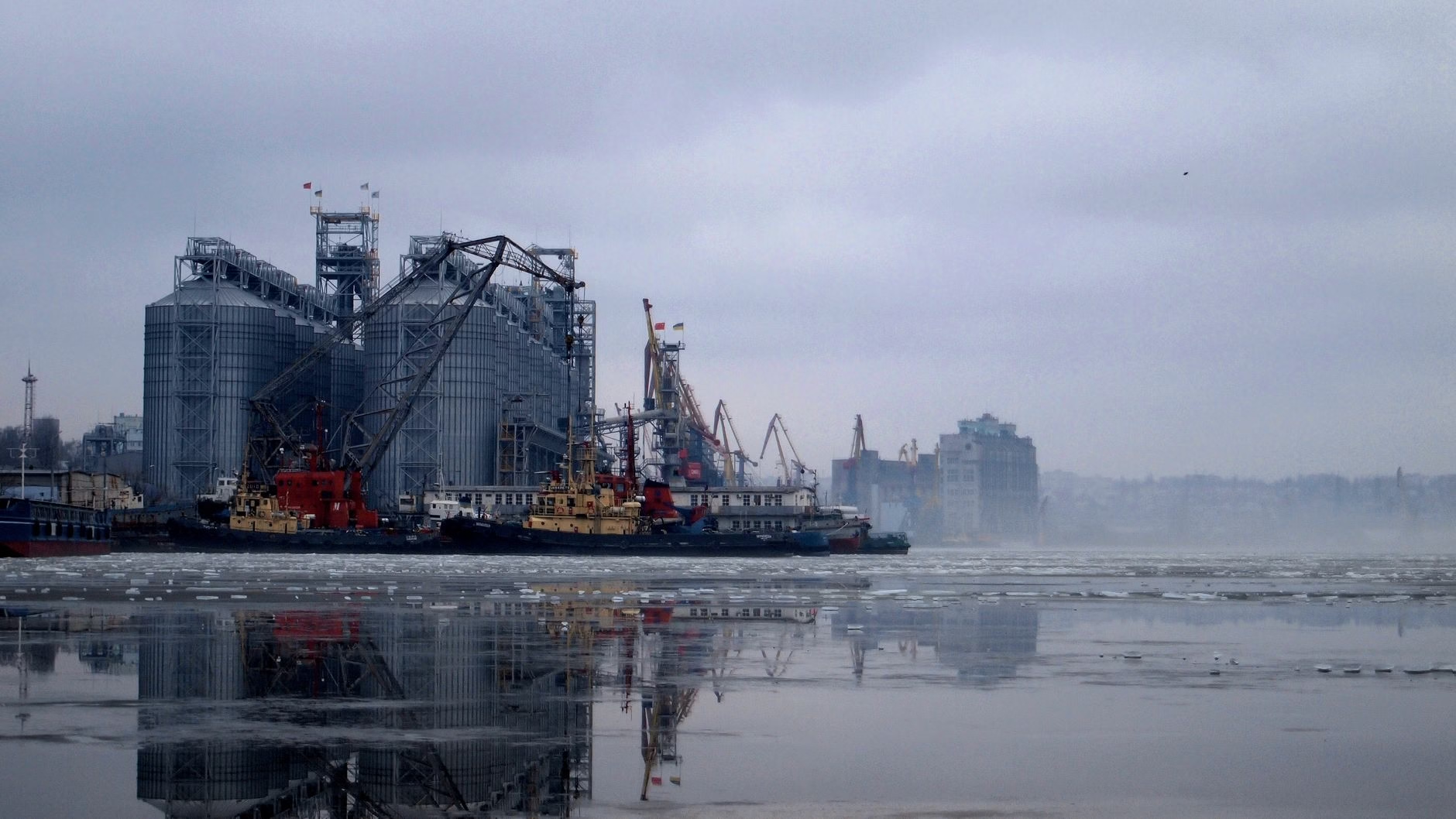
A significant drone assault has been conducted against military vessels and critical grain export infrastructure within the Black Sea port city of Novorossiysk. This strategic action by Ukraine targets a vital hub for Russian maritime operations and global commodity trade, immediately drawing attention to its potential ramifications for international food markets and regional stability.
The incident underscores the persistent tensions in the Black Sea region, a crucial waterway for both military and commercial activities. Novorossiysk, one of Russia’s largest ports, serves as a cornerstone of its economic and strategic interests, making it a high-value target in the ongoing conflict.
The implications of such an attack extend far beyond the immediate vicinity of the port. Disruptions to key export facilities in this region have historically triggered widespread concern among international observers and market analysts, particularly regarding the stability of global food supplies.
The Strategic Importance of Novorossiysk
Novorossiysk holds immense strategic importance for Russia, functioning as a major commercial port and a critical naval base. Its deep-water facilities accommodate a vast array of shipping, including tankers, container ships, and bulk carriers, making it indispensable for the nation’s export-driven economy.
For global trade, Novorossiysk is a primary conduit for Russian grain, oil, and other essential commodities. The port’s capacity to handle large volumes of agricultural products makes it a linchpin in the international food supply chain, particularly for countries in the Middle East, Africa, and Asia that rely heavily on Black Sea exports.
Beyond its commercial role, Novorossiysk hosts a significant portion of Russia’s Black Sea Fleet. The presence of naval assets at the port highlights its dual function as both an economic gateway and a military stronghold, further elevating its strategic value in the context of regional conflict.
Any disruption to operations at Novorossiysk, whether through direct damage or increased security concerns, can have a cascading effect on global markets. The port’s interconnectedness with international shipping routes means that incidents here resonate across the world’s trading networks.
Global Food Market Repercussions
The Black Sea region is often referred to as the world’s breadbasket, responsible for a substantial share of global wheat, barley, and sunflower oil exports. Consequently, any threat to the safe passage or loading of these commodities can quickly translate into heightened volatility in international food prices.
Previous disruptions in Black Sea shipping lanes have demonstrated the immediate and significant impact on global food security. Nations already grappling with food inflation or supply chain vulnerabilities are particularly susceptible to such events, which can exacerbate existing humanitarian and economic challenges.
The targeting of grain export terminals, specifically, sends a strong signal about the potential for further complications in the already fragile global food supply system. This action directly addresses the infrastructure vital for moving agricultural products from producers to consumers worldwide.
Warnings about the stability of food markets often follow incidents that threaten major export hubs. The recent assault on Novorossiysk’s grain facilities is likely to intensify these concerns, prompting stakeholders to evaluate risks to future shipments and potential price surges for staple crops.
Escalation in Black Sea Operations
The drone assault represents a continuation of the evolving nature of the conflict, where critical infrastructure and naval assets in the Black Sea are increasingly becoming targets. This shift underscores a broader strategy aimed at disrupting logistical capabilities and economic lifelines.
Modern drone technology has proven to be a potent tool in naval warfare, enabling attacks on targets that might otherwise be difficult to reach. The use of drones against both warships and commercial infrastructure highlights the adaptability of tactics in the ongoing hostilities.
Such incidents contribute to an environment of heightened risk for all maritime traffic in the Black Sea. Commercial shipping companies and insurers must continually reassess the safety of operating in these waters, potentially leading to increased costs for transportation and commodity prices.
The targeting of a major port like Novorossiysk also raises questions about the future security of maritime trade routes in the region. Ensuring safe passage for commercial vessels remains a paramount international concern, especially given the critical role of Black Sea exports in global supply chains.
Broader Economic and Geopolitical Implications
Beyond the immediate impact on grain markets, an attack on a port of Novorossiysk’s magnitude can have broader economic repercussions. Disruptions to oil exports, for instance, could influence global energy prices, adding another layer of complexity to the international economic landscape.
Geopolitically, such actions can be interpreted as an escalation, potentially inviting retaliatory measures and further entrenching the conflict. The international community often responds to these events with calls for de-escalation and adherence to international maritime law to prevent wider instability.
Maintaining the free flow of goods through international waters is a fundamental principle of global commerce. Any threat to this principle, particularly in a region as vital as the Black Sea, prompts significant diplomatic and security discussions among world powers.
The long-term implications could include a re-evaluation of global supply chain resilience and a push for diversification of sourcing for critical commodities. This incident serves as a stark reminder of the vulnerabilities inherent in highly concentrated trade routes.
Conclusion
The drone assault on Novorossiysk’s Black Sea port, targeting both naval vessels and crucial grain export terminals, marks a significant development in the ongoing conflict. It immediately brings into focus the delicate balance of regional security and the profound impact such events can have on global food markets.
As the situation unfolds, the international community will closely monitor the implications for commodity prices, shipping safety, and the broader geopolitical landscape. The incident underscores the persistent challenges in maintaining stability in critical maritime regions and ensuring the uninterrupted flow of essential goods worldwide.
Ultimately, the event at Novorossiysk highlights the interconnectedness of global systems, where localized conflicts can generate far-reaching consequences for economies and populations across the globe.





















Leave a Reply