



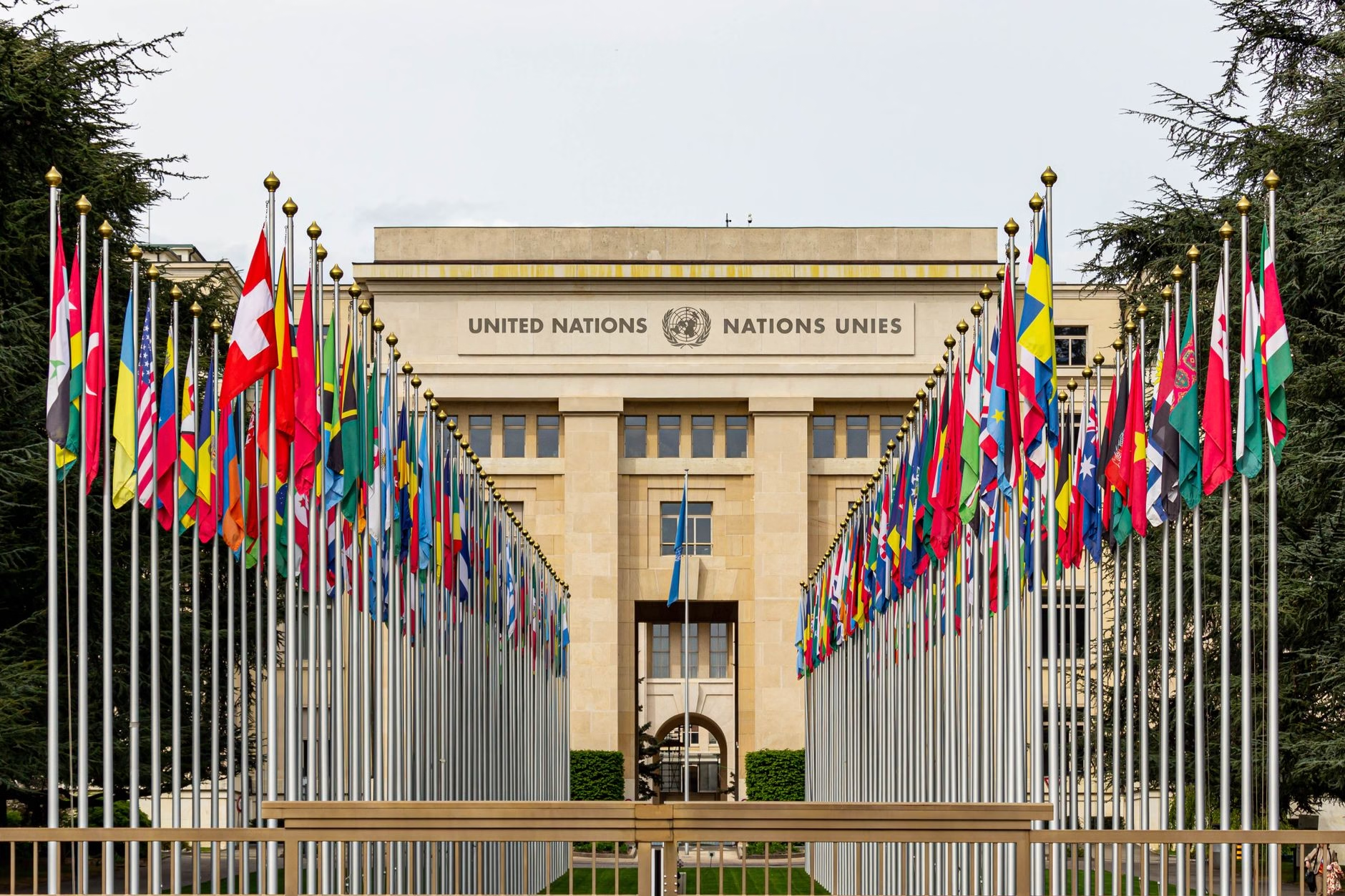
The ongoing diplomatic discussion surrounding the South Atlantic archipelago intensified recently as the head of state for Argentina addressed the international community. During a high-level appearance at the United Nations, President Javier Milei formally reasserted his country’s enduring claim of sovereignty over the Falkland Islands.
Background of the Territorial Dispute
The dispute over the islands has a long history involving both South American diplomacy and European governance. Argentina maintains that the territory, known locally as the Islas Malvinas, falls under its rightful jurisdiction due to geographical proximity and historical succession following independence from Spanish rule.
On the other side of the debate, the residents of the islands have repeatedly expressed their desire to remain an overseas territory of the United Kingdom. London has consistently maintained that the principle of self-determination for the local population must be respected, and that no sovereignty talks can occur unless the islanders themselves wish for a change in status.
A Call for Diplomatic Engagement
Despite the historical tensions and a brief armed conflict in the early nineteen-eighties, the recent address emphasized a shift toward contemporary diplomatic methods. The Argentine leader used the global platform to urge a peaceful solution to the long-standing disagreement.
Rather than escalating regional friction, the administration in Buenos Aires is positioning its current strategy around dialogue and adherence to international law. Officials suggest that a negotiated settlement remains the only viable path forward for addressing the complex territorial questions that have persisted for decades.
Implications for International Relations
Reintroducing the topic at the United Nations serves to keep the sovereignty question active on the global diplomatic agenda. International observers note that while immediate policy changes are unlikely given the firm stance held by the British government, continuous dialogue remains essential for maintaining regional stability.
As diplomatic channels stay open, both nations continue to navigate the delicate balance between national sovereignty claims and the practical realities of governance in the South Atlantic.






















Leave a Reply