


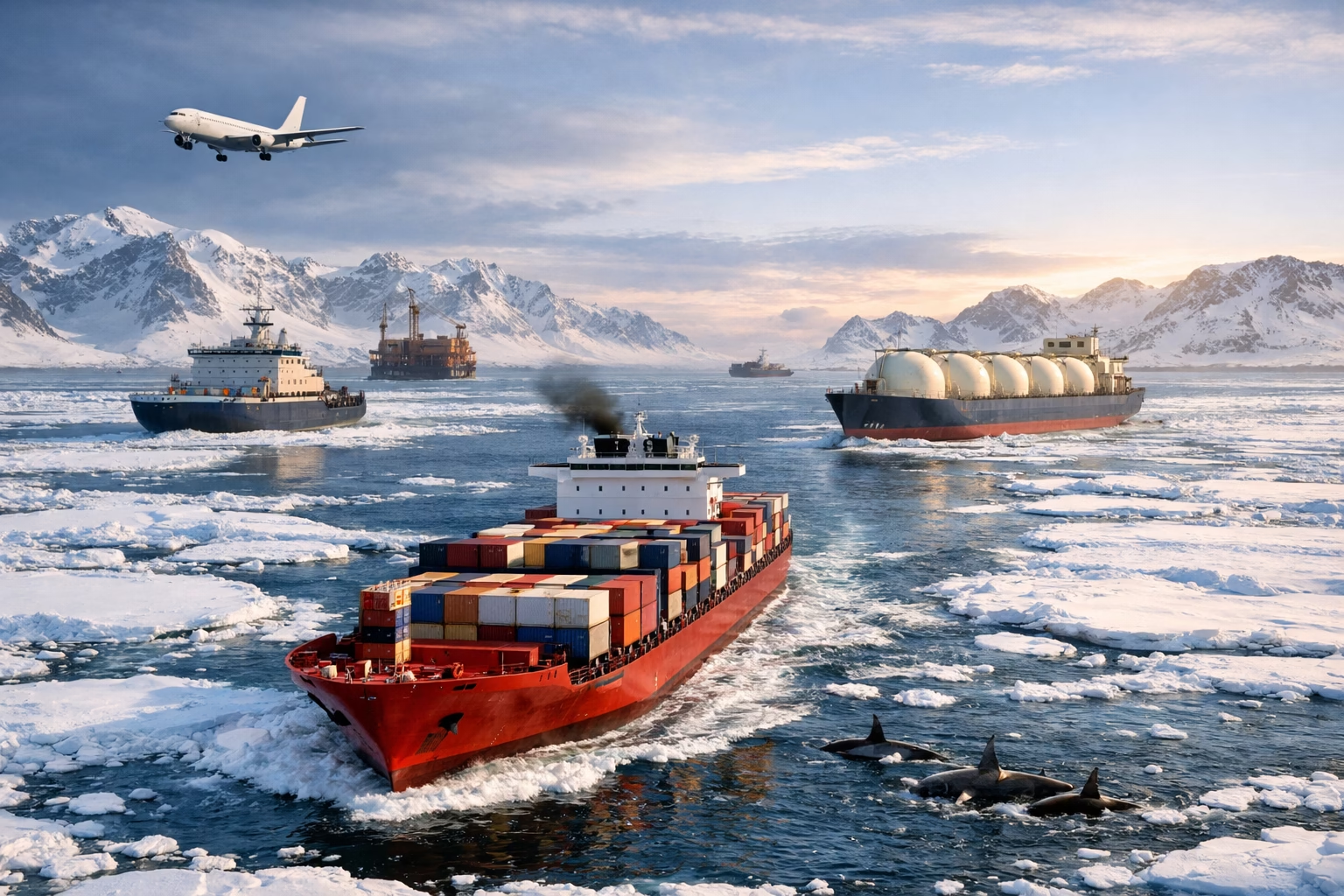
The Arctic Pivot: Navigating the 2026 Shipping Revolution
As of May 2026, the geopolitical map of global trade has undergone a fundamental shift. Continued volatility in the Red Sea and rising insurance premiums for the Suez Canal have forced a record number of cargo vessels into the Northern Sea Route (NSR). For business owners and logistics managers, this isn’t just a seasonal anomaly; it is the birth of a permanent secondary artery for global commerce.
The Current Reality: Why the North?
In May 2026, the “Arctic Silk Road”—a joint venture between Russian and Chinese state-led entities—has achieved year-round navigability for reinforced ice-class vessels. For a shipment traveling from Shanghai to Rotterdam, the NSR reduces distance by 40% compared to the Cape of Good Hope route. In an era of high fuel costs and volatile carbon taxes, this 12-to-15-day time saving is no longer optional—it’s a competitive necessity.
Strategic Tool for Monitoring: MarineTraffic Arctic Filters
To manage this risk, professional analysts are moving beyond standard GPS tracking. Use the MarineTraffic ‘Arctic Ice Class’ Filter combined with PolarView.aq satellite data. These tools allow you to:
- Track Ice-Breaker Convoys: Monitor the availability of Rosatomflot nuclear ice-breakers which dictate the flow of the NSR.
- Verify Vessel Ratings: Ensure your freight is on a PC (Polar Class) rated hull to avoid sudden insurance cancellations.
- Monitor Port Congestion: Track the rapid expansion of the Murmansk and Arkhangelsk hubs, which are becoming the ‘Singapores of the North.’
Direct Impact on Your Business
1. For Logistics Managers: The 35% Delta
Data shows that while NSR transit fees (paid in non-USD currencies) are rising, the total voyage cost is currently 35% lower than the ‘Suez + War Risk Premium’ alternative. If your supply chain relies on JIT (Just-In-Time) inventory, the Arctic route is now your primary hedge against Middle Eastern bottlenecking.
2. For Global Investors: Infrastructure Arbitrage
Capital is fleeing Mediterranean transshipment hubs and flowing into Baltic Sea ports. Investors should look at regional logistics REITs (Real Estate Investment Trusts) in Northern Europe and Scandinavia, which are seeing a 15% YoY increase in TEU (Twenty-foot Equivalent Unit) throughput.
3. For Business Owners: Currency and Compliance Risk
Using the NSR often requires navigating the ‘BRICS+ Bridge’ payment system. If you are an international freelancer or small business, be aware that paying for northern logistics may involve Ruble-Yuan settlements, which requires a specialized compliance desk to avoid secondary sanctions from Western jurisdictions.
Actionable Checklist for May 2026
- Audit your Freight Forwarders: Ask specifically for their ‘Polar Strategy.’ If they don’t have one, you are overpaying for Suez risk.
- Geopolitical Insurance: Re-evaluate your maritime insurance policies. Standard Lloyd’s of London hull clauses may have exclusions for high-latitude transits.
- Inventory Buffering: Use the time saved via the NSR to reduce your ‘safety stock’ and free up working capital.
The Arctic is no longer a frozen frontier; it is the new frontline of global logistics. In May 2026, the companies winning the trade war are the ones looking North.

























Leave a Reply