


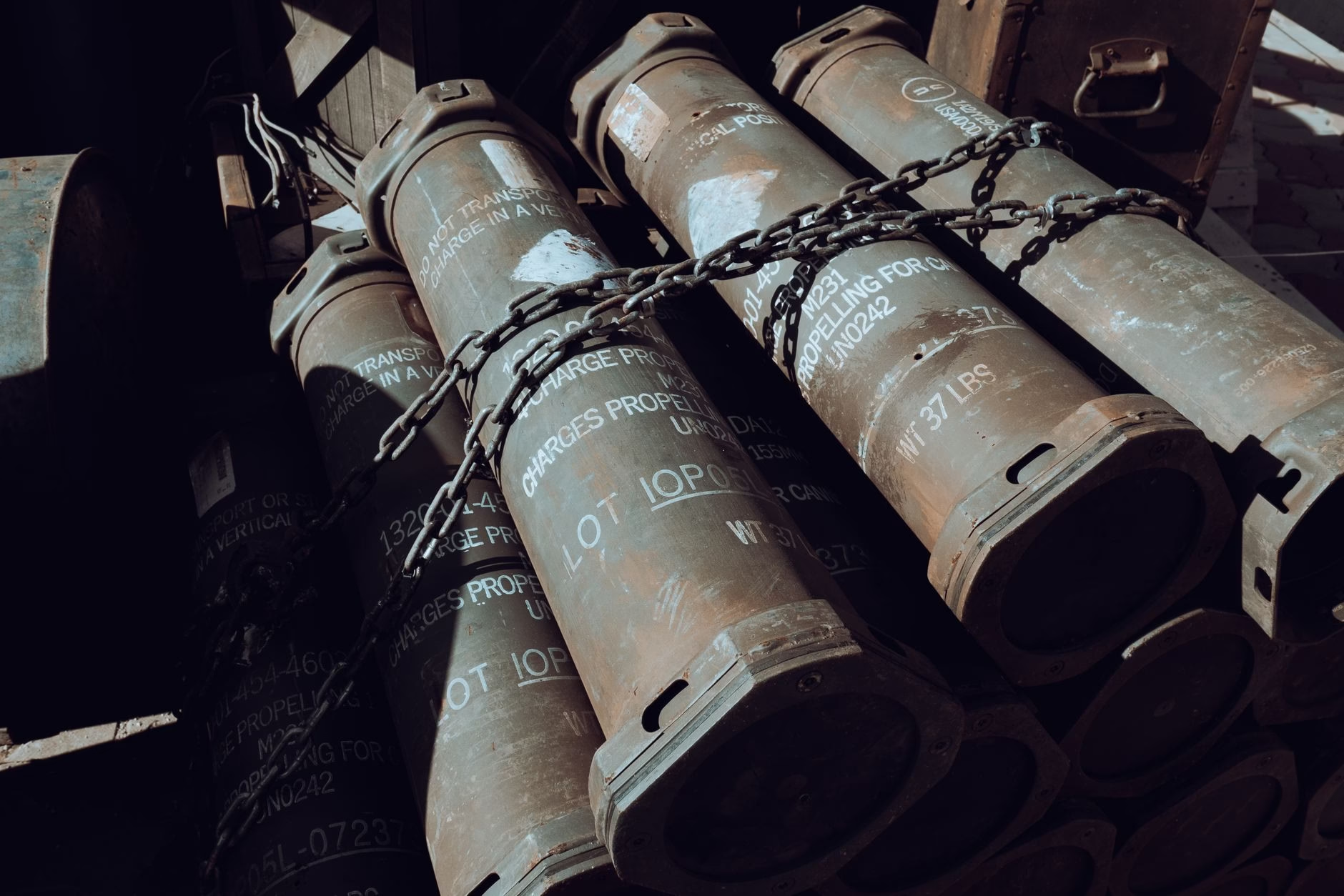
The prolonged military engagement against Iran has surpassed the six-month mark with no clear resolution in sight. During the initial phases of this campaign, United States forces expended thousands of advanced, precision-guided munitions. This heavy expenditure has left national stockpiles critically low. Consequently, military leaders now confront a severe logistical challenge regarding the nation capacity to sustain prolonged deterrence or conflict against major global adversaries.
Assessing Strategic Vulnerabilities
The rapid consumption of high-tech weaponry has exposed vulnerabilities within national defense readiness. The Department of Defense relies heavily on complex munitions that require extensive time and specialized supply chains to construct. With current inventories significantly diminished, defense planners must reevaluate how existing assets are allocated across various global theaters of operation.
The prospect of facing a peer adversary with depleted reserves has elevated concerns among military strategists. Precision-guided missiles are essential components of modern tactical operations, offering the ability to strike targets with minimal collateral damage while keeping personnel out of immediate harm way. Without an adequate supply of these systems, operational flexibility narrows substantially.
Transitioning to a Wartime Production Footing
To address the shortfall, defense officials have directed the aerospace and defense manufacturing sector to transition toward accelerated production capabilities. This shift, often described as operating on a wartime footing, is designed to fast-track the replenishment of depleted missile inventories and modernize the broader defense supply chain.
Expanding manufacturing capacity is a complex undertaking that involves overcoming significant logistical hurdles. Securing rare earth materials, specialized microchips, and skilled labor represents only a fraction of the challenge. Industrial facilities must scale up operations while maintaining stringent quality control standards required for military-grade hardware.
Financial Commitments and Long-Term Outlook
Rebuilding the national defense stockpile will demand substantial financial investment. Allocating billions of dollars toward missile manufacturing requires congressional approval and multi-year budgetary planning. Defense contractors indicate that achieving pre-conflict inventory levels will take several years of continuous production.
The current situation serves as a stark reminder of the demands modern warfare places on industrial capacity. As the defense sector ramps up output, policymakers and military leaders continue to monitor global stockpiles closely, balancing immediate operational needs with the long-term imperative of national security readiness.























Leave a Reply