


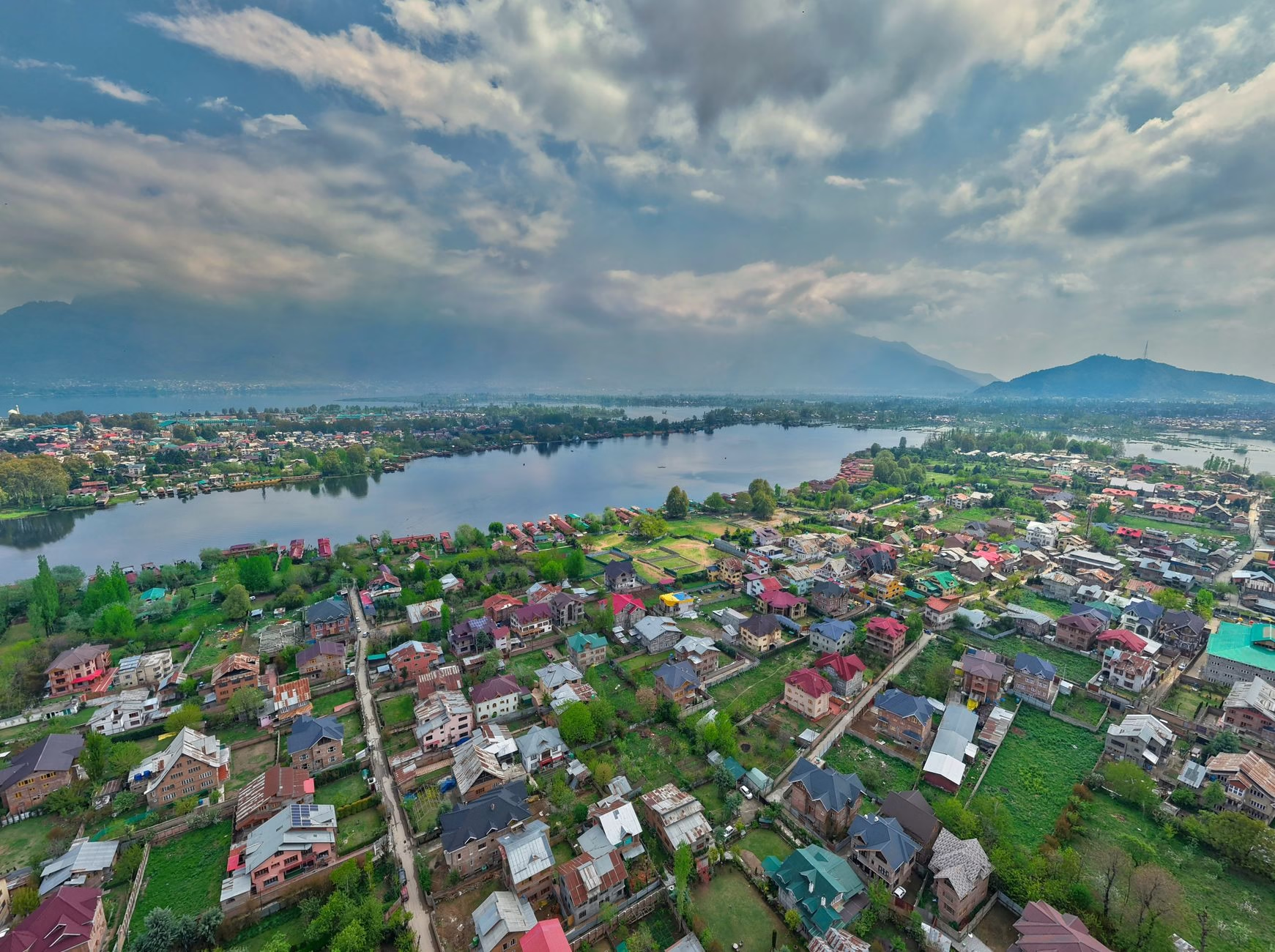
The digital landscape has become an increasingly complex arena where the line between reality and fabrication is often blurred. A recent incident involving an AI-altered image circulated online exemplifies this challenge, specifically concerning ongoing protests in Pakistan-administered Kashmir. This manipulated visual content was deployed to propagate unfounded claims suggesting Indian involvement in the demonstrations, thereby attempting to distort the narrative surrounding genuine local grievances.
The image, which quickly gained traction across various social media platforms, depicted a crowd of protestors ostensibly holding Indian flags. The accompanying captions and posts explicitly linked these visuals to the protests in Muzaffarabad, the capital of Pakistan-administered Kashmir, implying that India was either orchestrating or significantly influencing the demonstrations. Such a narrative, if left unchallenged, possesses the potential to exacerbate regional tensions and misrepresent the fundamental causes driving the public outcry.
Context of the Protests
To understand the gravity of this digital deception, it is crucial to grasp the true context of the protests in Pakistan-administered Kashmir. The demonstrations are rooted in profound socio-economic issues affecting the local populace. Residents have taken to the streets to voice their profound dissatisfaction with high inflation, burdensome taxes, and escalating electricity tariffs. These are genuine concerns stemming from local governance and economic conditions, reflecting a widespread struggle against the rising cost of living and perceived economic hardship.
These protests represent a grassroots movement driven by the immediate needs and frustrations of the community. They are a direct response to economic pressures that have made daily life increasingly challenging for many families. The attempt to inject a geopolitical angle, particularly one involving an external actor like India, serves to detract from these authentic local issues and redirect attention towards a manufactured controversy.
Unmasking the Digital Deception
Prompt and thorough fact-checking efforts were instrumental in exposing the deceptive nature of the image. Digital forensics experts and independent verification organizations quickly identified visual anomalies consistent with generative artificial intelligence. These inconsistencies often include subtle distortions in facial features, repetitive patterns in crowds, or unnatural lighting and shadows that betray the image’s synthetic origin.
Further investigation, including reverse image searches and comparisons with authentic footage and photographs from the actual protests, revealed a stark contrast. Genuine visuals of the demonstrations in Muzaffarabad consistently showed protestors expressing their grievances through banners and slogans related to local economic issues, without the presence of Indian flags. This discrepancy provided irrefutable evidence that the image in question had been digitally manipulated, specifically to insert the Indian flags and thus push a false narrative.
The Role of AI in Misinformation
This incident serves as a potent reminder of the growing threat posed by artificial intelligence in the realm of misinformation. AI tools have become increasingly sophisticated, capable of generating highly realistic images, videos, and audio that are difficult to distinguish from authentic content. This technological advancement lowers the barrier for creating convincing fake content, making it easier for malicious actors to produce and disseminate propaganda on a massive scale.
The speed at which such content can spread across global networks, amplified by social media algorithms, means that false narratives can quickly take root before fact-checkers have a chance to intervene. The implications are far-reaching, affecting not only geopolitical stability but also public trust in information, democratic processes, and social cohesion.
Geopolitical Implications
In sensitive regions like Kashmir, the deliberate spread of misinformation carries significant geopolitical risks. Fabricated images designed to implicate external powers can inflame nationalist sentiments, deepen existing divisions, and potentially provoke retaliatory actions or heightened tensions between nations. Such tactics aim to destabilize regions, sow discord among populations, and manipulate international perception.
By falsely attributing local protests to foreign interference, the manipulators seek to delegitimize genuine public grievances and shift blame, thereby complicating efforts to address the root causes of unrest. This strategy not only undermines peace and stability but also makes it more challenging for the international community to accurately assess situations and respond appropriately.
Combating Digital Disinformation
Effectively combating digital disinformation requires a multi-faceted approach. For individuals, critical media literacy is paramount. This involves questioning the source of information, scrutinizing images and videos for inconsistencies, and cross-referencing claims with multiple reputable news outlets and fact-checking organizations. Tools like reverse image search can be invaluable in verifying the authenticity of visual content.
For technology platforms, robust content moderation policies, investment in AI detection tools, and transparent labeling of manipulated content are essential. Governments and international bodies also have a role to play in fostering media literacy, supporting independent journalism, and potentially regulating the spread of demonstrably false information without infringing on freedom of speech.
Conclusion
The circulation of an AI-altered image to falsely link India to protests in Pakistan-administered Kashmir underscores the pervasive challenge of digital misinformation in contemporary society. It highlights how advanced technologies can be weaponized to manipulate public opinion and escalate geopolitical tensions. As the digital landscape continues to evolve, vigilance, critical thinking, and collaborative efforts across individuals, platforms, and governments will be crucial in safeguarding the integrity of information and preserving factual accuracy in an increasingly complex world.

















Leave a Reply