


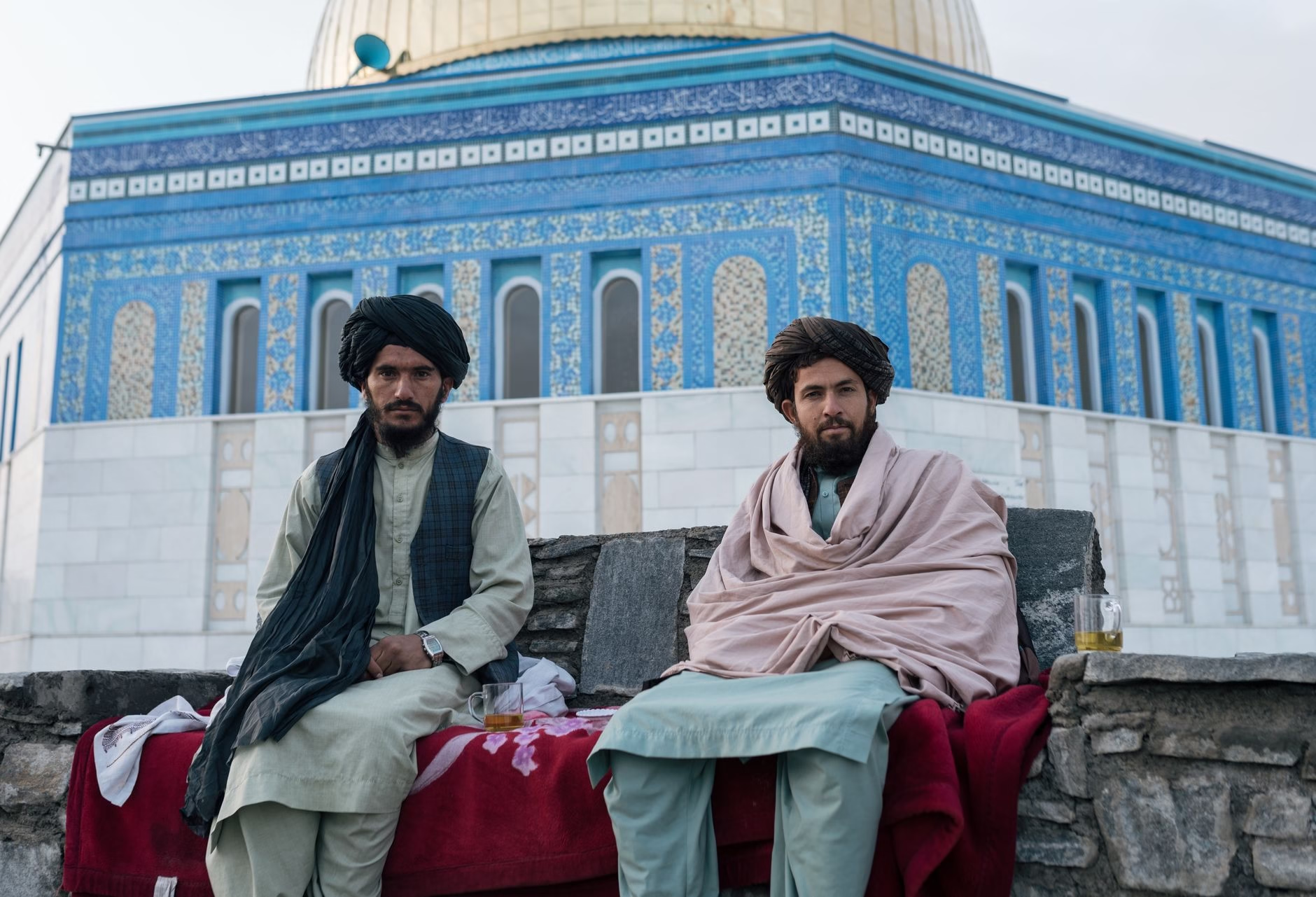
A Quarter Century Later
Twenty-five years after the historic events of September 11, the political landscape of Afghanistan has returned to a familiar reality. The Taliban is once again firmly in control of the nation, operating from the capital city of Kabul and governing the country under strict Islamic law.
However, the visual reality of the current regime bears a striking and ironic contrast to the insurgency that fought international forces for two decades. Rather than relying solely on traditional weaponry and makeshift transport, today’s rulers project military capability enhanced by advanced foreign hardware.
The Modern Face of Kabul Patrols
Recent reporting from the ground in Kabul highlights a profound shift in the equipment utilized by local security patrols. Observers note that fighters belonging to the de facto government are routinely seen operating armored vehicles that were originally manufactured for and supplied to partner military forces.
In addition to heavy transport vehicles, personnel assigned to security details across the capital wear advanced tactical gear. Helmets, protective vests, and communication systems that once belonged to coalition forces are now standard issue for the ruling regime’s units.
Carrying American Arms
The transformation extends to the individual level, where standard-issue sidearms and rifles carried by patrols are predominantly of American manufacture. The availability of these firearms has equipped the security forces with reliable, modern weaponry during routine city patrols and checkpoint operations.
This widespread adoption of foreign military surplus represents a significant logistical windfall for the administration. Without needing to establish complex supply chains for small arms and tactical vehicles, the government has integrated millions of dollars worth of abandoned equipment into its daily operations.
Implications for Regional Security
The presence of such advanced military assets in the hands of the current leadership continues to draw international attention and strategic concern. Analysts monitoring the region point out that the retained hardware provides the internal security apparatus with an unprecedented level of mobility and tactical advantage.
As the quarter-century mark passes since the pivotal date that drew foreign intervention to South Asia, the irony remains deeply embedded in the streets of Kabul. The current authorities maintain public order using the very tools left behind during the historic military withdrawal.
















Leave a Reply