


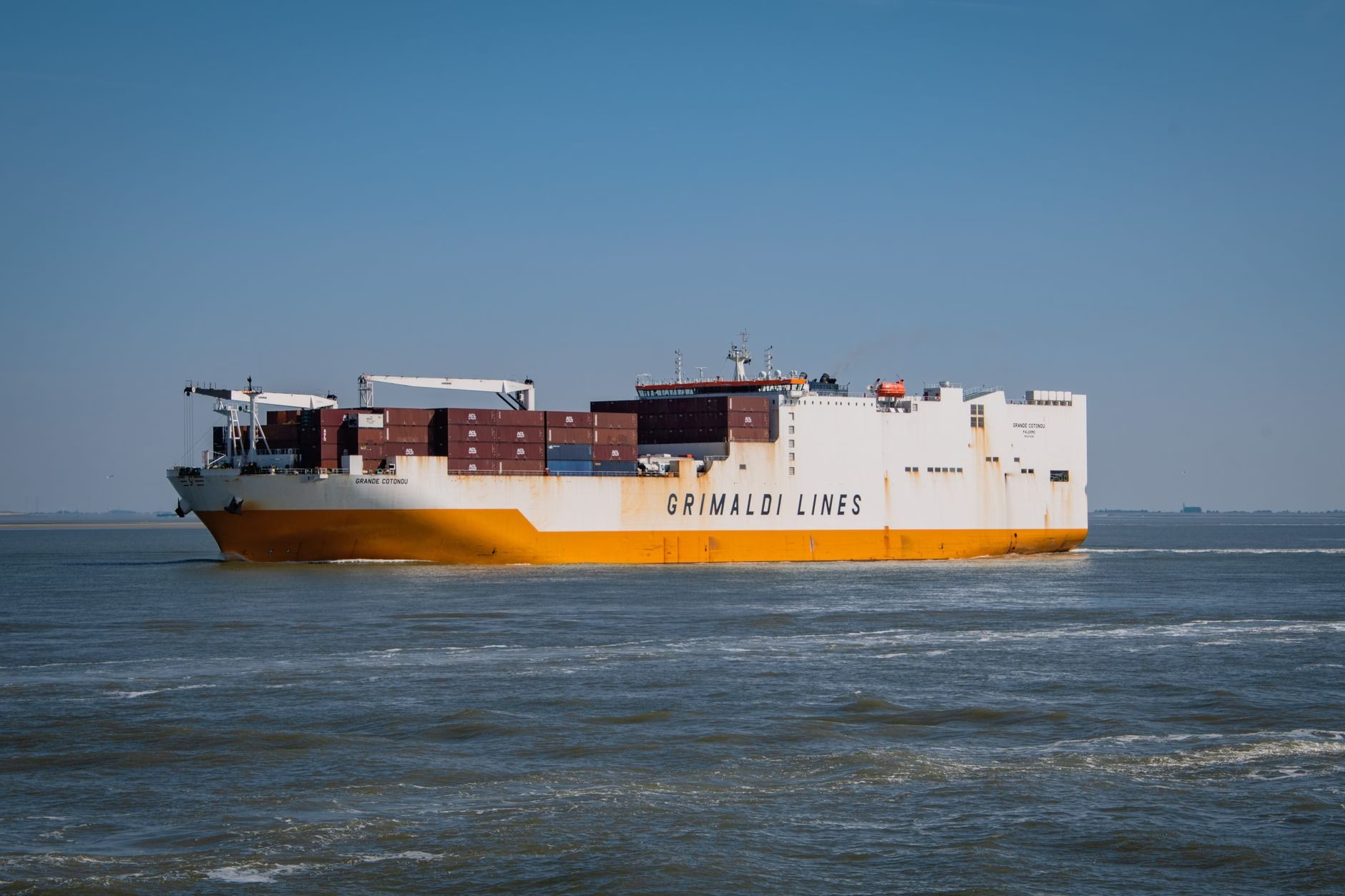
Global supply chains face continuous pressure as geopolitical tensions reshape maritime commerce across vital international waterways. Regional traders and merchants operating in East Africa are actively forced to reevaluate their established logistics networks. The persistent threat of maritime attacks near the Bab el-Mandeb strait has fundamentally altered how goods move through the Red Sea corridor. As vessel operators divert ships around the Cape of Good Hope to avoid conflict zones, local economies dependent on these maritime arteries must adapt quickly to shifting realities.
Shifting Maritime Dynamics
For generations, the maritime route connecting the Indian Ocean to the Mediterranean Sea via the Red Sea and the Suez Canal has served as a primary conduit for international commerce. This passage facilitates billions of dollars in trade annually, linking Asian manufacturing hubs with European consumer markets while servicing ports along the East African coastline. Recent security challenges orchestrated by militant groups have transformed this once reliable highway into a high-risk zone. Marine insurers have escalated premiums significantly, while numerous shipping lines refuse to send vessels through the danger area entirely.
Impact on Regional Commerce
For commercial enterprises in the Horn of Africa, the disruption of traditional maritime channels creates immediate operational hurdles. Imported commodities, ranging from manufactured electronics and machinery to essential food supplies, experience delays and inflated freight charges. Local enterprises operating on tight profit margins find it increasingly difficult to absorb these rising transportation expenses. Consequently, business owners are compelled to pass increased costs down to consumers or seek alternative sourcing methods altogether.
Exploring Alternative Logistics
In response to ongoing maritime instability, logistics planners are investigating diverse transportation pathways to maintain the flow of goods. Overland transit corridors and regional port facilities are receiving renewed attention as businesses attempt to bypass high-risk coastal waters. Smaller regional vessels, known locally as dhows, are also being utilized to ferry cargo between secondary ports, avoiding the deep-sea routes targeted by hostile actors. While these localized alternatives lack the massive capacity of modern container ships, they offer a vital lifeline for maintaining commercial continuity.
Economic Adaptability and Resilience
Despite the formidable challenges posed by regional instability, the merchant community demonstrates remarkable adaptability. Collaborative efforts among regional stakeholders aim to streamline customs procedures and upgrade port infrastructure to handle diverted cargo volumes more efficiently. Policymakers and business leaders recognize that modernizing domestic transport networks is essential for long-term economic survival. By diversifying trade relationships and investing in flexible supply chain strategies, the region aims to mitigate future vulnerabilities and safeguard its economic future against unforeseen geopolitical shocks.






















Leave a Reply