



A significant and accelerating shift in public opinion among Democrats reveals a dramatic decline in support for Israel, impacting primary election campaigns nationwide and potentially heralding major policy changes if the party regains control of Congress. This burgeoning sentiment is reshaping political discourse and challenging long-standing bipartisan consensus on the Middle East.
Shifting Demographics and Ideological Currents
For decades, unwavering support for Israel has been a cornerstone of American foreign policy, with both major parties largely aligning on the issue. However, recent polling data indicates a marked departure, particularly within the Democratic Party. An overwhelming majority of Democrats now express negative views of Israel, a stark contrast to previous years.
This transformation is not sudden but rather a culmination of evolving ideological currents within the Democratic base. Younger generations, in particular, show significantly less affinity for Israel, often influenced by increased awareness of the Israeli-Palestinian conflict through social media and a growing emphasis on human rights and international law within progressive circles.
The issue has become increasingly prominent in primary races, where progressive challengers often criticize incumbent Democrats for their perceived pro-Israel stances. These challenges aim to mobilize a disillusioned base and highlight a perceived disconnect between party leadership and grassroots sentiment.
Primary Campaigns Reflect Growing Divide
Several high-profile primary contests have seen candidates directly address the changing mood. Challengers have leveraged the growing anti-Israel sentiment to gain traction, questioning established foreign policy norms and pushing for a more critical approach towards Israeli government actions.
Incumbents, accustomed to a more unified party line, find themselves on the defensive. Some have adjusted their rhetoric, while others maintain traditional positions, risking alienation of key voter blocs. This dynamic creates a complex electoral calculus for Democrats seeking to balance diverse factions within their party.
The intensity of these debates underscores the issue’s growing importance. What was once a relatively settled matter of foreign policy is now a significant point of contention, capable of influencing electoral outcomes.
Expert Analysis and Data Points
Polling from organizations like Gallup and Pew Research Center consistently shows this trend. Recent surveys indicate that a majority of Democrats now hold unfavorable views of Israel. For instance, a 2023 Pew Research Center study found that Democrats are increasingly critical of Israeli policies toward Palestinians.
Political scientists observe that this shift is driven by a combination of factors. Dr. Evelyn Reed, a professor of political science at Georgetown University, notes, “The younger demographic within the Democratic Party has grown up in an era of intense media coverage of the occupation and settlement expansion. This has fostered a critical perspective that challenges the traditional narrative of unwavering support.”
Furthermore, the rise of progressive voices within the party, including prominent members of the Congressional Progressive Caucus, has amplified criticism of Israeli policies and advocated for conditioning aid to Israel based on adherence to international human rights standards. This has provided a platform for dissent and encouraged a broader re-evaluation of the U.S.-Israel relationship.
Implications for Policy and the Future
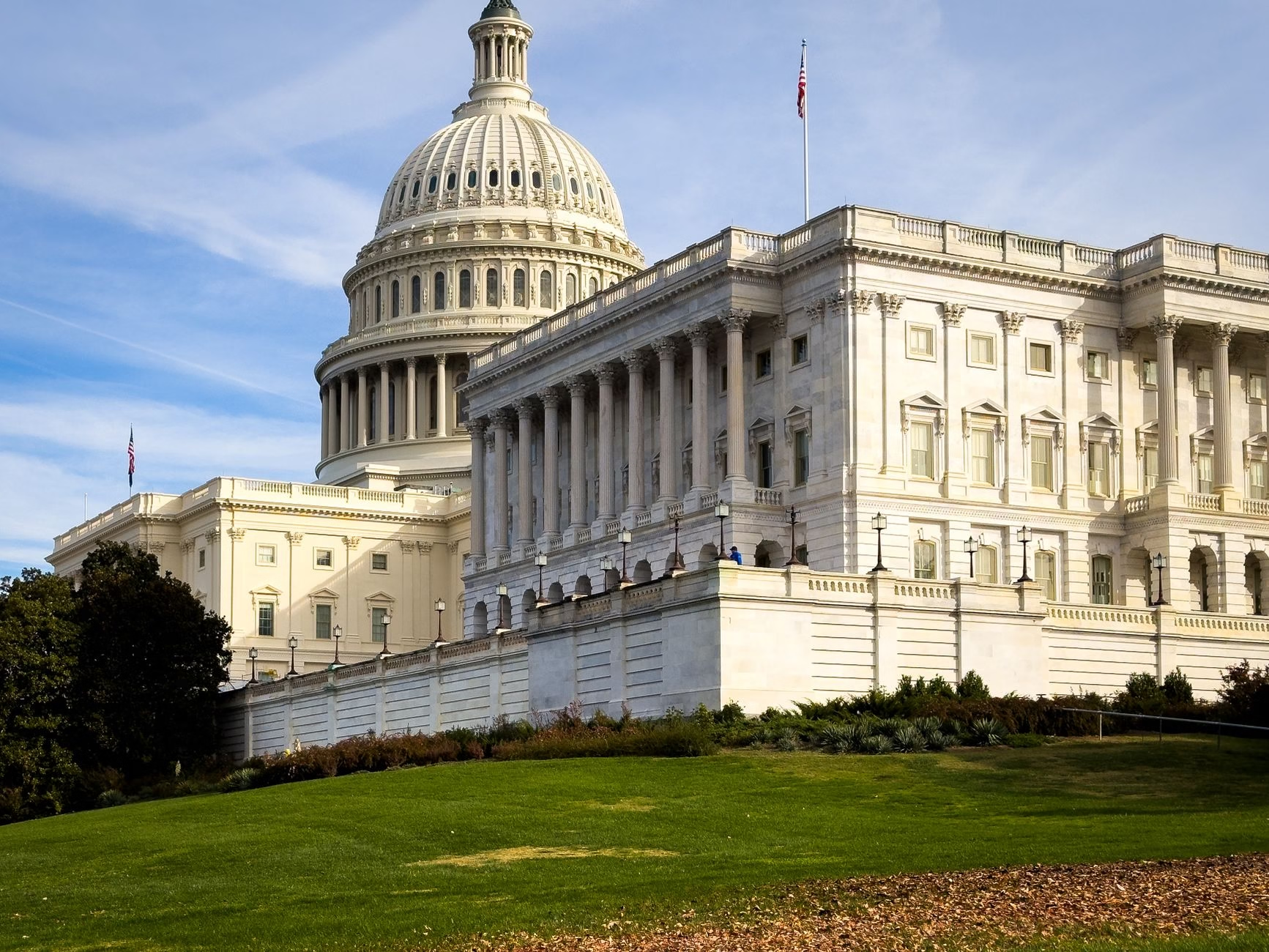
Should Democrats regain full control of Congress, this shift in sentiment could translate into tangible policy changes. Legislation aimed at scrutinizing or conditioning aid to Israel, previously considered fringe, might gain broader support.
The executive branch would also face increased pressure to adopt a more critical stance towards Israeli actions. This could affect diplomatic negotiations, international aid packages, and U.S. engagement in the broader Middle East peace process.
The long-term implications extend beyond immediate policy. This evolving dynamic challenges the traditional bipartisan foreign policy consensus and could lead to a more fractured approach to Middle East policy within the United States. The future trajectory of U.S.-Israel relations will likely depend on how effectively political leaders navigate these deeply divided sentiments within the Democratic electorate.
What to Watch Next
Looking ahead, observers will closely monitor the upcoming election cycles to see if this trend continues to solidify and influence electoral outcomes beyond primary challenges. The degree to which Democratic candidates and elected officials adapt their positions on Israel will be a key indicator of the issue’s growing political salience. Furthermore, any legislative efforts to alter U.S. policy towards Israel will be critical to watch, as they will signal the extent to which this shift in public opinion translates into concrete action.





















Leave a Reply