


On Thursday, U.S. Secretary of State Marco Rubio announced that Washington and Tehran are showing “good signs” of progress toward a diplomatic agreement to resolve the wider Middle East conflict. However, deep-seated disputes over Iran’s enriched uranium stockpiles and a controversial proposal for maritime tolls in the Strait of Hormuz continue to stall a final breakthrough. The announcement, delivered during a press briefing in Washington, marks a pivotal moment in regional diplomacy, though officials warn that critical details remain unresolved.
The Path to De-escalation
The diplomatic opening comes after months of quiet, backchannel negotiations mediated by regional intermediaries, including Oman and Qatar. Secretary Rubio’s remarks signal the most significant progress in U.S.-Iran relations in years, aimed at stabilizing a region rocked by consecutive security crises. Diplomatic sources indicate that both sides have agreed in principle to a framework for reducing regional hostilities, but translating these intentions into a binding treaty remains a formidable challenge.
Despite the positive rhetoric, negotiators face major hurdles in translating these “good signs” into a binding treaty. The primary friction points center on tangible security and economic issues that directly impact global markets. Washington insists on strict verification measures, while Tehran demands immediate relief from crippling economic sanctions before dismantling its strategic leverage.
The Nuclear Stall: Enriched Uranium
At the heart of the diplomatic impasse is Iran’s rapidly expanding stockpile of highly enriched uranium. According to the latest reports from the International Atomic Energy Agency (IAEA), Iran possesses uranium enriched up to 60% purity, which is technically close to the 90% threshold required for weapons-grade material. The United States and its European allies demand that Iran dilute or export this material as a precondition for any comprehensive peace deal.
Tehran, conversely, views its nuclear program as a sovereign right and a crucial bargaining chip. Iranian negotiators argue that enrichment activities will only scale back once the U.S. legally guarantees the permanent removal of banking and oil export sanctions. This “sequencing” dilemma—who acts first—has historically derailed previous diplomatic efforts, including the 2015 Joint Comprehensive Plan of Action (JCPOA).
Flashpoint in the Strait of Hormuz
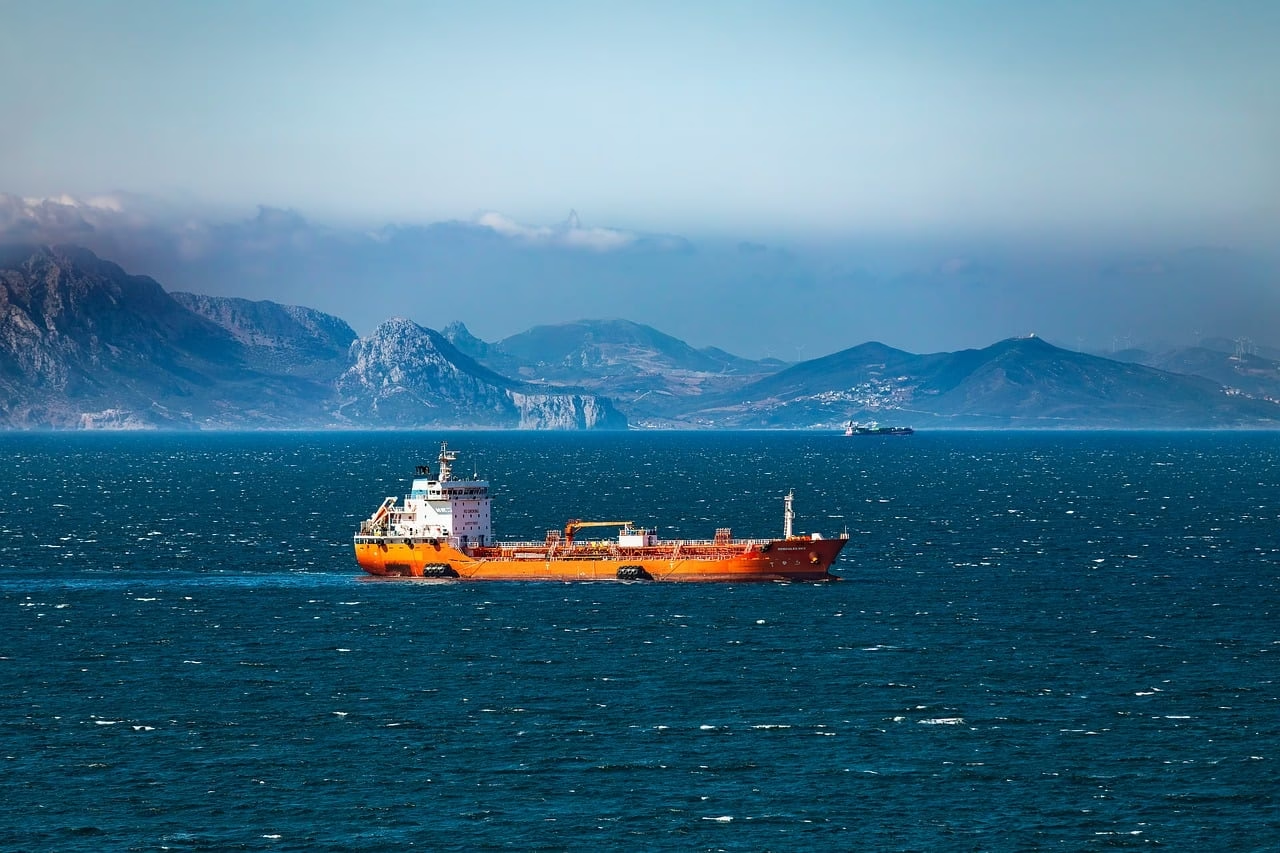
Adding complexity to the talks is a new Iranian proposal to levy transit tolls on commercial vessels passing through the Strait of Hormuz. The narrow waterway, situated between Oman and Iran, serves as the transit route for approximately 21 million barrels of oil per day, representing one-fifth of the world’s total liquid petroleum consumption, according to the U.S. Energy Information Administration (EIA). Iran asserts its right to charge “security fees” to offset the costs of patrolling the vital corridor.
The United States and international shipping coalitions have strongly rejected the proposed tolls, calling them a violation of the United Nations Convention on the Law of the Sea (UNCLOS). Maritime experts warn that imposing fees in international straits would set a dangerous global precedent. “Any attempt to unilaterally tax commercial shipping in Hormuz would immediately drive up maritime insurance rates and disrupt global supply chains,” says Dr. Elena Rostova, a senior maritime security analyst at the Global Shipping Institute.
Global Economic and Geopolitical Implications
The outcome of these negotiations carries immense weight for global energy markets and international security. A successful pact could stabilize oil prices, which have remained volatile due to geopolitical risks in the Middle East. Conversely, a collapse in talks could trigger renewed naval confrontations in the Persian Gulf, directly threatening global energy security.
Allies on both sides are watching the developments with apprehension. Israel and several Gulf states remain skeptical of any deal that does not fully address Iran’s regional proxy network. Meanwhile, European nations, eager to diversify their energy imports, are quietly pushing for a swift resolution that could bring Iranian oil back to Western markets under strict regulatory frameworks.
What to Watch Next
In the coming weeks, international observers will closely monitor the next round of high-level talks scheduled to take place in Geneva. Key indicators of progress will include whether the IAEA gains expanded access to Iranian nuclear sites to verify enrichment levels. Additionally, any movement of naval assets in the Persian Gulf will signal whether both nations are willing to de-escalate military postures while diplomats negotiate.
The shipping industry will also remain on high alert for any unilateral enforcement of transit fees by Iranian Revolutionary Guard vessels. For now, the global community remains cautiously optimistic, recognizing that while a diplomatic framework is within reach, the devil remains in the technical details of uranium limits and maritime sovereignty.
















Leave a Reply