


WASHINGTON — The Trump administration officially announced a landmark civil nuclear cooperation agreement with Saudi Arabia on Tuesday, coinciding with a sharp escalation in mutual threats between Washington and Tehran targeting critical energy infrastructure in the Middle East.
Escalating Tensions in the Persian Gulf
The dual developments highlight a rapidly shifting security landscape in the Middle East, where regional energy security and international nuclear proliferation collide. Tensions between the United States and Iran have intensified following months of maritime friction, drone activity, and sanctions enforcement near vital maritime shipping channels.
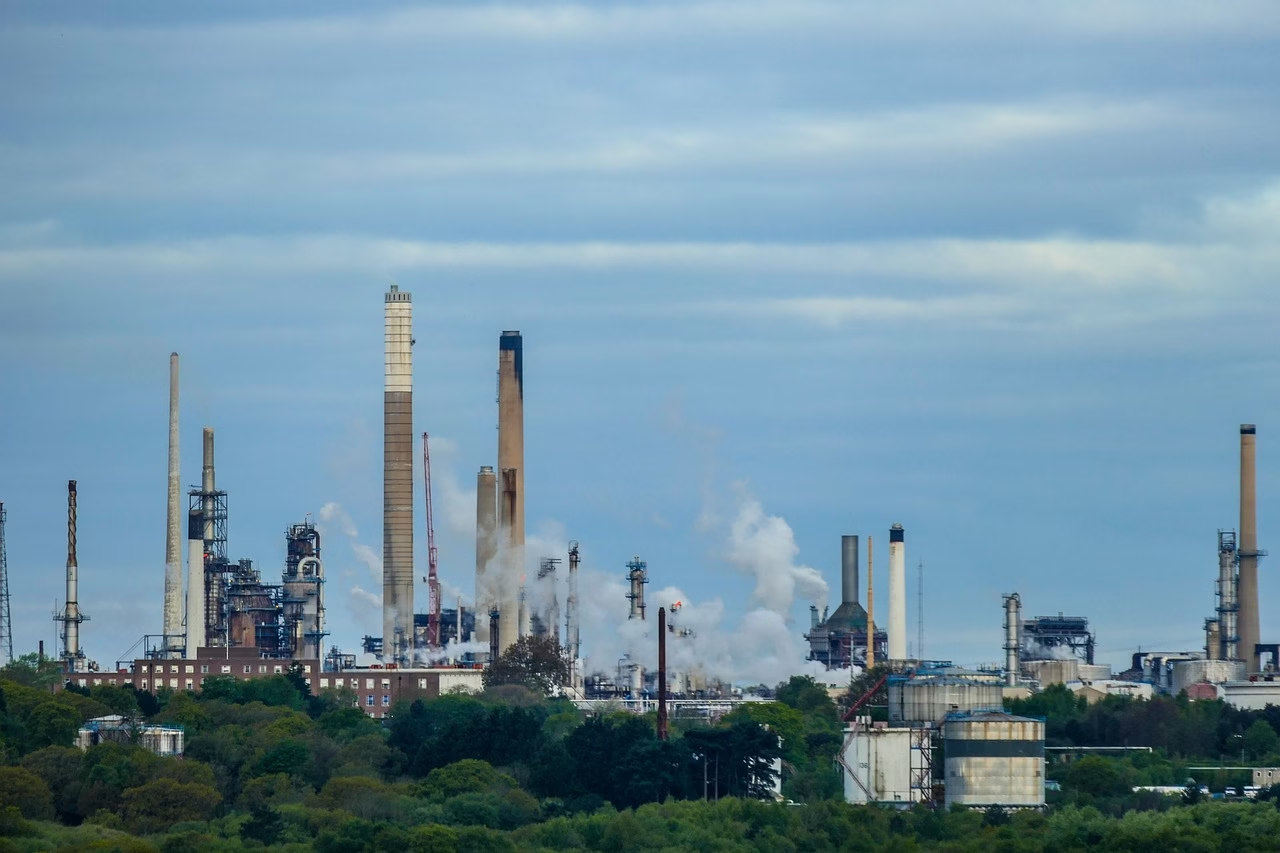
Central to the diplomatic standoff is the acute vulnerability of energy infrastructure across the Persian Gulf, including refineries, coastal desalinization facilities, offshore platforms, and vital oil supply pipelines. Approximately 20 percent of global liquid petroleum flows through the narrow Strait of Hormuz daily, according to data from the U.S. Energy Information Administration (EIA).
The U.S.-Saudi Civilian Nuclear Accord
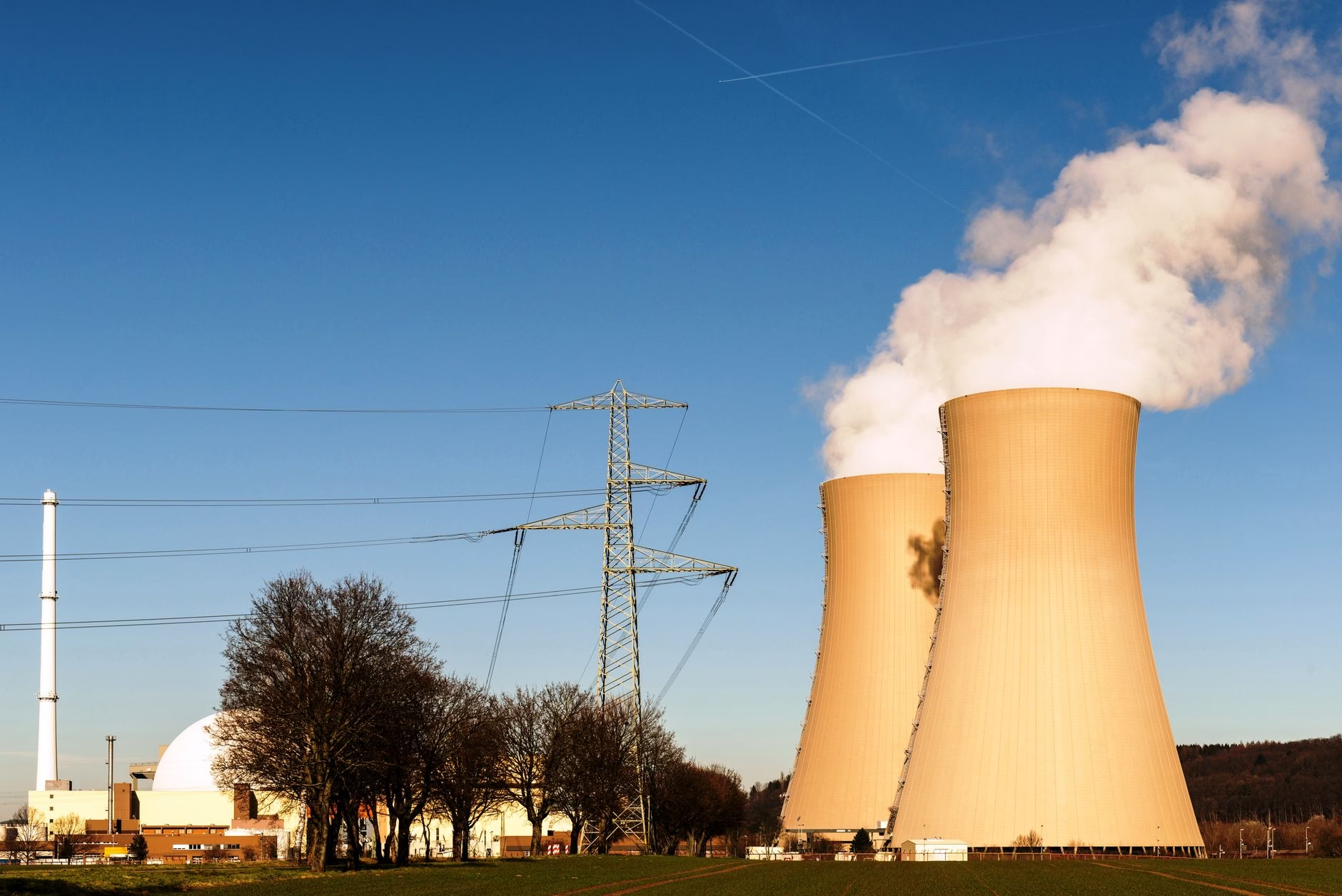
The newly unveiled nuclear framework creates a formal legal apparatus for bilateral cooperation between Washington and Riyadh, designed to support Saudi Arabia’s burgeoning civilian energy program. Saudi leadership has long sought nuclear technology to diversify its domestic energy matrix away from crude oil reliance under the kingdom’s broader Vision 2030 modernization initiative.
Administration officials stressed that the accord incorporates rigorous international non-proliferation safeguards and oversight mechanisms governed by global regulatory standards. However, lawmakers on Capitol Hill have consistently signaled caution regarding civil enrichment capabilities in volatile regions.
Speaking on CBS News’ “The Takeout with Major Garrett,” administration representatives argued that partnering with Saudi Arabia secures vital American technological oversight, preventing rival global superpowers from cementing long-term energy partnerships in the Arabian Peninsula.
Direct Threats to Regional Energy Systems
Simultaneously, aggressive rhetoric between Washington and Tehran reached new heights as both governments traded explicit operational warnings regarding strategic energy assets. U.S. officials warned that any military or proxy action by Iran targeting regional partners or international trade corridors would trigger immediate, targeted retaliation against Iranian state-owned oil fields and industrial export centers.
In response, senior Iranian military leaders warned that regional energy processing hubs hosted by Western allies would face immediate bombardment if conflict erupts. The sharp exchange triggered immediate volatility across global commodity markets, with crude oil futures jumping nearly three percent in early global trading sessions.
Expert Analysis and Market Exposure
“Direct threats targeting critical energy infrastructure represent a concerning shift from localized proxy conflicts to direct strategic deterrence,” said Dr. Marcus Vance, senior energy analyst at the Global Security Institute. “Energy processing infrastructure in the Gulf region is highly concentrated, meaning even minor localized disruptions can trigger severe global economic ripple effects.”
Supply chain security firms estimate that a sustained disruption at major Gulf export terminals could instantly withhold up to 5 million barrels of crude oil per day from the world market. Major import economies in Asia and Europe would feel immediate pricing pressures, forcing drawdowns from strategic national reserves within weeks.
Implications for Global Markets and Regional Stability
For international consumers and global businesses, the immediate consequence of this diplomatic dual-track is heightened energy price volatility and increased geopolitical risk premiums. Global financial institutions are adjusting short-term oil price forecasts upward as naval forces increase patrols across key maritime choke points.
Moving forward, foreign policy observers will carefully monitor the U.S. Congress for potential legislative actions or review mechanisms aimed at scrutinizing the Saudi nuclear agreement. Simultaneously, defense monitors are watching naval movements in the Gulf to evaluate whether public threats translate into operational maneuvers along commercial trade routes.




















Leave a Reply