


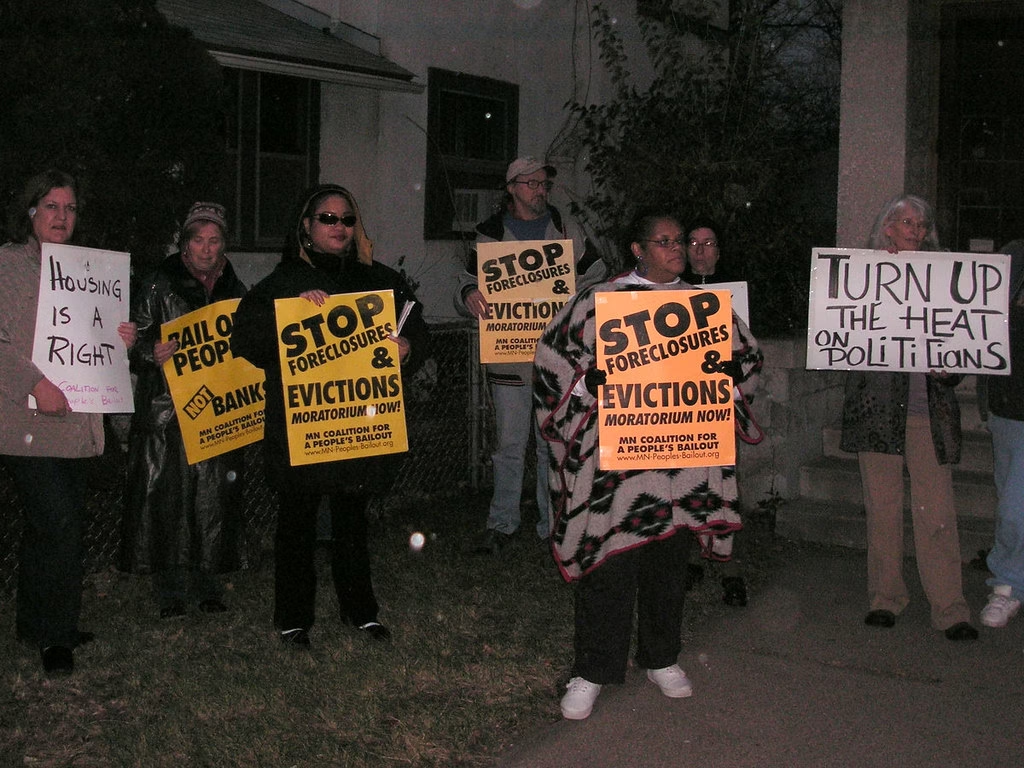
Demonstrators disrupted a Madison Police Department press conference in Madison, Wisconsin, seizing the podium as law enforcement officials attempted to reveal the identity of a man shot and killed by an officer twenty-four hours earlier. The outburst halted official proceedings as community members demanded immediate transparency and accountability from city leadership.
Context Surrounding the Incident
The disturbance follows a fatal encounter between Madison police officers and an unidentified male subject during a response to an active incident the previous day. While initial police statements noted that officers used deadly force in response to a perceived threat, key details surrounding the confrontation remain sparse.
Tensions between law enforcement and local residents have heightened in recent years following several high-profile officer-involved shootings across the region. Local advocacy groups have repeatedly called for systemic reforms, faster public release of body-worn camera footage, and independent oversight of police disciplinary actions.
Under Wisconsin state law, all officer-involved deaths must be investigated by an independent outside agency rather than the department involved. The Wisconsin Department of Justice Division of Criminal Investigation was brought in to handle the inquiry shortly after the shooting occurred.
Disruption at the Press Briefing
The press conference was scheduled to provide updated details regarding the sequence of events and formally release the victim’s name. Minutes after police leadership approached the microphone, a group of approximately two dozen protesters entered the briefing room chanting slogans and holding handwritten signs.
Demonstrators surrounded the podium, interrupting the police chief and preventing officials from continuing their prepared remarks. The activists raised concerns about municipal police practices and questioned the speed and impartiality of internal investigations.
Rather than escalating the confrontation, police officials withdrew from the room, allowing community members to speak directly into the broadcast microphones and address assembled news media. The takeover lasted for nearly forty minutes before the crowd voluntarily dispersed into the building corridor.
Expert Perspectives and Data Points
Data from the Washington Post Fatal Force database indicates that nationally, police officers have fatally shot over 1,000 individuals annually over the past five years. Community disruptions at public police briefings have become an increasingly frequent tactic utilized by civil rights organizations to force immediate media attention onto local cases.
Dr. Marcus Vance, a professor of criminal justice and public policy, noted that public disruptions often signal a fundamental breakdown in trust between citizens and civic institutions. “When communities feel that standard administrative channels lack transparency, direct action becomes the primary mechanism to demand answers,” Vance stated.
Legal analysts emphasize that while independent state investigations are designed to maintain objectivity, the process typically takes several weeks or months to complete. This statutory delay often collides with the community’s demand for real-time information following a fatal event.
Systemic Implications and Industry Standards
The incident highlights growing national pressure on law enforcement agencies to modernize their crisis communication protocols. Public safety experts argue that traditional press conferences may no longer suffice in high-tension scenarios without pre-established channels for public dialogue.
Municipalities across the United States are increasingly adopting mandatory release windows for audio and video evidence. Several major metropolitan departments now mandate the public release of body camera footage within 14 days of a critical incident to mitigate public skepticism.
The disruption in Madison underscores the operational challenges police departments face when balancing statutory investigative secrecy with public demands for immediate disclosures during ongoing inquiries.
What to Watch Next
Attention now shifts to the Division of Criminal Investigation as state investigators review body-camera recordings, witness statements, and forensic evidence from the scene. The agency is expected to determine whether the officer’s use of force aligned with state legal standards once the preliminary phase concludes.
Local advocacy groups have announced plans for additional rallies outside the municipal building, calling on the mayor’s office to institute mandatory administrative timelines for releasing all video footage. Meanwhile, the city police department faces decisions regarding how future press briefings will be conducted amid ongoing civil unrest.





















Leave a Reply