



Ukrainian military forces launched targeted drone strikes against major distribution centers owned by Wildberries, Russia’s largest online retailer, over the weekend in Elektrostal and the Tambov region. The coordinated attacks killed at least eight people, injured scores more, and marked a significant escalation in Kyiv’s campaign to dismantle economic and dual-use infrastructure deep within Russian territory.
Targeting the Hubs of Russian Domestic Commerce
The strikes hit two vital operational nodes in the Russian e-commerce network. The facility in Elektrostal, situated roughly 35 miles east of Moscow, serves as one of Wildberries’ premier fulfillment hubs, managing millions of daily shipments across a footprint exceeding 100,000 square meters.
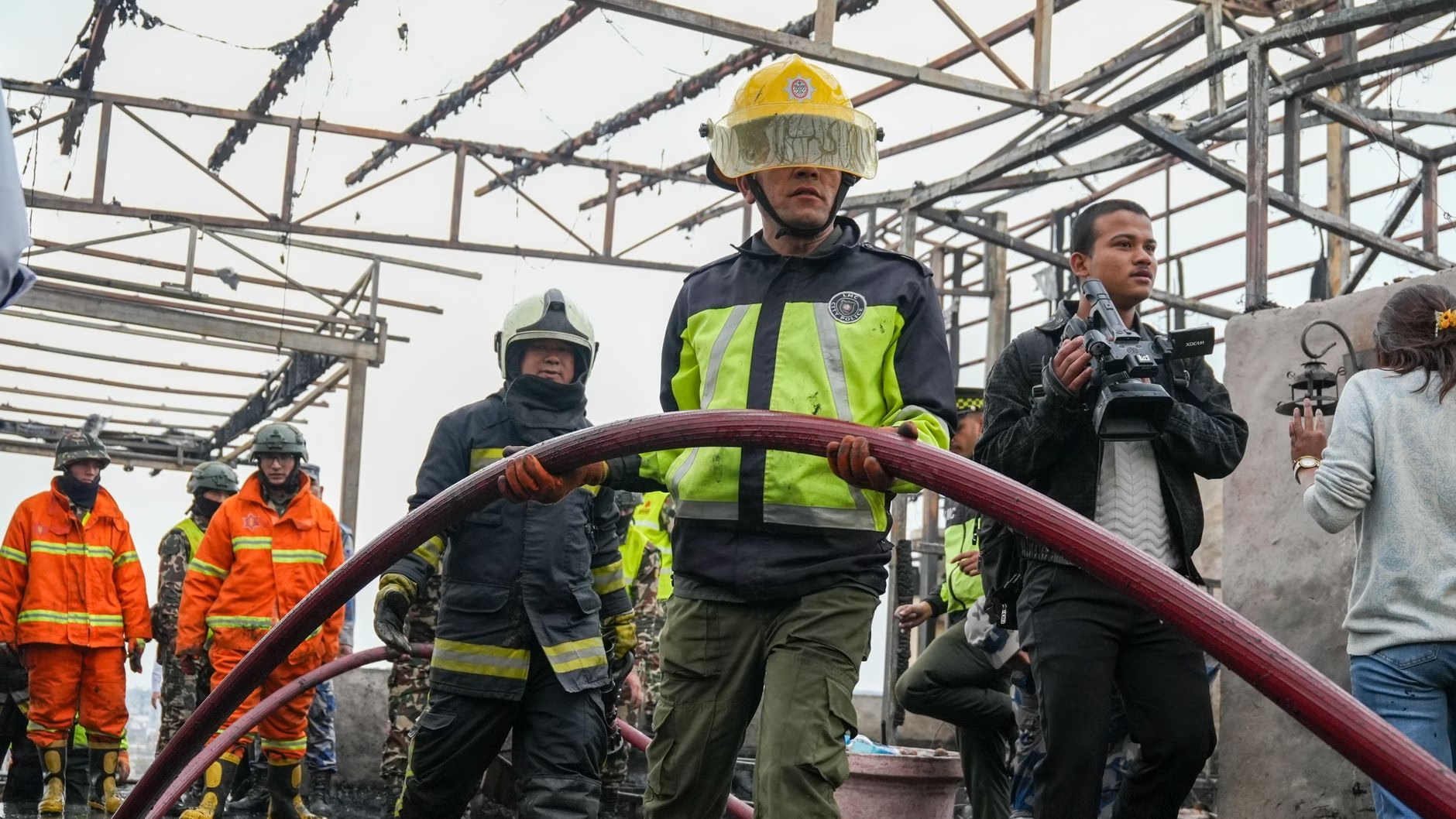
Simultaneous strikes targeted a secondary logistics site in the Tambov region, located southeast of the capital. Emergency services reported heavy structural fires, collapsed roofing, and widespread destruction of inventory across both locations.
Wildberries, founded in 2004, acts as the dominant backbone of Russian online retail. The platform processed over 2.5 billion orders in 2023 and serves as a primary distribution mechanism for consumer goods, electronics, and parallel-imported merchandise that circumvent Western economic sanctions.
Strategic Rationale Behind Economic and Dual-Use Targeting
Military intelligence analysts indicate that modern commercial e-commerce networks play an increasingly vital role in supporting military logistics during prolonged conflicts. High-capacity fulfillment centers possess automated sorting equipment, vast transport fleets, and inventory management systems capable of handling goods for both military and civilian end-users.
Defense analysts suggest Ukrainian planners targeted Wildberries facilities to strain Russia’s internal distribution capabilities. By disrupting major fulfillment centers, Ukraine aims to create cascading bottlenecks in logistics while imposing direct financial costs on corporate entities supporting the Russian war economy.
Ukrainian officials have repeatedly asserted that Russian commercial logistics networks facilitate the movement of dual-use components, including micro-electronics, tactical gear, and drone parts destined for frontline forces. Interrupting these supply chains forces Russian logistics operators to decentralize operations, reducing overall efficiency.
Data Points and Economic Impact
According to economic assessments from European policy institutes, the physical damage and operational disruption from the dual strikes could exceed $60 million in lost inventory and structural destruction. Wildberries temporarily halted regional delivery dispatch, delaying hundreds of thousands of commercial orders across western Russia.
Data from retail analytics firms shows that top-tier Russian marketplaces account for more than 70 percent of domestic non-food retail growth post-2022. Disruptions to this sector directly affect urban consumer access and domestic commercial stability.
“Targeting mega-hubs creates a multi-layered disruption,” said Dr. Marcus Vance, a senior defense analyst at the Center for European Security Studies. “Beyond the immediate inventory losses, it creates severe friction in regional transportation networks and forces the adversary to commit air defense assets to safeguard civilian corporate infrastructure.”
Vance noted that protecting sprawling fulfillment centers spread across vast geographic areas presents a complex challenge for Russian air defense networks, which are already heavily deployed near military bases, oil refineries, and frontline positions.
Security Adjustments and Corporate Vulnerability
The strikes underscore the growing vulnerability of Russian corporate giants operating near major population centers. In response to the weekend attacks, several Russian logistics and marketplace firms announced heightened security protocols, including satellite-tracked routing adjustments and temporary night-shift suspensions at vulnerable fulfillment centers.
Insurance underwriters in Moscow reported an immediate surge in inquiries regarding drone strike coverage for commercial properties. Analysts anticipate that rising commercial insurance premiums will increase overhead costs for major Russian retailers, further fueling domestic inflation.
Broader Implications and What to Watch Next
The strike on Wildberries signals an expanding target set for Ukrainian long-range strike operations, moving beyond energy infrastructure and direct military targets to include systemic corporate logistics. Kyiv is demonstrating that Russian economic entities facilitating wartime resilience remain high-priority operational targets.
Military observers will monitor how Moscow reallocates short-range surface-to-air missile systems, such as the Pantsir-S1, to defend major industrial and commercial parks surrounding Moscow. Any redistribution of air defense assets toward civilian logistics hubs risks exposing critical military installations and energy networks to subsequent long-range drone attacks.
Industry analysts will also watch for potential retaliatory strikes by Russian forces against Ukrainian commercial transport and storage infrastructure, as well as shifts in how Russian e-commerce operators structure their supply chains to mitigate future aerial threats.


























Leave a Reply