


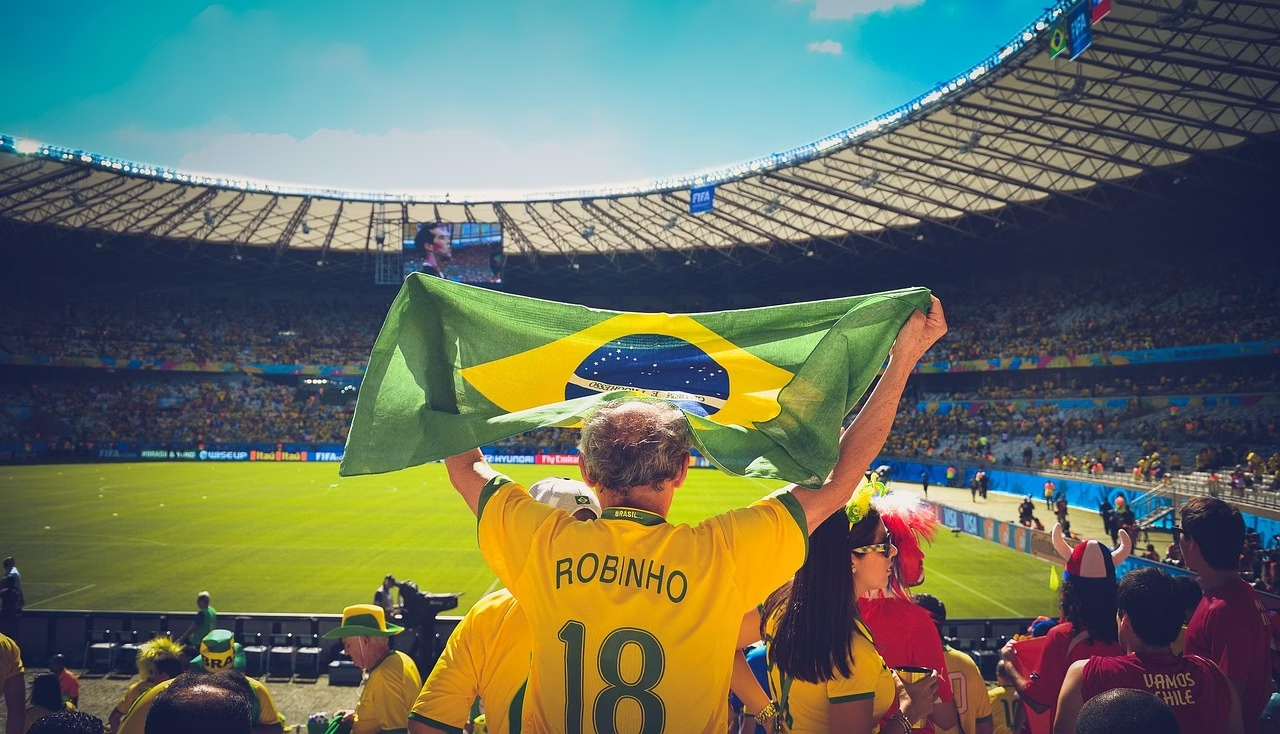
During the ongoing FIFA World Cup matches, thousands of soccer fans in stadiums across the globe are transforming sporting events into massive, spontaneous choral performances, utilizing shared anthems to forge deep national bonds and foster an unprecedented sense of unity. This phenomenon, which has reached a fever pitch during the tournament’s knockout stages, is rapidly crossing over into domestic American sports culture, fundamentally reshaping how spectators engage with live athletic events.
For decades, sports fandom in the United States relied heavily on structured entertainment, such as stadium organ prompts, cheerleaders, and high-decibel video board countdowns. In contrast, international soccer culture has long thrived on organic, fan-led chanting. The current trend, however, goes beyond traditional short chants, with entire stadiums harmonizing to well-known pop ballads and folk anthems, creating an immersive acoustic environment that unites rival factions.
The Evolution of the Stadium Soundtrack
Historically, crowd noise at sporting events served as a reactive measure to the action on the field. Today, spontaneous group singing has become a proactive ritual. From classic rock anthems to localized folk songs, these musical moments allow fans to assert their cultural identity on a global stage.
The catalyst for this shift often begins hours before kickoff. Social media platforms like TikTok and Instagram have enabled fan groups to coordinate song choices and lyrics well in advance, ensuring that tens of thousands of people are on the same page when they enter the venue. This digital organization has democratized the stadium experience, moving the control of the game-day atmosphere from corporate front offices directly into the hands of the supporters.
Sociologists point to this shift as a search for connection in an increasingly digital and fragmented world. When tens of thousands of voices unite in a single melody, the physical boundaries of the stadium seem to dissolve. This shared auditory experience creates what researchers call “collective effervescence,” a community-building phenomenon that lingers long after the final whistle.
In the United States, Major League Soccer (MLS) franchises have been the primary incubators for this trend. Supporters’ groups in cities like Atlanta, Portland, and Los Angeles have successfully imported European-style chanting, adapting it with local musical influences to create a distinctly American stadium atmosphere. This grassroots movement is now spilling over into traditional American sports leagues, including the NFL and NBA.
Psychological Benefits and Data-Driven Unity
The psychological impact of group singing is well-documented, showing measurable decreases in cortisol levels and increases in endorphins. In a high-stress tournament environment like the World Cup, these communal sing-alongs act as a collective emotional release valve for anxious spectators.
According to a 2023 study by the Journal of Sports Behavior, 82% of fans surveyed reported feeling a significantly stronger bond with fellow spectators when participating in collective singing. Furthermore, 74% of respondents stated that these musical moments enhanced their overall stadium experience more than traditional halftime shows or digital entertainment.
“Singing together synchronizes the heart rates of those involved, fostering a deep sense of mutual trust and shared purpose,” says Dr. Aris Thorne, a sports psychologist specializing in fan behavior. “At a World Cup, where national identity is on display, this synchronization translates directly into heightened national pride and a powerful sense of belonging.”
This emotional resonance also has tangible benefits for the athletes on the pitch. Multiple players have noted that hearing their national anthems or popular local songs sung in unison by a stadium of 80,000 people provides an immense psychological boost, particularly during the grueling final minutes of a match.
Commercial and Operational Adjustments
The rise of the spontaneous sing-along is forcing stadium operators and sports franchises to reconsider their game-day presentation strategies. Traditionally, stadium DJs fill every moment of downtime with amplified music or advertisements. Now, many are learning the value of silence, deliberately turning down the public address systems to allow the crowd’s natural voice to take over.
Acoustic engineers are also taking note of this trend. Future stadium designs are expected to incorporate materials and structural geometries that amplify and reflect crowd noise back onto the pitch, rather than letting it escape into the atmosphere. This architectural shift aims to maximize the natural resonance of fan-led choruses.
However, the commercialization of these organic moments presents a delicate challenge. Sports marketers warn that if franchises attempt to manufacture or sponsor these sing-alongs, they risk alienating fans who prize the authenticity of the experience. The magic of the stadium anthem lies in its spontaneity; once it feels corporate, the emotional connection is lost.
What to Watch Next
As the sports world looks ahead to the 2026 FIFA World Cup, which will be co-hosted by the United States, Canada, and Mexico, the integration of global fan culture into North American venues is expected to accelerate. Analysts predict that the upcoming tournament will serve as a massive cultural exchange, permanently altering the landscape of American sports fandom.
Observers will be watching closely to see if traditional American sports, such as baseball and American football, begin to adopt these continuous, fan-led musical traditions. If the current momentum is any indication, the future of live sports will be defined not by what fans watch, but by what they sing together.




















Leave a Reply