


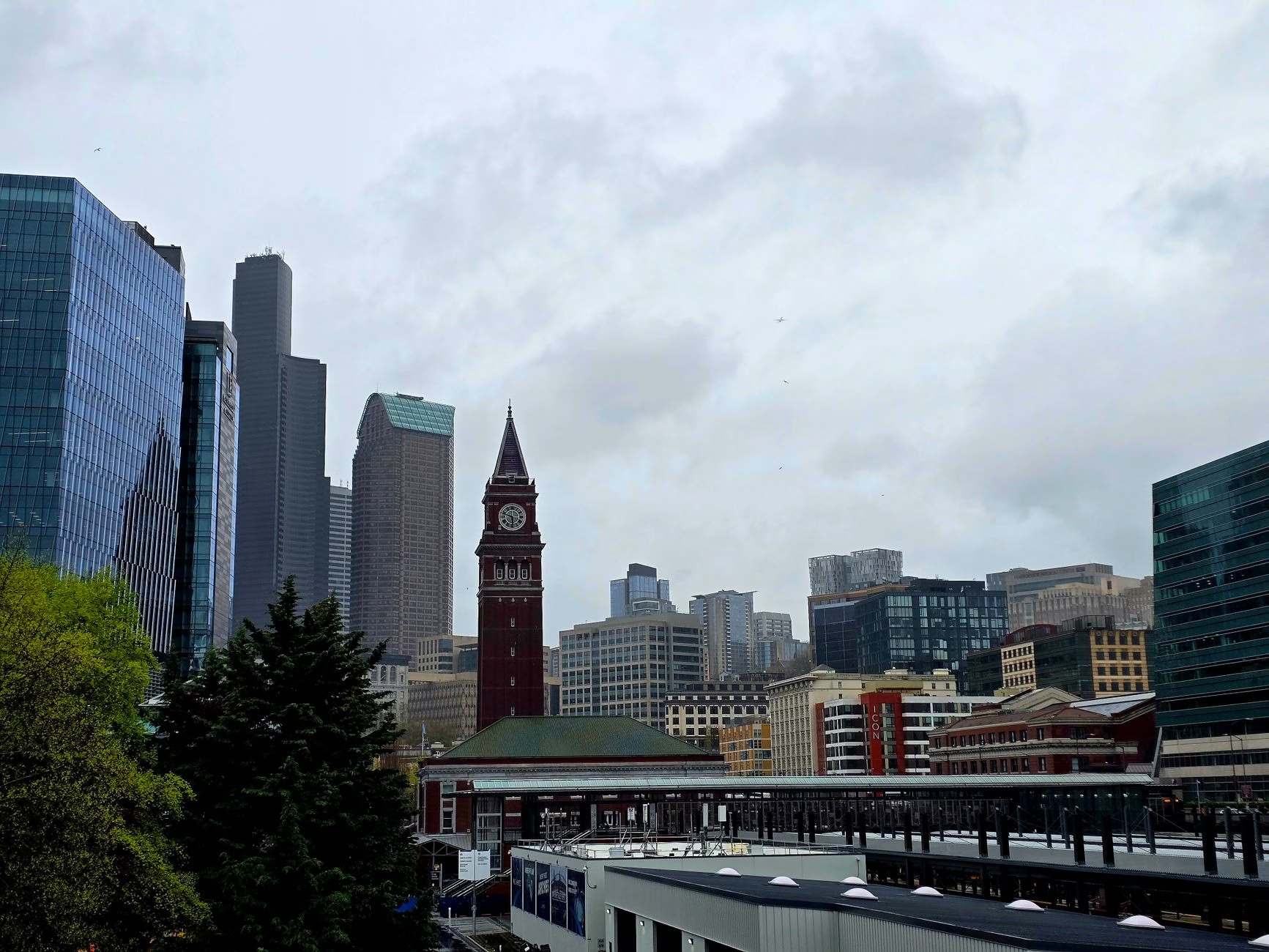
In a swift and unprecedented exercise of executive authority, President Donald Trump dismissed the newly appointed U.S. Attorney for the Western District of Washington in Seattle on Thursday, less than an hour after the district’s federal judges unanimously selected the prosecutor to lead the office. The rapid termination marks a dramatic escalation in the ongoing tension between the White House and the federal judiciary over the administration of local federal law enforcement offices.
The Legal Framework of Federal Appointments
Under federal law, specifically 28 U.S.C. § 546, when a vacancy for a U.S. Attorney persists beyond 120 days, the local district court judges hold the statutory authority to appoint an interim prosecutor. This judicial appointment remains valid until the President nominates, and the Senate confirms, a permanent successor. The system is designed to ensure continuity of law enforcement and prevent prolonged leadership vacuums in critical federal districts across the country.
The Western District of Washington, which oversees federal prosecutions across western Washington state and handles high-profile cases involving national security, cybercrime, and civil rights, had been operating under temporary leadership for several months. The unanimous decision by the district’s active federal judges to appoint a new top prosecutor was intended to bring administrative stability to the office. However, the administration’s immediate intervention has thrown the district’s leadership back into uncertainty.
An Unprecedented Removal in Seattle
The dismissal occurred with striking speed, catching courthouse staff, local defense attorneys, and legal observers by surprise. Within fifty minutes of the court filing that announced the judicial appointment, the White House issued a directive terminating the newly minted U.S. Attorney. The administration immediately designated an acting replacement from within the Department of Justice, asserting the President’s constitutional authority to oversee executive branch officials.
Department of Justice officials defended the move, stating that the President possesses broad authority under Article II of the Constitution to hire and fire executive branch officers, including U.S. Attorneys. Critics, however, argue that the swift dismissal bypasses the statutory mechanism established by Congress to prevent political interference in local prosecutions and maintain the independence of district offices.
Constitutional Tension and Expert Analysis
Legal scholars are divided on the limits of the President’s removal power in this specific scenario. While the Supreme Court has historically upheld the President’s near-absolute authority to remove executive officers, the statutory role of the judiciary in appointing interim prosecutors creates a unique constitutional gray area that has rarely been tested in court.
“This is a direct challenge to the statutory authority of the federal courts,” said Sarah Kingsley, a professor of constitutional law. “While the President has the ultimate power to nominate a permanent successor, firing a court-appointed interim officer within minutes suggests an effort to assert total executive control over the Department of Justice, bypassing the traditional Senate confirmation process.”
Data from the Congressional Research Service indicates that judicial appointments of U.S. Attorneys are relatively rare and typically serve as a bipartisan, administrative stopgap. Historically, administrations have allowed these interim appointees to remain in office until a permanent, Senate-confirmed replacement is ready to take over, making this immediate dismissal highly unusual.
Implications for Pending Cases and Judicial Independence
The sudden leadership change threatens to disrupt several high-profile investigations currently underway in the Western District of Washington. Defense attorneys and federal prosecutors alike must now navigate the legal uncertainty surrounding the authority of the newly installed acting U.S. Attorney. Legal challenges questioning the validity of indictments signed during this transition period are expected to arise in the coming weeks, potentially stalling active prosecutions.
Furthermore, the move has raised concerns among advocacy groups and legal professional organizations regarding the politicization of the justice system. The swiftness of the termination signals a highly centralized approach to federal law enforcement, where local judicial consensus is subordinated to executive preference. This could impact morale within the Seattle office, which employs dozens of career prosecutors who handle hundreds of cases annually.
In the coming days, observers will watch closely to see if the dismissed prosecutor or external legal groups challenge the termination in federal court. Such a lawsuit could force a landmark ruling on the balance of power between the executive branch’s removal authority and the judicial branch’s statutory appointment powers, potentially redefining how federal vacancies are managed nationwide.





















Leave a Reply